
Reviewed · ZADAR
Meet and feel ancient town of Nin
Nin compresses centuries into one compact walk. I love the Roman remains that show how Aenona once thrived, and I love the stop at St. Cross and nearby St. Anselmo, so the town feels connected instead of random sightseeing.
Because it lasts just 90 minutes, the pace is efficient, not slow. If you want long photo breaks or extra museum time, you’ll need to add some free hours.
In This Review
- Key things that make this Nin tour worth your time
- Welcome to Nin: why this “heart-shaped” town feels different fast
- Meeting at Duke Branimir’s Statue by the Lower Bridge
- St. Cross Church and St. Anselmo Cathedral: where the medieval story clicks
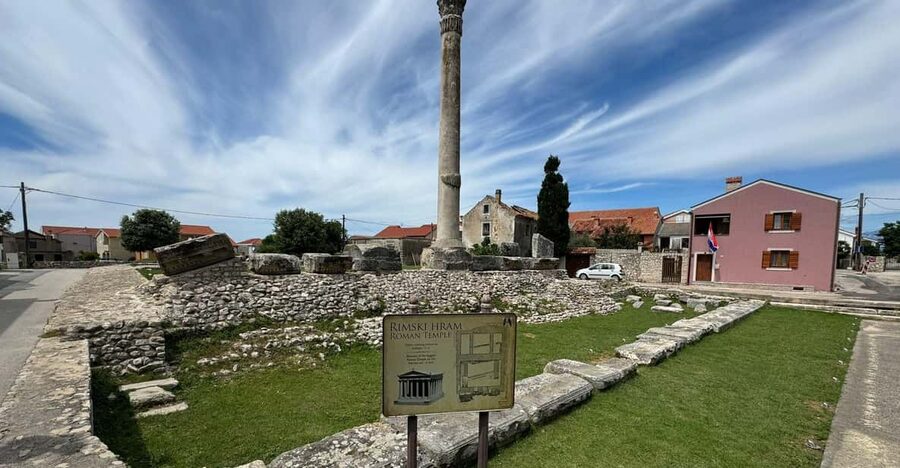
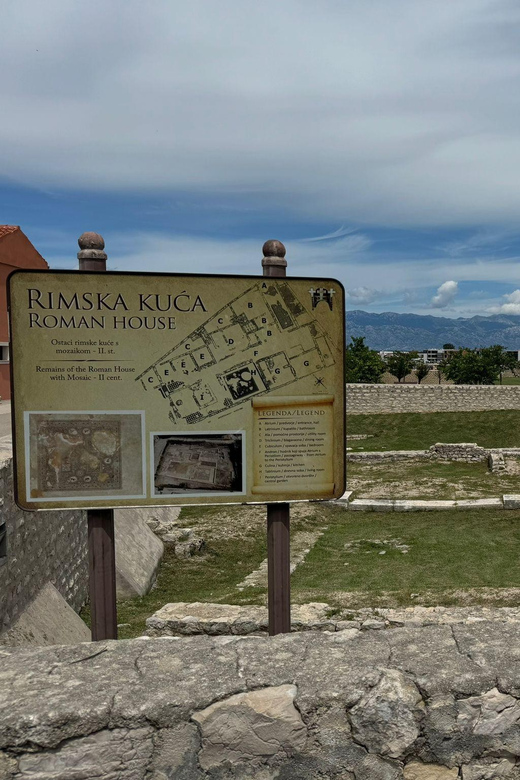
- Roman Aenona remains: the temple and the house you can almost picture
- Sculptures and named figures: Branimir and Gregory of Nin made visible
- The early medieval feel: small churches and tight streets
- Why Nin feels romantic, and how this tour fits real plans
- Museum time with a local curator: what it adds
- Price and value: $21 for 90 minutes with a guide plus curator
- Accessibility and pacing: good fit, with one trade-off
- Who should book this Nin tour
- Should you book Meet and feel ancient town of Nin?
- FAQ
- FAQ
- How long is the Nin guided tour?
- Where do I meet the guide?
- What language is the tour offered in?
- What is included in the price?
- What is not included?
- How much does the tour cost?
- Is there free cancellation?
- Is the tour wheelchair accessible?
Key things that make this Nin tour worth your time
- Roman Aenona context: you’re not just looking at stones; you’re learning what kind of town this used to be
- St. Cross plus St. Anselmo: two landmark church stops that anchor the medieval story
- Early medieval Nin with small churches: the route helps you spot the town’s quieter layers
- Largest Roman-temple remains on the east Adriatic: a rare chance to stand near something truly big
- Duke Branimir and Gregory of Nin: sculpture talk turns history into names you can point to
- A museum curator joins in: you get local interpretive help, not only street-level facts
Welcome to Nin: why this “heart-shaped” town feels different fast
Nin is small, and that’s a big part of why this tour works. The old town sits on a small island shaped like a heart, connected to the mainland by two bridges. That setup means you can feel the town’s boundaries right away. You cross in, you start walking, and suddenly you’re in a place that still behaves like an island neighborhood rather than a big-city grid.
As you follow the guide, you’ll also notice the way Nin layers eras. You’ll go from medieval streets and church landmarks to Roman remains in a way that stays chronological. That’s the real win here: you don’t feel like you’re collecting disconnected stops.
And yes, Nin is often described as one of Croatia’s more romantic small towns. The tour doesn’t turn into a beach day, but it does give you enough grounding to understand why people fall for this place. When you later look out toward the bay and sandy shoreline, it won’t feel like a separate attraction. It’ll feel like part of the same town you just learned.
Meeting at Duke Branimir’s Statue by the Lower Bridge
Your start point is easy to find if you arrive with a clear mental picture: you meet at the statue of Duke Branimir by the Lower bridge. I like meeting points like this, because they force a “where am I?” moment that sticks. Branimir is one of the named historical anchors you’ll hear about during the walk, so the tour begins with a character, not just a location.
From the start, expect a guiding style that turns the physical layout into a story. Because Nin is compact, the guide can point things out with less rushing and more clarity—at least within a 90-minute window.
One practical note: the tour is offered in English and Croatian, with a licensed tour guide (and a curator joining you in the local museum portion). That matters if you want explanations that match what you’re seeing, not vague “this is old” commentary.
St. Cross Church and St. Anselmo Cathedral: where the medieval story clicks
When this tour hits the medieval landmarks, it does so for a reason. Church architecture and church locations in old European towns are like page headings in a book. Once you know where the headings are, everything else on the page makes more sense.
You’ll visit the famous St. Cross church, and then you’ll also see the local cathedral of St. Anselmo. These aren’t just pretty stops. The point is to show early medieval Nin as a living cluster of small churches, not as an empty “ruins zone.” If you’re the type who likes your photos to mean something later, this section is for you.
Here’s what I’d watch for during your time at the churches: look for how the buildings relate to the street and to the small-scale nature of the old town. Nin’s church collection is part of what makes it feel intimate. It’s not huge monuments marching past you. It’s a set of places that fit a small town life.
The slight challenge is time. Because the tour is short, you won’t get a slow, sit-and-read-the-details experience at each door. Still, you’ll leave with enough context to revisit on your own afterward if you want more.
Roman Aenona remains: the temple and the house you can almost picture
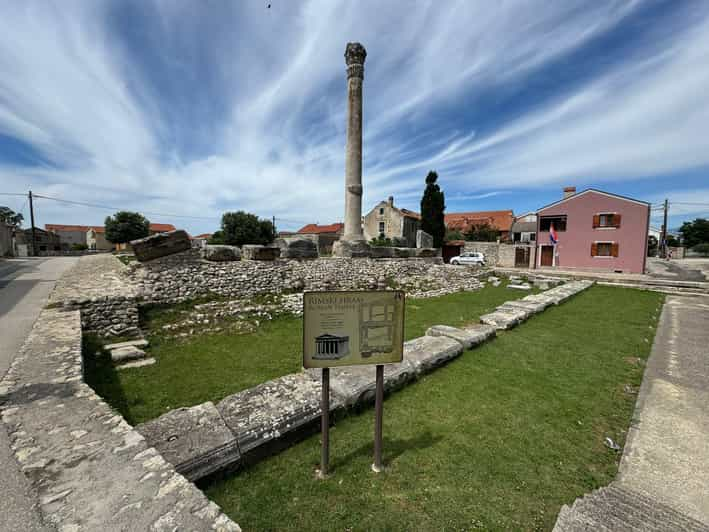
Then the tour shifts gears into the Roman layer. Nin used to be the ancient town of Aenona, and the guide treats that like a turning point. The most memorable part of this Roman section is the remains of the largest Roman temple on the east coast of the Adriatic. Standing near that scale—even if you’re looking at remnants rather than a full building—changes how you read the area. You stop thinking of Nin as only medieval and start seeing it as a place that once had serious importance.
You’ll also see remains of a house used in Roman times. That’s a smart addition because a Roman temple alone can feel abstract. A house helps you picture daily life: where people moved, how spaces might have functioned, and how Roman influence would have shown up beyond grand public buildings.
If you’re worried you’ll get lost in “ruins speak,” don’t. The guide’s job is to connect what you see to what it likely meant. In a short tour, that’s the difference between feeling impressed and actually feeling oriented.
A good way to enjoy this section is to slow down for a minute when the guide points out major features. Let the Roman elements anchor your mental map before you move on to the medieval streets again. You’ll feel the overlap more clearly if you do.
Sculptures and named figures: Branimir and Gregory of Nin made visible
Nin history isn’t only about buildings. During the walk, the guide talks about famous sculptures of historical personas, including Duke Branimir and the archbishop Gregory of Nin. You’ll hear why those names matter, and you’ll see them made physical through the town’s monuments.
This is where I think a guided tour earns its keep. Without the explanations, it can be easy to treat statues as background. With context, you start reading them like wayfinding: this person is tied to that era, and that era helps you interpret the town.
Because Nin is small, your brain doesn’t have to work overtime. You can keep a running sense of time while still enjoying the “tour mode” walk. That’s a big deal in compact old towns where self-guided routes sometimes feel like a scavenger hunt.
The early medieval feel: small churches and tight streets
After the Roman remains, the tour returns to the “human scale” of old Nin. The early medieval town is known for a collection of small churches, and that theme shows up as you explore. It’s not one mega-site. It’s a pattern: church after church, each one contributing to the town’s character.
This part is a nice contrast to the Roman section. Roman sites tend to feel bigger and more monumental in concept. Medieval church clusters feel lived-in and local, even when you’re viewing them as historic objects.
One thing you might appreciate if you enjoy slower travel is that the tour can help you pick what to revisit later. If a church catches your eye, you’ll have the guide’s context in your head. Then, on your own time, you can go back and spend more time where it really matters to you.
Why Nin feels romantic, and how this tour fits real plans
Nin’s “romantic small town” reputation isn’t only marketing. It’s based on the town’s shape, its scale, and its bay. The tour highlights the fact that Nin is known for a beautiful bay with sandy beaches and plenty of fun possibilities.
Even though this is a history-focused tour, you can use it to plan the rest of your day. If you time this well, you’ll get your historical grounding first, then you can shift to relaxed coastal time afterward. That’s a better rhythm than trying to do beach mode without context, or doing history mode without time to breathe.
Also, the tour gives you a feel for the layout: old core on the heart-shaped island, bridges to the mainland, and a clear sense of where to wander next. That means you’re less likely to spend your next hour backtracking because you didn’t know what was connected to what.
Museum time with a local curator: what it adds
This tour includes a walking guided tour with a licensed tour guide and a curator in the local museum. The “curator” detail matters because it changes the value of the museum stop. A guide can do street interpretation, but a curator often adds the why—how objects, architecture, or local discoveries fit into the story.
You should expect that museum portion to be short and focused, given the total duration. But it’s there to help you translate the outdoor remains into a clearer picture. In practice, that usually means you’ll have fewer question marks afterward, and more specific things you can notice when you look back at ruins and monuments.
If museum tickets aren’t included, plan on using the time efficiently. The tour’s included elements should still help you understand what you’re seeing; you just might need to budget separately for entry if you decide you want deeper access.
Price and value: $21 for 90 minutes with a guide plus curator
At $21 per person for a 90-minute guided walk, the price is mainly about interpretation. You’re paying for a route that connects Roman Aenona, early medieval Nin, landmark churches, and named sculptures into one coherent visit.
You also get practical value from the format:
- A licensed tour guide in English and Croatian
- A curator involvement in the local museum portion
- A tight route that hits big highlights without eating your day
What’s not included is important for real budgeting: museum tickets, plus food and drinks. If you know you don’t want museum time beyond what the tour includes, you might still be fine. If you plan to linger in museums, you’ll want to check ticket expectations so you don’t get surprised.
The other value angle is “decision confidence.” In a small old town like Nin, knowing what matters saves time. This tour helps you avoid the classic problem: wandering and realizing you spent 60 minutes on the wrong direction because you didn’t know which landmark anchors the story.
Accessibility and pacing: good fit, with one trade-off
This experience is wheelchair accessible, which is a real plus for Nin, since old towns can be tricky. If you need accessibility support, this detail is worth taking seriously.
The pacing is the bigger consideration. Because the tour runs only 90 minutes, the rhythm is efficient. You’ll cover a lot: church stops, Roman remains (including the major temple remains), a Roman house remnant, sculpture discussions, and the museum piece. If you want to linger over every detail or do extra photos at each stop, you’ll feel the time limit.
My practical advice: do the tour first, then slow down afterward on your own. You’ll get the structure during the guide time, then you can choose your personal favorites without feeling behind schedule.
Who should book this Nin tour
This tour is a strong fit if you:
- Want a first-timer orientation to Nin’s old town
- Like tours that connect eras rather than listing random sights
- Enjoy church landmarks as historical anchors
- Appreciate Roman remains but don’t want to guess what you’re looking at
It may feel less ideal if you:
- Want a slow, in-depth museum session
- Plan to spend the whole trip photographing and reading without a guided timeline
- Prefer “free roaming” with no structured interpretation
Should you book Meet and feel ancient town of Nin?
I’d book it if you want an efficient, storyline-driven introduction to Nin. For $21, you’re getting a guided walk that links Roman Aenona, early medieval Nin, major church stops, and significant monument talk, all wrapped into 90 minutes with a licensed guide and curator support.
Do it especially if Nin is on your Croatia route as a day-or-half-day stop. You’ll leave with a mental map, a clearer timeline, and a much easier time enjoying the bay and sandy beaches afterward.
FAQ
FAQ
How long is the Nin guided tour?
The tour duration is 90 minutes.
Where do I meet the guide?
You meet at the statue of Duke Branimir by the Lower bridge.
What language is the tour offered in?
The live tour guide speaks English and Croatian.
What is included in the price?
It includes a walking guided tour with a licensed tour guide and a curator in the local museum.
What is not included?
Museum tickets, food, and drinks are not included.
How much does the tour cost?
The price is $21 per person.
Is there free cancellation?
Yes. You can cancel up to 24 hours in advance for a full refund.
Is the tour wheelchair accessible?
Yes, the tour is wheelchair accessible.