
Reviewed · GUIDED
Zadar Guided Tour with Virtual Reality Experience
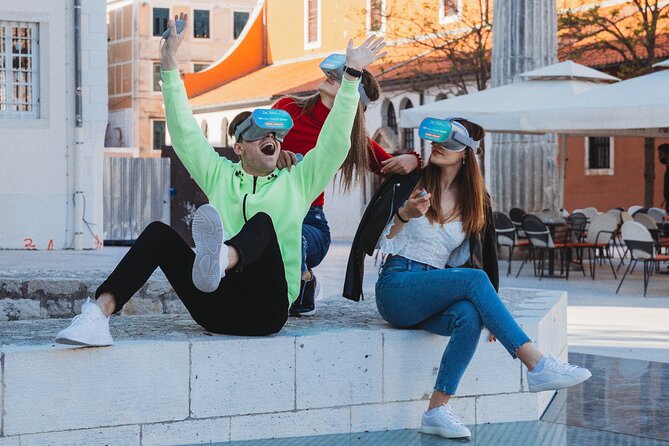
A short walk turns into a time machine in Zadar. This guided route uses included VR headsets to show you places that are quiet, closed, ruined, or simply hard to picture today. You’ll move through Roman, medieval, and WW II layers while your guide keeps the story clear from start to finish.
I like having a real guide on hand for context and practical tips, not just a screen. I also like that the tour is paced for sightseeing without feeling like a sprint, with stops that include major city landmarks and VR access where you normally can’t go.
One thing to consider: the VR quality is not equal at every stop. At a few locations, it can feel basic—more like panoramic views or early-style computer graphics—and one scene effect (the balloon view) may surprise you if you’re sensitive to heights.
In This Review
- Key highlights to know before you go
- Zadar through VR: what the walking tour really changes
- Where to meet and how the 2-hour route flows
- Church of St. Krševan (Chrysogonus): Romanesque outside, VR inside
- St. Simon’s Church: the reliquary you’ll remember
- Five Wells: Roman gates, medieval entrances, and Venetian walls
- The Forum: aerial VR first, then you stand in the center
- Bell Tower VR: WW II bombing from the top of St. Anastasia
- Cathedral of St. Anastasia: largest in Dalmatia, plus VR access to closed rooms
- Paseo Maritimo and the lost city market after the bombing
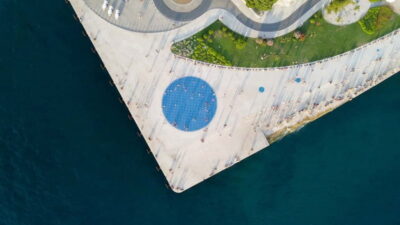
- Sea Organ and Greeting to the Sun: 13th-century Crusaders, then the modern promenade
- Price and value: is $36.04 worth it?
- Who should book (and who might prefer a different style)
- Should you book this Zadar VR walking tour?
- FAQ
- How long is the Zadar guided tour with VR?
- What is included in the tour price?
- What time does the tour start, and where does it end?
- What language is the tour offered in?
- How big is the group?
- Can I cancel for a full refund?
Key highlights to know before you go
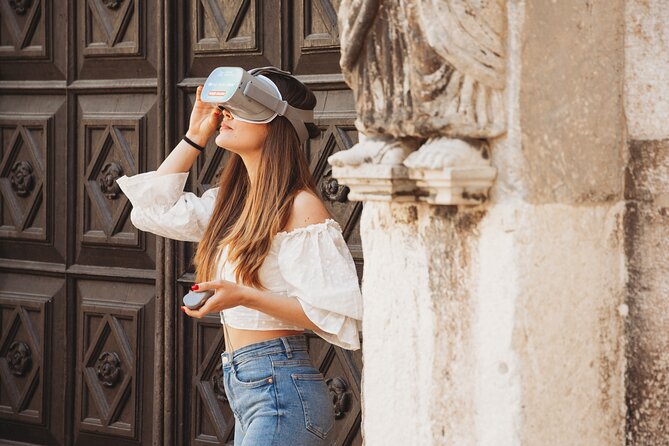
- Included VR headsets at every stop (not a rent-your-own add-on)
- Small groups (max 25), so your guide can actually answer questions
- Free entry tickets listed for each VR/landmark stop
- Chrysogonus / St. Krševan: VR access to a Romanesque church area that’s normally closed
- Roman Forum VR: air view first, then you stand in the real ruins at ground level
- WWII bombing scenes staged through VR at multiple old-town locations
Zadar through VR: what the walking tour really changes
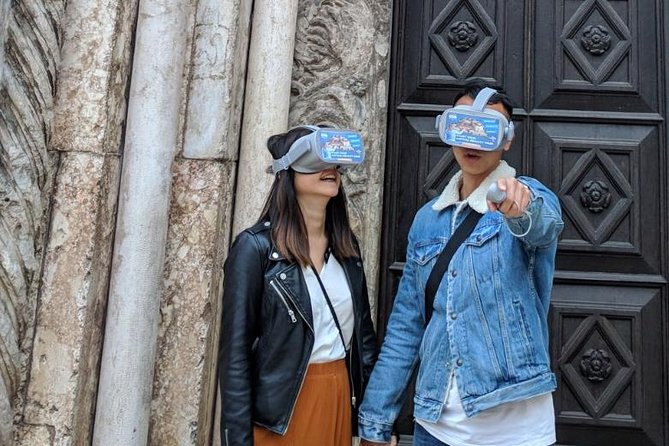
Zadar is the kind of city where it helps to know what you’re looking at. This tour gives you that “oh, I get it now” moment, using VR to reconstruct what time does to buildings.
You start with churches and city gates—places that already look old but can still be hard to place. Then the tour climbs into bigger-scale stories: the Roman Forum, Venetian walls, and the WW II damage that shaped the modern layout. You’re not just staring at stones. You’re seeing how the space used to function, and then meeting it in the present.
Two practical benefits make this work well: first, your guide stays with the group through the whole loop. Second, the VR is paired with physical landmarks you can re-check after you take the headset off. That “then vs. now” contrast is where the value lands.
More days out with a local guide who knows the coast.
- Zadar: Plitvice Lakes Guided Day Tour with Tickets
★ 4.9 · 3,148 reviews - Zadar: Plitvice Lakes Full-Day Guided Tour with a Boat Ride
★ 4.7 · 807 reviews - Zadar: Guided Tour to Ugljan, Osljak, & Galevac by Speedboat
★ 4.9 · 523 reviews - From Zadar: Plitvice Lakes Day Trip with Guide and Boat Tour
★ 4.6 · 479 reviews
Where to meet and how the 2-hour route flows
The tour starts at Magic Croatia – Travel Agency, Poljana Pape Aleksandra III 7, 23000 Zadar, and it runs on a 10:00 a.m. start time. It ends at the Sea Organ area on the sea promenade (Obala kralja Petra Krešimira IV, 23000).
The duration is about 2 hours, with each stop keeping things short—usually around 10 to 15 minutes. That matters because the VR takes time to put on, explain, and watch. If you like a tour that moves at a comfortable walking pace, you’ll appreciate the structure: you’re never stuck too long in one spot.
This is also set up for real life. The meeting point is near public transport, and the tour supports service animals. It’s offered in English, with other languages available as well, and you’ll receive a mobile ticket at booking.
Church of St. Krševan (Chrysogonus): Romanesque outside, VR inside
Stop one is the Church of St. Krševan, also linked with Chrysogonus (eng.), a Romanesque monastery church built in 1175. This is a strong opener because the church’s exterior is already beautiful and well preserved—and then the tour adds a twist.
The church is closed for the public, and that’s the key reason this works as more than a normal photo stop. With the VR headset, you can go to the monastery courtyard and visit the interior virtually. You’re getting the missing piece that most visitors never see: the feeling of space inside, not just the shape from outside.
One practical tip: treat the first VR scene like a warm-up. The tour experience gets more dramatic after this, so if you’re trying to keep your bearings, this early stop helps you learn how the headset interface and guide pacing work.
St. Simon’s Church: the reliquary you’ll remember
Next is St. Simon’s Church, focused on the interior of St. Simeon’s church and Zadar’s “city treasure” object: a silver pleated Gothic chest used for the relics of St. Simeon.
This is the kind of stop that makes sense on a walking tour because it’s specific. You’re not trying to memorize every wall. You’re looking for one focal object, and the guide’s explanation keeps it from turning into a blur of medieval stone.
If you enjoy religious art details, pay attention to the reliquary presentation. The VR element here is less about reconstructing a whole lost building and more about getting you oriented to what’s inside and why the treasure mattered then—and still matters now.





Five Wells: Roman gates, medieval entrances, and Venetian walls
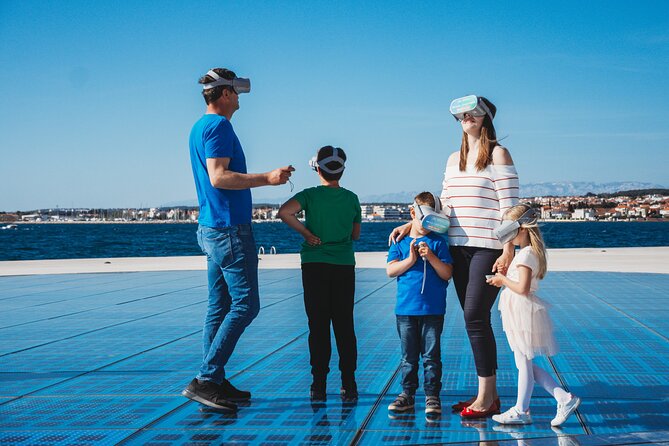
At Five Wells, the story shifts from individual buildings to city planning. You’ll learn about how Roman gates formed entrances into Zadar’s antique city, and then the tour continues into later layers—where medieval entryways were and how Venetian walls shaped defense and movement.
This stop can feel like “history talk” if you’re not a fan of explanations. But it works here because you’re learning while standing in the old-town area where those transitions are physically hinted at. Even if you can’t see every original structure, the guide translates the lines of the city into time periods you can picture.
The value is that it gives you a map in your mind. After Five Wells, when the tour moves into the Roman Forum and the bell-tower WW II scenes, you’ll understand why those areas were so important.
The Forum: aerial VR first, then you stand in the center
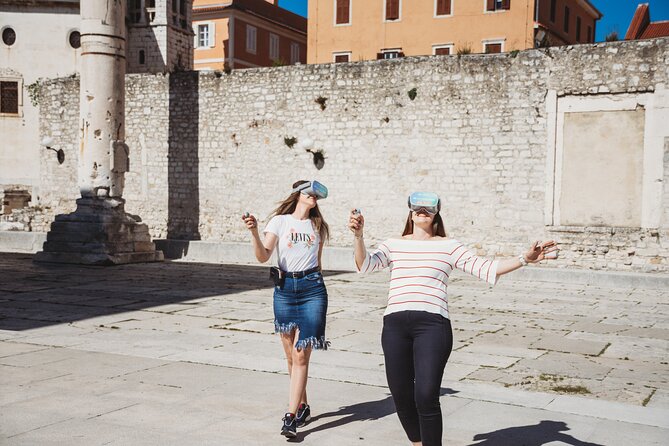
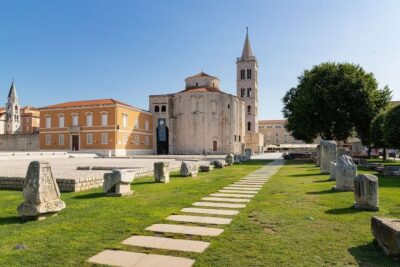
The Forum stop is the tour’s main “wow” for most people. You start with the ruins of the Roman Forum within old town—described as the biggest forum built in Croatia, built from the 1st until the 3rd century, and visible today mostly as ruins.
Then VR takes you upward. The headset recreates the Forum as if you’re seeing it from above—specifically from the perspective of a hot-air balloon. An audio guide style introduction gives facts while you watch the reconstruction, so it’s not only visual. After the aerial view, you remove the headset and step into the Forum space itself.
This is where the experience becomes grounded. You stand in the center, surrounded by recreated buildings and statues. The tour then points you to the temple dedicated to Jupiter, Juno, and Minerva, dating from the 1st century BC. You hear a story about ancient religious rituals connected to that setting.
When the VR visual ends, the message you take away lands hard: parts of the construction still exist in original placement after about 2000 years. That’s the point of doing VR at ruins. It doesn’t replace the real thing—it helps you see how the real thing used to be shaped and used.
Bell Tower VR: WW II bombing from the top of St. Anastasia
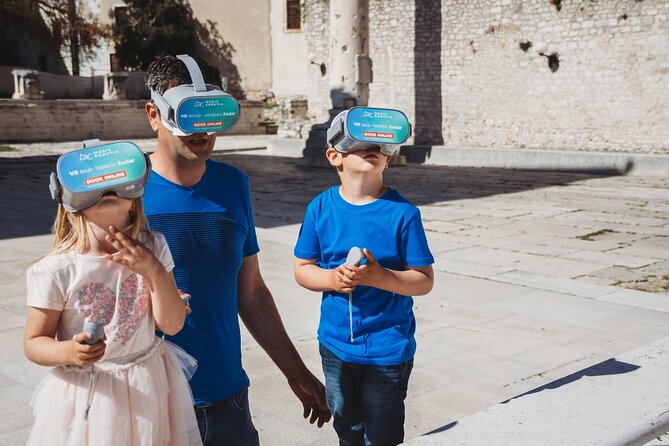
Next comes the emotional punch. At the Bell Tower section, the VR experience recreates WW II bombing—you view the old town as if you’re standing at the top of St. Anastasia’s bell tower.
The scene includes an air attack view: buildings burning, crashing, and the impact of airplanes dropping bombs. It’s dramatic, and it’s clearly meant to show how much the city was damaged and how the modern map reflects that history. The VR sequence ends with a map showing heavily damaged areas of the city that no longer exist today.
A quick consideration: if you’re sensitive to war imagery, give yourself a moment before putting on the headset. Also, remember that VR can amplify the feeling of being “there,” because you’re looking around from a high vantage point with no physical reference.
Still, if you want Zadar history in a way that’s more than dates, this stop does that job. It connects the city’s later layout to what happened here.
Cathedral of St. Anastasia: largest in Dalmatia, plus VR access to closed rooms
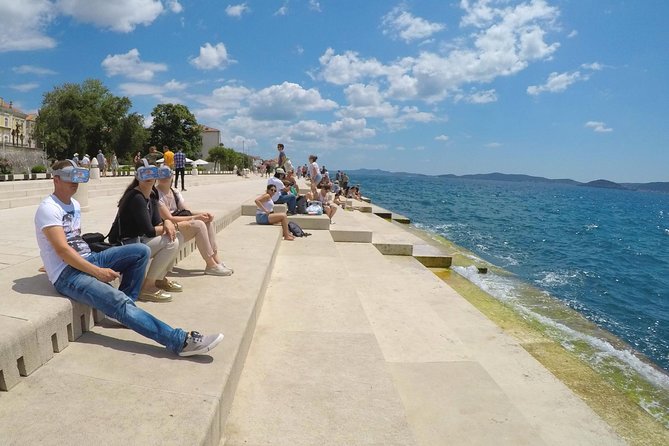
The tour moves to the Cathedral of St. Anastasia, built in the 12th and 13th century and described as the largest cathedral in the Dalmatia region. St. Anastasia is a protector saint of the city, and her relics are inside the cathedral.
VR adds two key advantages at this stop. First, you can “visit” the cathedral and hear the story of St. Anastasia. Second, the tour includes a look into areas that are closed for public: the baptistery and sacristy.
This is a stop where VR feels practical, not just theatrical. You’re not only watching reconstructions; you’re getting access to spaces you would otherwise miss, and you’re doing it while still in the real cathedral environment.
If you like churches for art and atmosphere, this is one of the best payoff points on the itinerary.
Paseo Maritimo and the lost city market after the bombing
At Paseo Maritimo, you visit where the former city market used to be—where people once sold fish, vegetables, fruits, and other products. Today, the open city market is on the opposite side of the city because the original market area was destroyed during the WW II bombing.
VR helps you understand the difference by showing residential buildings and a post office that no longer exist. There’s also a continued bombing depiction—planes dropping bombs—tying this area’s modern form to what was wiped out.
This stop is valuable if you’ve ever walked through a city and felt like the buildings didn’t quite match your mental map. Here, you get a “before” picture: you see not only what vanished, but what the everyday rhythm of the space might have been like.
Sea Organ and Greeting to the Sun: 13th-century Crusaders, then the modern promenade
The last stretch is along the sea promenade to the Sea Organ and the Greeting to the Sun area. This is where the experience adds contrast: from ruins and bombing to a modern landmark built in 2005.
With VR, the tour revisits the same spot as it might have looked in the 13th century, when Crusaders attacked Zadar from the sea. You hear the background story tied to that attack and the fact that Zadar was a Catholic city at the time.
Then, you end where the tour promised: at Sea Organ, with the present-day promenade under your feet. It’s a satisfying close because it gives your brain a full circle—from ancient city layers, to destruction, to the rebuilt waterfront you can actually enjoy after.
Price and value: is $36.04 worth it?
At $36.04 per person for about 2 hours, this tour can be a great value if you’re the type who learns best through a mix of walking + story + visuals.
Here’s what you’re paying for that makes it feel “worth it”:
- VR headsets included, so you’re not hunting for rentals or extra fees
- A guide in English who provides context while you’re standing in the right places
- Stops with admission ticket free listed for each VR/landmark segment
- A group size capped at 25, which helps keep the pacing sane
Where value can wobble is if you’re picky about VR quality. One review critique described the VR as extremely basic in places, with panoramic views that you might see better just by looking around without the headset. Another pointed out that the simulations can feel like older computer graphics. If VR fidelity is your top priority, you may want to mentally lower expectations and treat the VR as interpretive, not cinematic.
Overall, though: for the price, you’re getting a guided story plus multiple VR “story scenes” tied directly to real Zadar stops. That combination is hard to beat.
Who should book (and who might prefer a different style)
I think this tour fits best if you:
- want a guided history walk, but you also like visual reconstructions
- enjoy seeing closed-off spaces virtually, like parts connected to churches and cathedrals
- like strong “time jump” storytelling: Roman Forum → medieval layers → WW II impact → modern waterfront
I’d be more cautious if:
- you get unsettled by VR viewpoints (one scene includes a hot-air balloon look-down effect)
- you need high-end VR graphics throughout the whole experience
- you want a tour that relies mostly on physical exploring, with minimal headset time
For families with older kids, this sort of format can work well because it turns monuments into scenes. For anyone who prefers quiet museum wandering, the headset-based dramatization may feel like too much.
Should you book this Zadar VR walking tour?
Book it if you want a focused, two-hour introduction to Zadar that uses VR to explain what’s missing from today’s ruins and closed rooms. The Forum stop, the cathedral interior access, and the WWII scenes are the big reasons this works—especially because you’re guided the whole time and you can look back at the real spaces right after.
Skip or choose carefully if you’re a VR perfectionist. Some scenes are reportedly more like simple panoramas, and the graphics can feel dated in spots. In that case, go in expecting interpretation, not blockbuster quality.
If your goal is to get your bearings in Zadar fast—Roman, medieval, and modern in one loop—this is a smart way to do it without burning an entire day.
FAQ
How long is the Zadar guided tour with VR?
It lasts about 2 hours (approx.).
What is included in the tour price?
The tour includes a guided walking route and VR headsets are included. Admission tickets are listed as free for the stops in the itinerary.
What time does the tour start, and where does it end?
It starts at 10:00 a.m. at Magic Croatia – Travel Agency (Poljana Pape Aleksandra III 7). The tour ends at the Sea Organ on the sea promenade.
What language is the tour offered in?
It is offered in English, and tours in multiple languages are available.
How big is the group?
The tour has a maximum of 25 travelers.
Can I cancel for a full refund?
Yes. You can cancel up to 24 hours in advance for a full refund.
More Guided Days Out
More Tours in Zadar




More Tour Reviews in Zadar
After something else? More tours and days out around Zadar



Guided, compared.
 ★ 4.9Plitvice Lakes Guided Day Tour with TicketsFrom $883,148 reviews
 ★ 4.4Plitvice Lakes: Guided Walking Tour with Train and Boat RideFrom $281,093 reviews
 ★ 4.7Plitvice Lakes Full-Day Guided Tour with a Boat RideFrom $58807 reviews
 ★ 4.9Guided Tour to Ugljan, Osljak, & Galevac by SpeedboatFrom $40523 reviews
 ★ 4.6Plitvice Lakes Day Trip with Guide and Boat TourFrom $53479 reviews
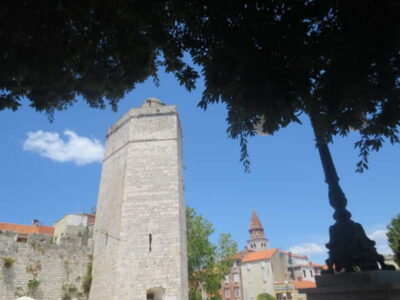 ★ 4.8Guided Walking TourFrom $17445 reviews
 ★ 4.6From Split/Trogir/Omiš: Plitvice Lakes Guided Group TourFrom $58320 reviews
 ★ 4.6From Metajna/Novalja: Pag Bay Guided Sea Kayaking TourFrom $61300 reviews