
Reviewed · SIBENIK OLD TOWN & RIVIERA TOURS
Daily or night walking tour through Medieval Šibenik
Medieval Šibenik has a way of grabbing you fast. In just 1 hour 30 minutes, this guided walk takes you through the stone logic of the city: cathedrals, churches, underground waterworks, and secret passage vibes that make the Old Town feel like it was built to withstand sieges and droughts. It runs during the day or at night, and you get a city map for following along.
I like how the route is built around the big, physical stories you can still see. You’ll spend time at the Cathedral of St. James (UNESCO) and you’ll also get the practical side of medieval life at the Square of the Four Wells cistern, including how it worked and why it mattered.
One possible drawback: this is a walking tour through older streets and stone steps, and you’ll want to be comfortable moving at a steady pace, especially on the day’s climbs and stairs.
In This Review
- Key things I’d watch for on this walk
- Medieval Šibenik at night (or day): it changes the whole feel
- Your guide and group size: why this stays personal
- Stop 1: St. James Cathedral and Juraj Dalmatinac’s stone signatures
- Stop 2: Church of St. Barbara and Gothic relief stories
- Stop 3: Square of the Four Wells cistern and water politics
- Stop 4: St. Ivan Krstitelja, the Turkish clock, and Renaissance windows
- Stop 5: St. Frane complex—organ from 762, incunabula, and the Šibenik Prayer
- Stop 6: Church of St. Duha and the bells of December 17–18
- Medulić Square and the measurement mess (plus an electricity milestone)
- Price and value: is $29.79 worth it?
- Who this tour suits best
- Should you book this Medieval Šibenik walking tour?
- FAQ
- FAQ
- How long is the Medieval Šibenik walking tour?
- Is the tour offered in English?
- Does it run during the day or at night?
- How much does it cost?
- What’s the group size?
- Where does the tour start and end?
- Can I cancel for a full refund?
Key things I’d watch for on this walk
- UNESCO St. James Cathedral: construction stories tied to Juraj Dalmatinac and Gothic-Renaissance stone design
- Church details that teach you how medieval people thought, not just what they built (shells, reliefs, vows)
- The Four Wells cistern: a 15-minute stop with a look at filtration and four water openings
- Bell-tower curiosities like the Turkish one-hand clock brought from Drniš
- Library and manuscript treasures at St. Frane’s complex, including Latin materials from around 1375
- Small group size (max 10), which keeps the pace human and questions welcome
Medieval Šibenik at night (or day): it changes the whole feel
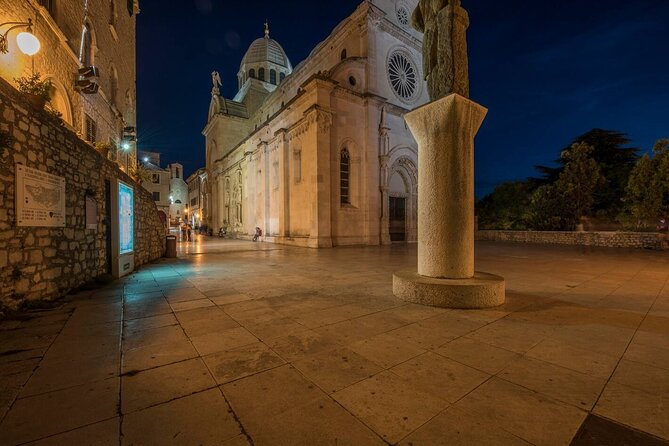
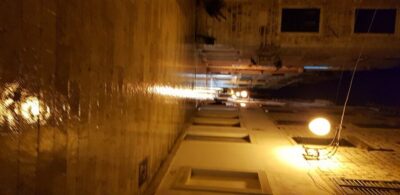
Šibenik’s medieval core works best when you slow down and look where other people just walk through. In daylight, you can spot architectural transitions and construction choices quickly. At night, the same streets feel more secretive, which fits the guide’s focus on tunnels, passages, and the odd “holes” in the city fabric that hide how the place actually functioned.
The tour also gives you a Sibenik city map so you’re not stuck staring at a guide’s head the whole time. That small tool matters because it helps you reconnect the walk to what you’ll see later on your own.
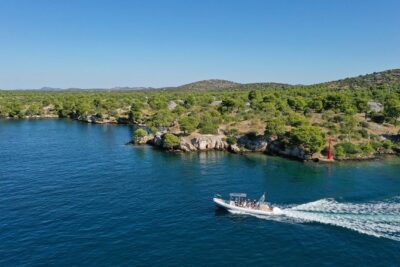
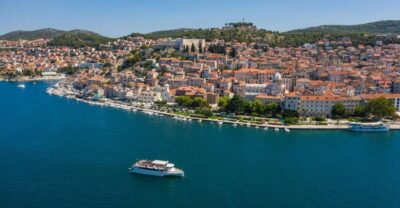
Down the coast to Sibenik, its cathedral and the Riviera islands.
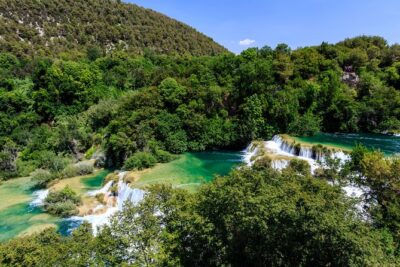
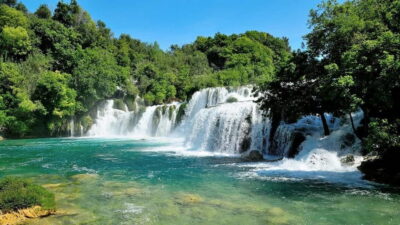
- Vodice: Krka Waterfalls National Park Boat Tour
★ 4.6 · 250 reviews - Šibenik Riviera boat tour: Zlarin + Prvić + Tijat
★ 4.5 · 71 reviews - Sibenik: Guided Evening Walking Tour
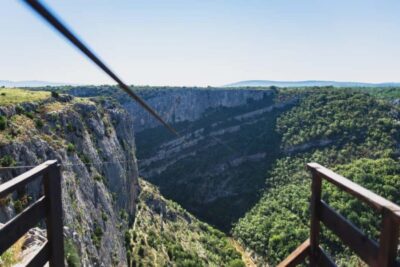
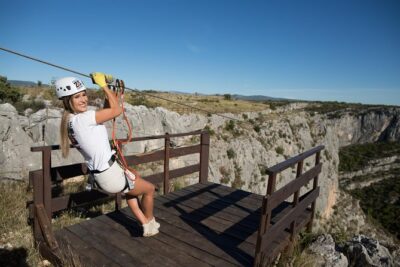
★ 4.9 · 62 reviews - Zipline Šibenik – Čikola Canyon
★ 5.0 · 48 reviews
Your guide and group size: why this stays personal
The experience is led by Dario Mikulandra, a personal tour guide, and the group is capped at 10 people. That size is big enough to feel social, but small enough that you can hear the stories clearly and ask follow-ups when something clicks in the stonework.
English is the listed language, and the pacing is structured by stops that range from a quick 5-minute church moment to longer interior-focused time blocks at key sights. If you prefer city walking that feels like a guided lecture with actual locations attached, this format fits.
Stop 1: St. James Cathedral and Juraj Dalmatinac’s stone signatures
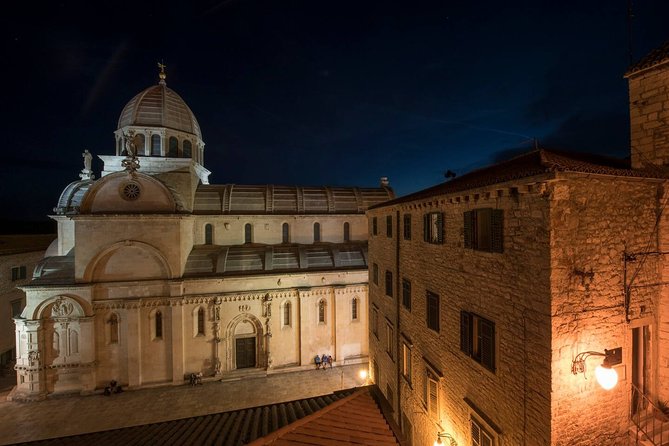
Most walks start with a headline sight. This one starts with the headline: St. Jacob’s Cathedral, formally known as the Cathedral of St. James, listed by UNESCO. You’ll spend about 30 minutes here, with the guide walking you through what came before the current cathedral and how the building was designed and constructed.
The cathedral’s construction history is part of the fun. You’ll hear whether 105 years of construction is a lot and what that long timeline says about medieval building culture. The guide also connects the architecture to theology, so you’re not just looking at decoration. You’ll get stories about specific features people always notice, including the cathedral’s shells, and the unusual anecdotes tied to the presbytery, fruit and vegetables, and the many sculpted heads.
A big payoff is meeting the name behind it all: Juraj Dalmatinac. Even when you’re not physically meeting him in the literal sense, the guide points out the hidden signature associated with his work, and that makes the cathedral feel like a craftsman’s fingerprint rather than a museum object. You’ll also hear why the cathedral is often described as one of the Mediterranean’s most beautiful stone masterpieces, built exclusively from stone.
Practical note: cathedral stone can be cool and echoey. Take your time with photos, but also keep your eyes up when the guide points out detail-level things.
Stop 2: Church of St. Barbara and Gothic relief stories
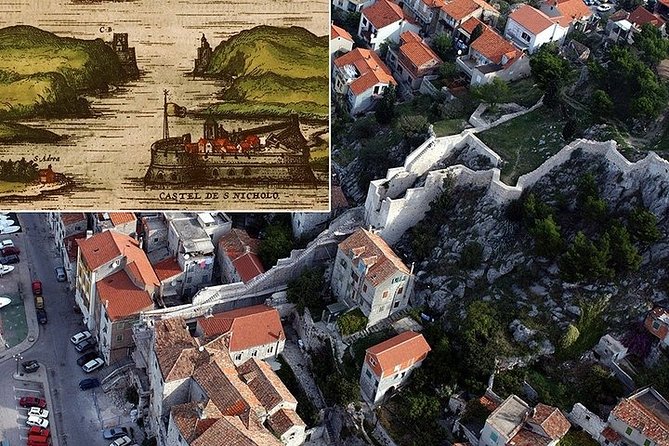
Next up is the Church of St. Barbara, a single-nave Gothic building whose construction began around 1400. This is a shorter stop at about 10 minutes, but it’s the kind of place where the guide’s stories make the architecture feel alive.
Above the main entrance, you’ll see a Gothic niche with a sculpture of St. Nikola, described as the work of the Italian master Bonino from Milan. On the north wall, there’s also a Gothic window and a sculptural piece tied to a vow made in 1419 by Šibenik doctor Marko.
The guide’s framing here is smart. The relief is described as a unique medieval example of physicians depicted on the eastern Adriatic coast. That’s not just trivia. It shows how medieval communities used art to mark identity, profession, and belief at the same time.
More to do once the sun is off the water.

Stop 3: Square of the Four Wells cistern and water politics
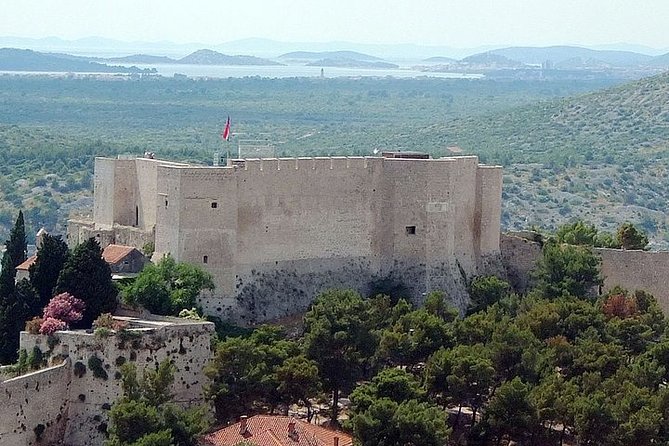
If you want medieval life in one sentence, it’s here: people built water systems because they couldn’t rely on comfort. The Trg 4 bunara—the Square of the 4 Wells with an underground cistern—is only a short distance from the cathedral area, but it explains a totally different kind of power: survival infrastructure.
You’ll spend about 15 minutes at this stop, and the guide ties it to drought and to military sieges. Construction is described with a contract in 1446 and supervision by Juraj Dalmatinac. The cistern’s capacity is given as 28,000 barrels of water, plus a special tax that helped fund the project. That tax detail is the kind of thing you won’t learn if you just stand in front of the monument.
On the plateau above, you’ll see the four wells that pumped water. The complex is also described as renovated, and there’s a cafe and wine bar inside, which means you can understand the space as something used, not only admired.
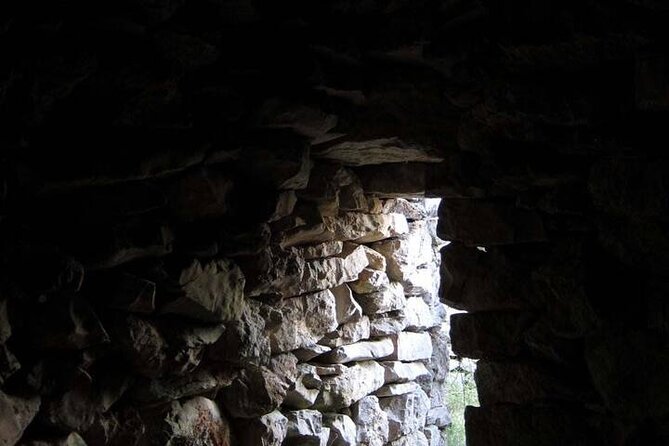
Inside, the guide points out how the water filtration system worked and the four openings described as crowns where fresh water was taken. The whole place turns medieval city planning into something you can picture with your own eyes.
Stop 4: St. Ivan Krstitelja, the Turkish clock, and Renaissance windows
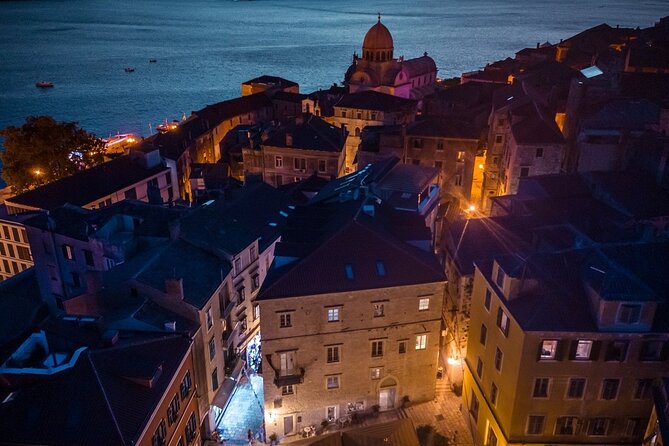
The Church of St. Ivan the Baptist is where you see Gothic-Renaissance layering in action. The stop runs about 10 minutes, and the guide explains it began under a different dedication as the church of St. Trinity in the 15th century.
Expect a focus on craft details. The staircase along the south side is described as work by Šibenik builder Ivan Pribislavić, decorated with bas-relief. There’s a Renaissance window tied to Nicholas of Florence, and above that window is a relief with a lamb below a winged angel.
The bell tower adds the kind of story that makes you look up. You’ll hear about a Turkish clock with one hand built into the tower, brought from Drniš after the Turks had abandoned it in the 18th century. The guide also mentions mysterious iron hoops on the north wall, plus what they were used for starting in the early 17th century.
Then there’s the Renaissance window decorated with fruits and vegetables, described as made by Nikola Firentinac. If you like the moment when ornament stops feeling random, this is it. The fruit-and-veg details help you see how artists mixed sacred work with everyday symbolism and skill.
Stop 5: St. Frane complex—organ from 762, incunabula, and the Šibenik Prayer

This is the long-thought stop for history lovers. Church of St. Frane is described as built in the second half of the 14th century in the southeast edge of the Old Town, and it’s noted as a spacious single-nave Gothic church with no heavy decorative exterior elements. That simplicity makes the interior history feel earned.
At the front, the main entrance has a Gothic stone frame. In the Chapel of the Holy Cross, the guide points out an organ dating to 762, built by Petar Nakić—the kind of detail that makes a city feel unusually deep in time.
The story expands beyond the church into the Šibenik Franciscans monastery on the south side of the church. The library collection is described as having 151 incunabula plus manuscript codices. The guide also points to the Šibenik Prayer, described as one of the oldest Croatian linguistic and literary monuments, written in Latin around 1375.
Adjacent to this complex, you’ll also see remains tied to city defense and notable families, including eastern city walls and the Vrančić Palace, noted as the birthplace of Antun and Faust Vrančić. Even if you only catch pieces, the takeaway is clear: this wasn’t just a place of worship. It was a center for learning, writing, and local leadership.
Practical note: the steps and uneven stone are real in this part of Šibenik, so I’d wear shoes you trust.
Stop 6: Church of St. Duha and the bells of December 17–18
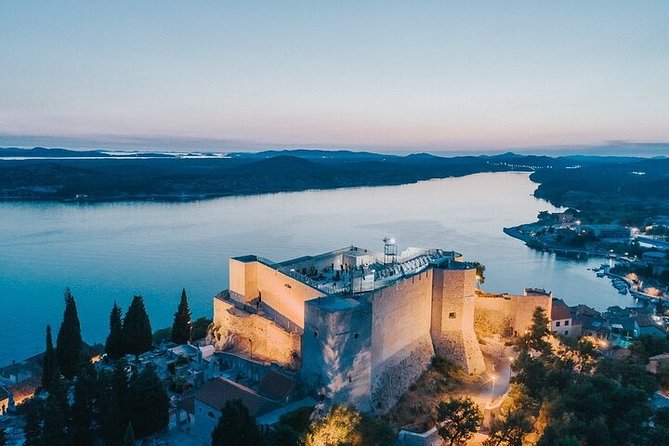
Crkva Svetog Duha (Church of St. Duha) sits in the city center on Dinko Zavorović Square. It was built in the 17th century based on a project by Antun Nogulović. This stop is short, about 5 minutes, but it plays a useful role in the bigger medieval map.
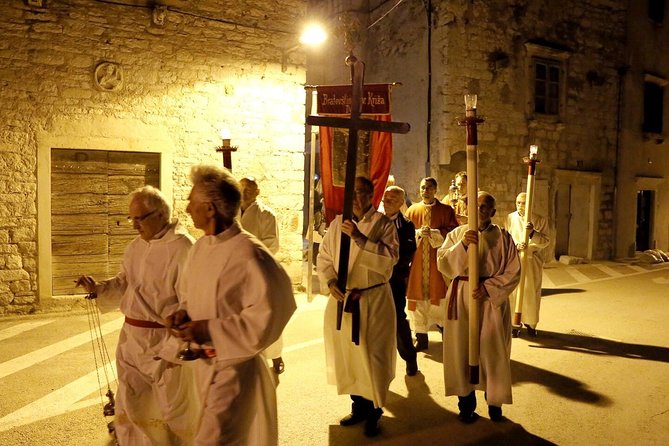
The guide frames it as the third church at about 100 meters from the previous key points, and explains that these churches belonged to the three most important medieval fraternities. You also hear about the medieval custom of celebration when, on the night of December 17–18, the bells of Šibenik’s churches ring to announce the arrival of Christmas. It’s a small story, but it gives the city a calendar.
This is also where a map helps. You can look at where you are, then trace the idea of fraternities and bell culture through the streets.
Medulić Square and the measurement mess (plus an electricity milestone)
The walk ends with Medulić Square and nearby points that connect medieval commerce to physical details you can still read in stone. The guide explains the square’s medieval role as the seat of a small trading lodge.
Here’s the angle I like: the guide connects architecture to trade problems. The idea is that merchants had trouble with measurements, including the problem of what a meter meant in practical daily life. On the palace wall at Medulić Square, you can see official measuring units associated with the Venetian Republic and the city of Šibenik.
A few minutes more brings in the Divnić Palace and a copy of a lamp that reportedly shone in 1895. The story here is that Šibenik was the first city in Europe to receive alternating electricity and lighting from the hydroelectric power plant on the river Krka. That turns a medieval walk into a bridge to modern infrastructure without pretending the centuries are the same.
Finally, there’s mention of a stone pet bowl, AMOR D. CANI, a quirky local touch that breaks the solemn tone and gives you something light to remember.
The highlights also include Medieval Mediterranean Garden and Medici Square, so if you pick this tour as part of your first day (or first night), you’ll leave with names and locations you can search for later on your own.
Price and value: is $29.79 worth it?
At $29.79 per person for about 1 hour 30 minutes, you’re paying for more than a walk. You’re paying for a guide who links visible architecture to the reasons it exists, including specific craftspeople and odd anecdotes tied to cathedral and church details.
Here’s why the value feels strong:
- You cover multiple major sites in a compact time window, not just one cathedral and a quick photo break.
- The guide’s focus on details with names matters. Stops include references like Juraj Dalmatinac, Ivan Pribislavić, Nikola Firentinac, Petar Nakić, and more.
- The stops are described with admission ticket free entries, so you’re not stacking surprises on top of your ticket.
The main thing you’re giving up is freedom: this is a guided route, so you follow the guide’s pacing rather than wandering randomly. If you like structured walking with clear payoffs, that’s a plus.
Who this tour suits best
This is ideal for you if:
- You want a medieval city walk that explains stone and symbolism, not just facts.
- You like architecture and craftspeople—especially when the guide points out named work on specific elements.
- You’re okay with stair steps and uneven surfaces, and you’d rather learn than chase your own map trivia.
It may feel less ideal if you’re looking for a pure religious-only talk. One review note flagged that the tone can lean more toward religion than strictly medieval history. The itinerary still includes medieval life details like water systems, trade measurements, and civic infrastructure, but your personal preference matters.
Should you book this Medieval Šibenik walking tour?
Yes, I’d book it if your priority is getting your bearings fast and learning what makes Šibenik unique. The combination of UNESCO cathedral, the Four Wells cistern, and the St. Frane learning-and-library stop is a strong mix of faith, daily survival, and culture in one route.
Pick the night version if you like quieter streets and a more atmospheric pace. Pick the day version if you want the clearest view of the architecture details and outdoor stone features.
If you have mobility concerns, choose your shoes carefully and go in knowing there are stone steps and older streets. If that’s a dealbreaker, you might prefer a less step-heavy plan—but based on the general “most travelers can participate” note, many people do fine with standard walking precautions.
FAQ
FAQ
How long is the Medieval Šibenik walking tour?
It lasts about 1 hour 30 minutes.
Is the tour offered in English?
Yes, the tour is offered in English.
Does it run during the day or at night?
It’s offered during the day or at night, and you’ll use a Šibenik city map while walking.
How much does it cost?
The price is $29.79 per person.
What’s the group size?
The tour has a maximum of 10 travelers.
Where does the tour start and end?
It starts at Ul. Biskupa Fosca 9, 22000, Šibenik, Croatia and ends back at the meeting point.
Can I cancel for a full refund?
Yes. It offers free cancellation, with a full refund if you cancel up to 24 hours in advance of the start time.
More Tours in Sibenik
More Tour Reviews in Sibenik
More of Sibenik & the Riviera
After something else? More tours and days out around Sibenik



Sibenik Old Town & Riviera Tours, compared.
 ★ 4.6Vodice: Krka Waterfalls National Park Boat TourFrom $93250 reviews
 ★ 5.0Private Sibenik Walking Historical Morning or Evening TourFrom $5493 reviews
 ★ 4.5Šibenik Riviera boat tour: Zlarin + Prvić + TijatFrom $14471 reviews
 ★ 4.9Sibenik: Guided Evening Walking TourFrom $4562 reviews
 ★ 5.0Zipline Šibenik – Čikola CanyonFrom $8948 reviews
 ★ 4.5Krka Waterfalls National Park Boat Tour from VodiceFrom $18043 reviews
 ★ 5.0Sibenik Private Combined Food & Drink and Historical TourFrom $17836 reviews
 ★ 4.0Kornati island National Park & Telascica Nature Park Boat Tour from VodiceFrom $8436 reviews
Browse the lists this tour appears in