
Reviewed · SIBENIK OLD TOWN & RIVIERA TOURS
Sibenik: Guided Evening Walking Tour
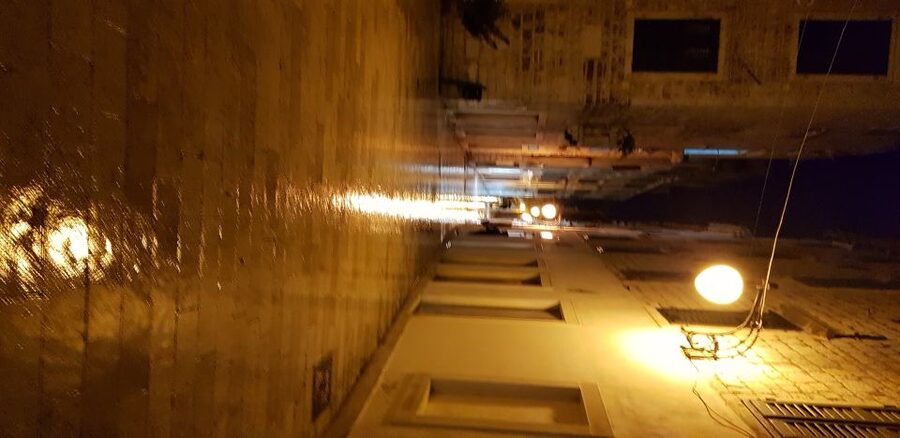
Nightfall turns Šibenik into a storybook. I like the way the cobblestone lanes and hidden squares feel calmer and more atmospheric after dark, and I especially enjoy the stop-by-stop details at big hitters like St. Jacob’s Cathedral. One consideration: the ground is uneven in places, so wear shoes with grip and expect a bit of walking through old-town streets.
This is a guided evening stroll designed to help you understand what you’re actually seeing. You’ll move through the historic center at an easy pace, learning why the city’s landmarks matter, not just where they are.
It’s 90 minutes for $45, and it’s a good fit when you want your first mental map fast. No hotel pickup means you’ll arrive on your own, and it’s not listed as suitable for mobility impairments.
In This Review
- Key things to know before you go
- A night-meets-medieval Šibenik walk in 90 minutes
- Starting at gat Krka: meet the orange-cap guide and move fast
- Hidden squares and the stories behind the city’s layout
- St. Francis and St. Krsevan: small churches with standout reasons
- The Assumption Church and the bell tower memory trick
- St. John the Baptist and the patron saint change
- Four Wells cistern: a medieval engineering moment
- St. Jacob’s Cathedral: why its stonework is the star
- Croatian National Theater: electric lighting and the big stage
- St. Barbara’s church and the bells you’ll learn about
- The main square question: seeing the city like a local
- Price and value: why $45 can make sense here
- Practical logistics that matter on an evening walk
- Who should book this tour, and who may want another option
- Should you book the Šibenik evening walking tour?
- FAQ
- How long is the guided evening walking tour in Šibenik?
- What does the tour cost?
- Where do I meet the guide?
- What languages are available for the live guide?
- What should I bring?
- Is the tour suitable for people with mobility impairments?
- Can I cancel and get a refund?
Key things to know before you go
- 90 minutes that’s short enough for jet lag, long enough for real context
- Hidden squares and lesser-seen corners, not just postcard stops
- Church-and-city stories tied to specific monuments and why they’re important
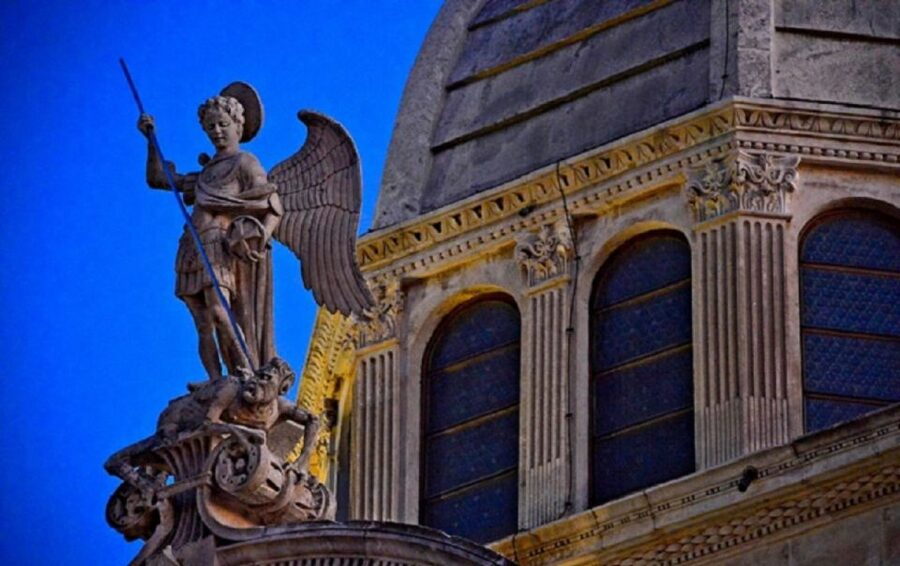
- St. Jacob’s Cathedral details that are hard to spot on your own
- A practical ending where you can head straight to nearby cafés and restaurants
- A local guide vibe that turns architecture into something you can picture
A night-meets-medieval Šibenik walk in 90 minutes
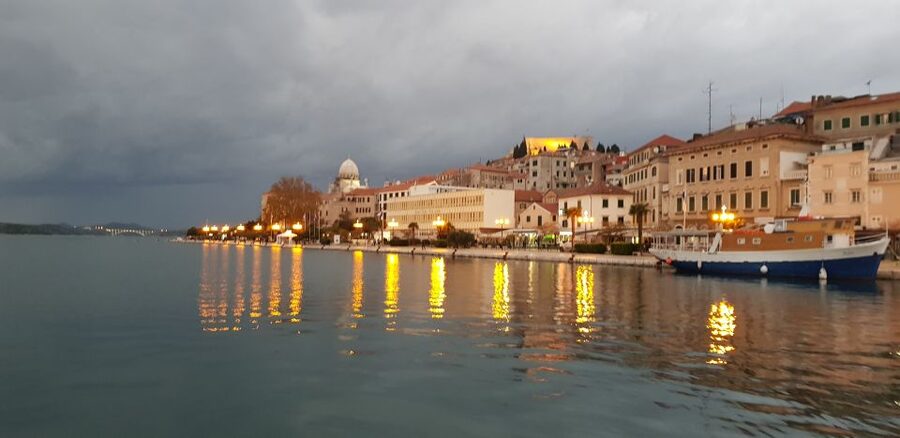
This tour is built for the moment the light changes. In the evening, Šibenik’s older streets can start to feel like you’re watching the city from the side, not just passing through it.
I like that it’s paced for discovery: you’re walking, but the guide is also pointing out what to notice. That matters in a town where a lot of the charm is in small architectural choices and street-level details.
The big idea is perspective. You’re not only seeing famous spots, you’re learning why they got built, who used them, and what makes each church or square distinct.
Down the coast to Sibenik, its cathedral and the Riviera islands.
- Vodice: Krka Waterfalls National Park Boat Tour
★ 4.6 · 250 reviews - Šibenik Riviera boat tour: Zlarin + Prvić + Tijat
★ 4.5 · 71 reviews - Sibenik: Guided Evening Walking Tour
★ 4.9 · 62 reviews - Zipline Šibenik – Čikola Canyon
★ 5.0 · 48 reviews
Starting at gat Krka: meet the orange-cap guide and move fast
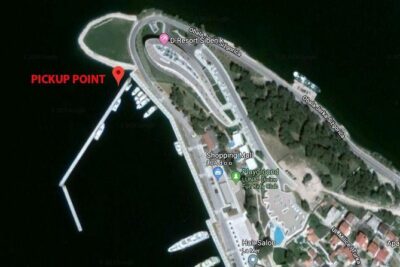
Your meeting point is simple if you arrive a little early. Meet your guide next to the lantern at the gat Krka parking lot, and look for the guide wearing an orange cap.
Aim to get there at least 5 minutes ahead. In old towns, it’s common to lose a few minutes just finding the right alley-level entrance, and you don’t want that stress before the walk starts.
There’s no hotel pickup. So plan to start from where you’re staying and head to gat Krka when you have time to spare.
And yes, comfortable shoes are not optional. The tour focuses on cobblestones and historic paths, which look romantic right up until your feet complain.
Hidden squares and the stories behind the city’s layout
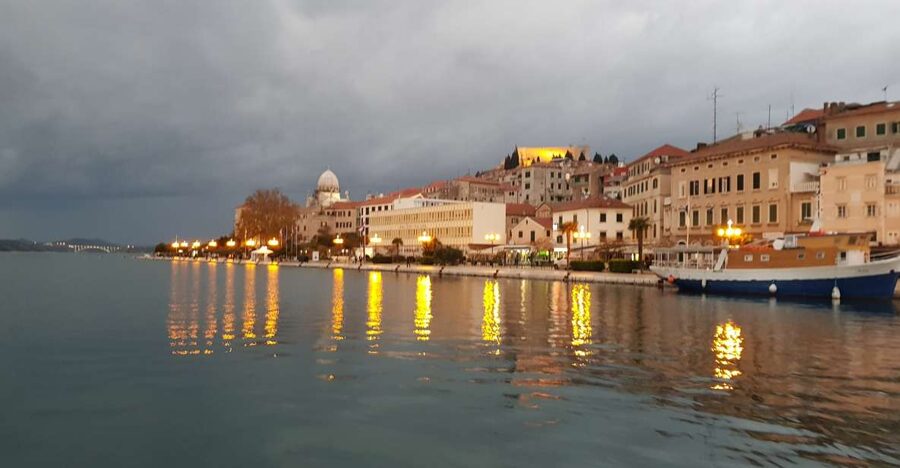
One of the best ways to understand Šibenik is to watch how the city’s streets connect. This tour takes you into the historic center and toward attractive squares that you might miss if you’re only following the main sights.
You’ll learn facts that don’t fit neatly on a brochure page. The guide connects places to people and to real local history, including who King Petar Kresimir was and why he matters to Šibenik and its people.
Another fun city puzzle: you’ll find out why the main city square is not located in the city. It’s the kind of odd detail that makes you look differently at what you see next.
St. Francis and St. Krsevan: small churches with standout reasons
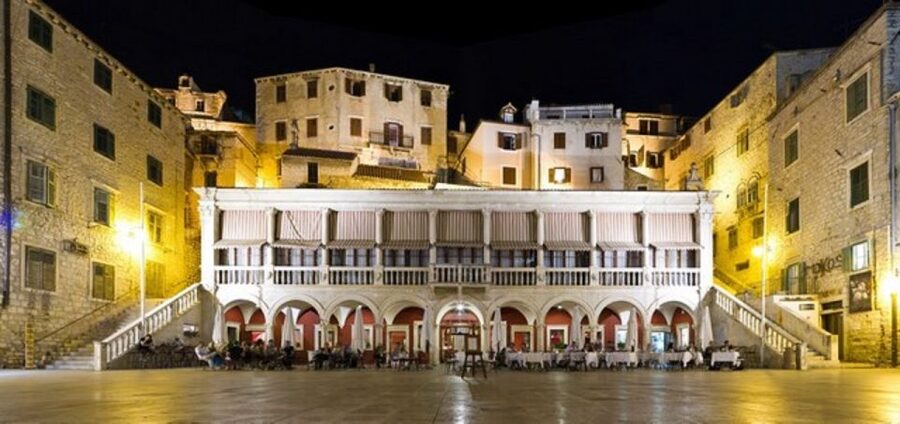
Churches in Šibenik aren’t just religious stops. They’re chapters in the city’s architecture, crafted for specific purposes and times.
You’ll hear why the church of St. Francis is more special than other churches in town. And you’ll also learn why St. Krsevan is the oldest church in Šibenik.
The practical value here is attention. On your own, you might admire the exterior and move on. With a guide, you’ll know what to look for so you can actually understand what you’re looking at.
That also helps with photos. Evening light can be tricky, but knowing what’s unique about a façade or side detail makes your images more meaningful and less random.
More days out with a local guide who knows the coast.
The Assumption Church and the bell tower memory trick
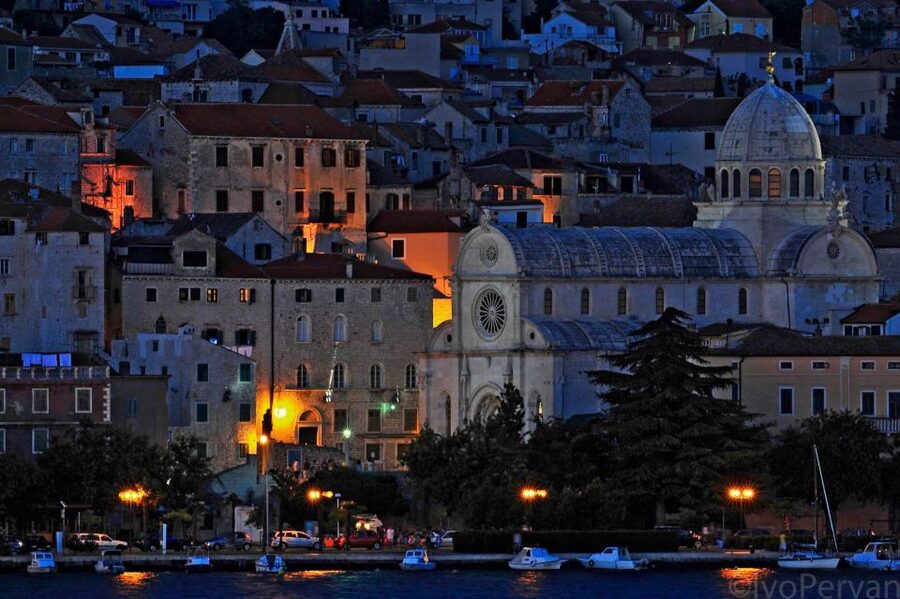
Another highlight is the church of the Assumption of the Blessed Virgin Mary and its bell tower. You’ll get a clear explanation of who uses this church and who built the bell tower.
There’s even a guide-led memory trick about the artist’s name. I love this kind of thing because it turns information into something you retain instead of something you forget five minutes later.
This is also where an evening format helps. Lighting and shadows make architectural shapes feel more dramatic, and it’s easier to notice the form of a tower when you’re not distracted by daytime crowds.
St. John the Baptist and the patron saint change
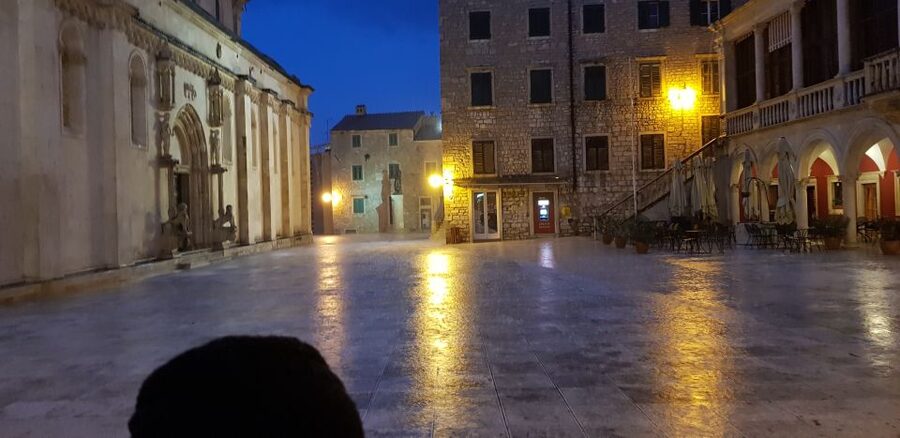
You’ll learn why the church of St. John the Baptist had special significance throughout the Middle Ages. Then there’s a twist: the patron saint changed, and the guide explains why.
This kind of detail is exactly what makes guided walking worth the money. It’s not just dates and names. It’s how the city’s identity and its religious focus shifted over time.
If you like history but hate lectures, this still works. The information is tied to the building in front of you, so it feels grounded instead of abstract.
Four Wells cistern: a medieval engineering moment
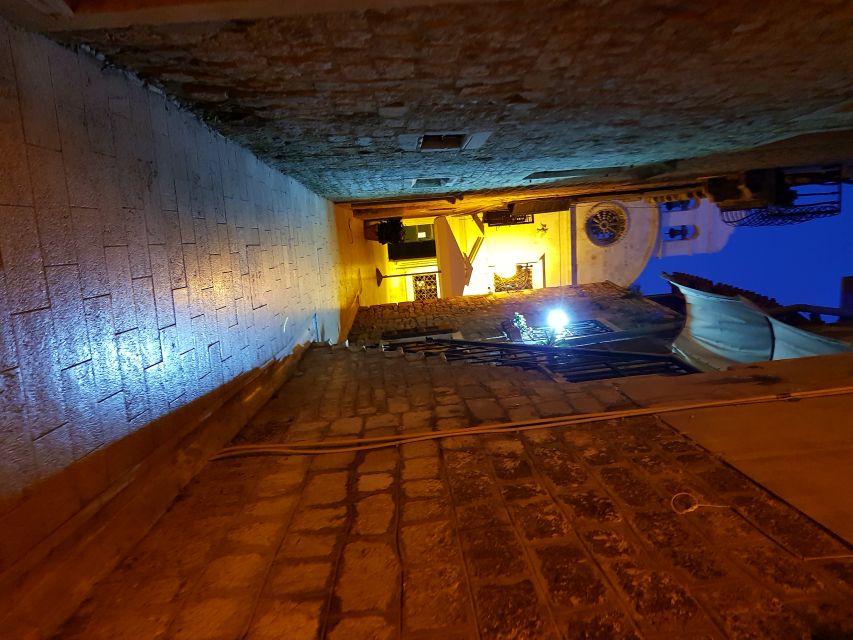
Not every stop is a church. You’ll also hear about the public town cistern called Four Wells.
The key point is timing: it was built during the Middle Ages. A cistern doesn’t sound like a tourist highlight until you realize it’s the kind of structure that keeps a city alive when water access is limited.
This is a good “breather” stop too. After a few churches and squares, the cistern gives your brain a different angle on the city—practical, functional, and still part of the old-town experience.
St. Jacob’s Cathedral: why its stonework is the star
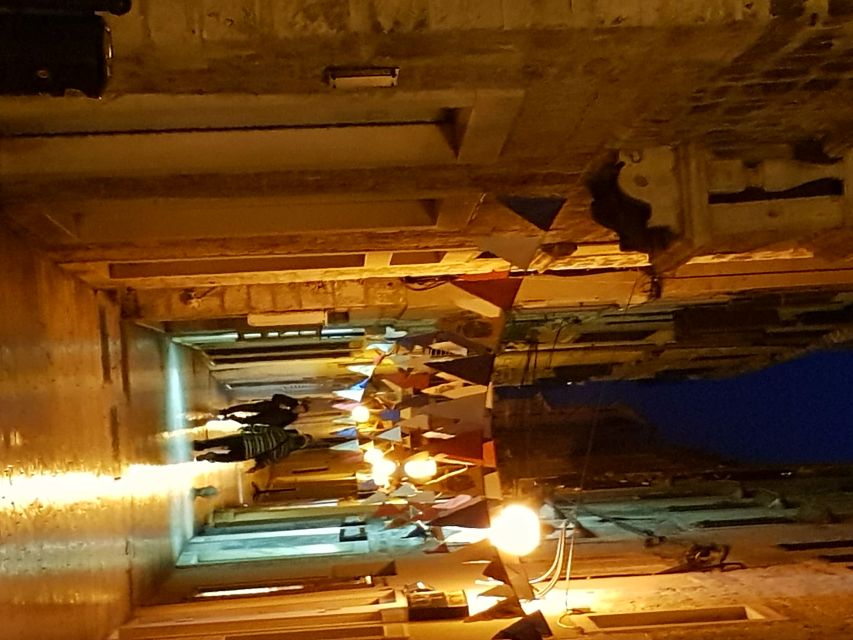
If St. Jacob’s Cathedral is the name you’ve heard most, this tour is the way to make it click. The guide explains why it’s unique not only in Croatian architecture but in European architecture as well.
First, it’s entirely built of stone. That’s already interesting, but the tour goes further into how the structure is made: a brave arrangement of stone slabs and ribs with no binding material.
Then there’s the trefoil front façade, which is distinctive in Renaissance church design. And the tour highlights one of the most memorable features: a row of 71 realistic sculptural portraits around the apses.
This is the kind of stop where you really benefit from a guide. On your own, you might admire the scale. With the explanation, you’ll notice the details that prove why the cathedral is famous.
Even if you’re not an architecture nerd, you’ll leave with a mental checklist. You’ll know what to find when you look up again.
Croatian National Theater: electric lighting and the big stage
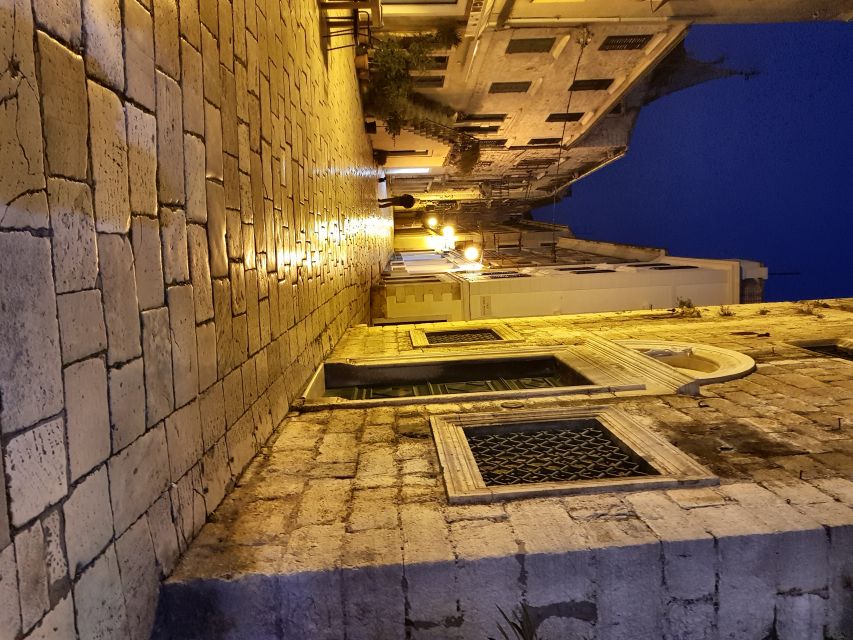
You’ll also cover the Croatian National Theater in Šibenik. The guide explains that when it was built, it was the largest and most beautiful theater in South Europe.
Then comes a detail that feels oddly modern: in 1896, the theater got electric lighting as one of the first in the world. That’s not just trivia. It’s a sign of how ambitious the city’s cultural life was becoming at the time.
This stop pairs well with the evening setting. Theater architecture often looks more striking after dark, and the lighting story makes the building feel like it was built for a new era.
St. Barbara’s church and the bells you’ll learn about
St. Barbara’s church is another memorable stop. You’ll learn why the church has four bells and when those bells ring.
That’s the kind of practical detail that changes how you listen in the city. Instead of only hearing general street noise, you can catch the sound events the guide prepared you to notice.
For me, the sweet spot with any tour is when it teaches you to use your senses better. This one does that with bells, stonework, and small architectural cues.
The main square question: seeing the city like a local
One of the tour’s most useful skills is how it trains you to look at the city’s logic. You’ll find out why the main city square is not in the city, and the guide ties that fact back to how Šibenik functions.
That may sound like a random oddity, but it’s actually helpful. It gives you a new way to interpret what you see on future walks—why some streets feel like connectors, why certain spots feel like social hubs, and why the city’s center feels different from what you might expect.
By the end, you’re not just tired. You’re oriented.
And in a place where streets can twist, being oriented is a gift.
Price and value: why $45 can make sense here
At $45 per person for 90 minutes, you’re paying for a guide and for their ability to turn stone into meaning. This isn’t a long tour, but it covers a lot of high-impact stops—churches, the cathedral, a cistern, and key city structures.
The value angle is simple: these are monuments you’d likely see on your own anyway, but you’d miss the why. The guide gives you explanations you can carry beyond the walk, like the cathedral’s stone construction approach and the stories tied to specific churches.
Also, because the tour ends with time to wander cafés and restaurants, you’re not trapped inside the experience. You get information now, then you get your own time afterward.
So if you want a quick, high-return way to understand Šibenik’s old core, this pricing feels fair.
Practical logistics that matter on an evening walk
The tour runs in the evening and lasts 90 minutes. That timing is ideal for first-day energy or for pairing with dinner plans afterward.
You’ll be walking around the historic center, and the included focus is on what you see and why it matters. Food and drinks are not included, so plan to treat the walk as the prelude to dinner rather than the full meal.
Language options are English, German, and Croatian, and you’ll want to choose a session that matches your comfort level. If you’re traveling with mixed language needs, check availability before you lock in.
Finally, it’s not listed as suitable for people with mobility impairments. If walking uneven cobblestones could be an issue, you’ll want to consider a different format.
Who should book this tour, and who may want another option
This tour is ideal if you:
- want a fast, guided introduction to Šibenik’s historic center
- like architecture and church details, but don’t want to figure it all out alone
- enjoy night atmosphere and prefer fewer crowds than daytime sightseeing
- want a local who can answer the big questions as you walk
It’s less ideal if you:
- have mobility limitations that make cobblestones and older streets hard
- prefer very long, free-form exploring with no structured stops
- want the tour to include food or drinks (it doesn’t)
If you’re the type who likes to understand what you’re looking at, this is a strong fit.
Should you book the Šibenik evening walking tour?
I’d book it if your goal is to get oriented in Šibenik and learn the stories behind the landmarks without doing a self-guided puzzle. The combination of evening mood, key monuments, and very specific architectural and historical explanations makes the $45 price feel like it earns its keep.
Skip it only if mobility is a concern or if you hate guided pacing. Otherwise, go with comfortable shoes, arrive a few minutes early at gat Krka, and let the city explain itself—one church, square, and stone detail at a time.
FAQ
How long is the guided evening walking tour in Šibenik?
The tour is 90 minutes.
What does the tour cost?
The price is $45 per person.
Where do I meet the guide?
Meet the guide next to the lantern at the gat Krka parking lot. The guide will be wearing an orange cap, and you should arrive at least 5 minutes early.
What languages are available for the live guide?
The tour is offered with a live guide in English, German, and Croatian.
What should I bring?
Wear comfortable shoes, since the tour involves walking on cobblestone streets and historic paths.
Is the tour suitable for people with mobility impairments?
No, it is not suitable for people with mobility impairments.
Can I cancel and get a refund?
Yes. You can cancel up to 24 hours in advance for a full refund.
More Tours in Sibenik

More Tour Reviews in Sibenik
More of Sibenik & the Riviera
After something else? More tours and days out around Sibenik
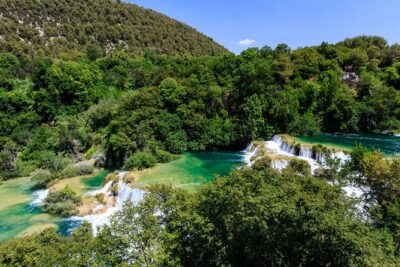
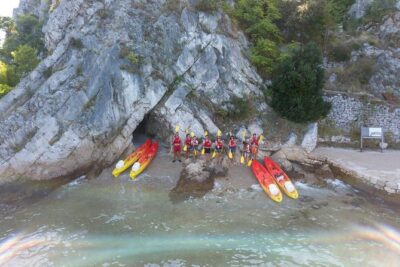
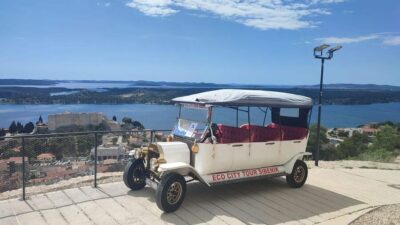
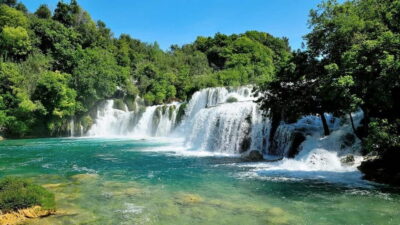
Sibenik Old Town & Riviera Tours, compared.
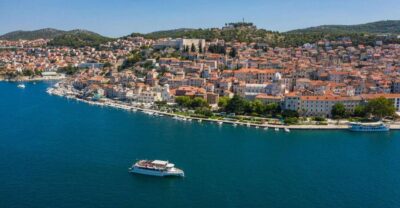 ★ 4.6Vodice: Krka Waterfalls National Park Boat TourFrom $93250 reviews
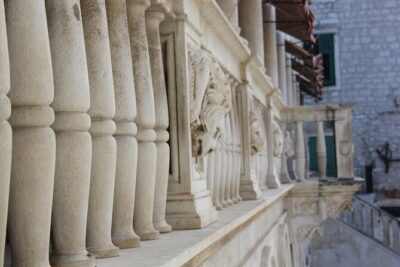 ★ 5.0Private Sibenik Walking Historical Morning or Evening TourFrom $5493 reviews
 ★ 4.5Šibenik Riviera boat tour: Zlarin + Prvić + TijatFrom $14471 reviews
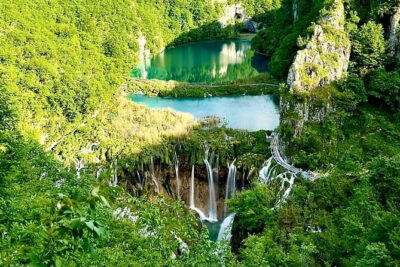 ★ 5.0Zipline Šibenik – Čikola CanyonFrom $8948 reviews
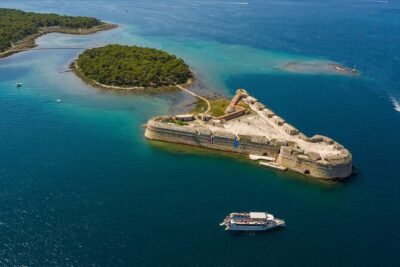 ★ 4.5Krka Waterfalls National Park Boat Tour from VodiceFrom $18043 reviews
 ★ 5.0Sibenik Private Combined Food & Drink and Historical TourFrom $17836 reviews
 ★ 4.0Kornati island National Park & Telascica Nature Park Boat Tour from VodiceFrom $8436 reviews
 ★ 4.8Panorama Tour – Eco City Tour ŠibenikFrom $1731 reviews
Browse the lists this tour appears in