
Reviewed · SIBENIK OLD TOWN & RIVIERA TOURS
From Sibenik: Private Walking Sibenik Sightseeing Tour
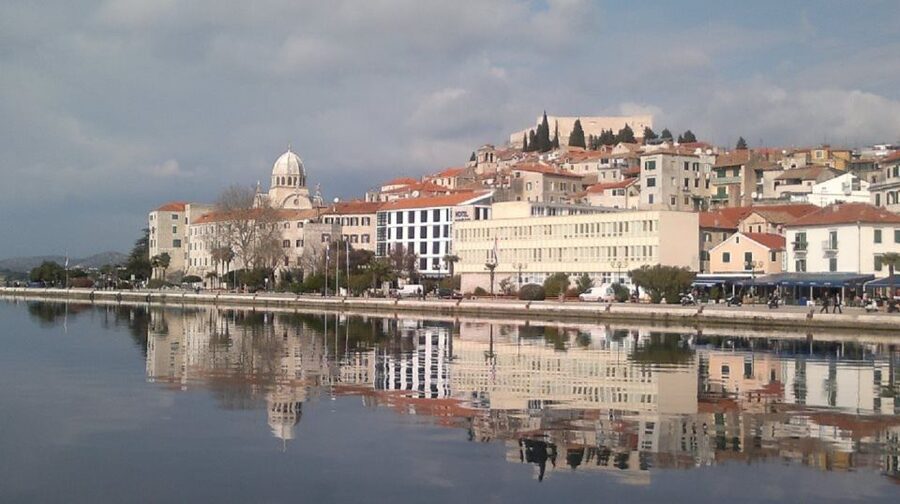
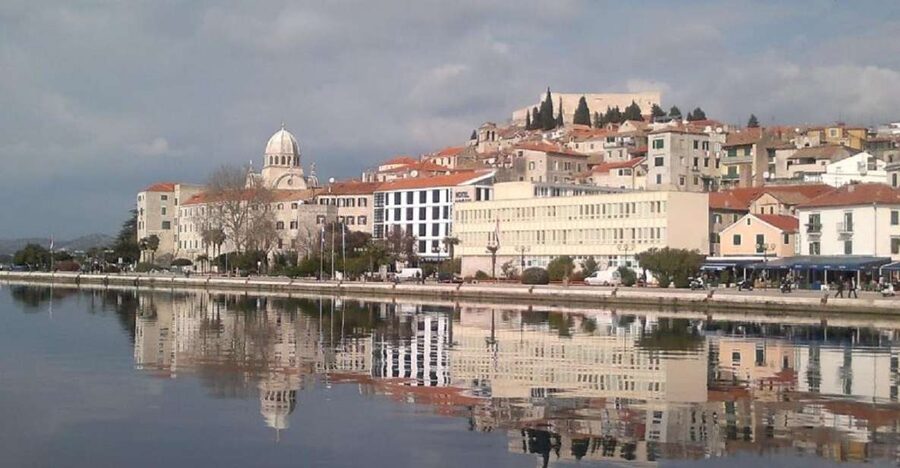
Stone streets in Šibenik feel made for wandering. This private 90-minute walk connects you with Sibenik’s unforgettable architecture and the small details that make the old town come alive, especially with guide Irena’s warm, organized storytelling. I also love that the tour mixes big-name sights like St. Jacob’s Cathedral with the smaller places that explain how the city really worked centuries ago.
A single drawback to plan around: 90 minutes moves fast. If you like to linger, you may want to save extra time afterward for the stops that pull you in most.
In This Review
- Key Things You’ll Get From This Sibenik Walking Tour
- Šibenik’s Stone Soul: Why This Walk Works
- Price and Group Value: How Much It Really Costs
- Starting on the Waterfront: Where You Meet and What to Expect
- St. Jacob’s Cathedral: The Stone Landmark You’ll Remember
- Narrow Streets and Staircases: The Real “Town” Part of Šibenik
- St. Francis, St. John the Baptist, and St. Krsevan: Church Stops With Actual Meaning
- Four Wells Cistern and Water Sense in the Old Town
- Assumption Bell Tower and St. Barbara’s Four Bells
- The Croatian National Theater and the Main Square Puzzle
- King Petar Krešimir: Power, Pride, and the City’s Story
- How Irena’s Style Makes It Flow (and Stay Fun)
- Timing, Physical Pace, and What to Do If You’re Slow-Moving
- Who This Sibenik Tour Is Best For
- Should You Book This Private Walking Tour?
- FAQ
- Where does the tour meet?
- How long is the tour?
- Is this tour private?
- What languages are available?
- What should I wear or bring?
- What’s included in the price?
- Is food or drinks included?
- Is there a cancellation option?
- Can I pay later?
Key Things You’ll Get From This Sibenik Walking Tour
- St. Jacob’s Cathedral built in stone with ribs and slabs, plus a rare trefoil front facade explained in plain words
- A guided walk through narrow streets, staircases, and old wall remains that create that true Mediterranean maze feeling
- Church stops tied to specific meanings, including why patronage changed at St. John the Baptist and why St. Krsevan matters as the oldest church in town
- City know-how moments like the Four Wells cistern and how people managed water in the Middle Ages
- Practical guidance from a guide known for stopping in the shade when the sun gets serious
Šibenik’s Stone Soul: Why This Walk Works
Sibenik isn’t trying to be flashy. It’s old, compact, and made of stone, so every corner feels intentional. That matters on a walking tour, because you’re not just seeing sights. You’re getting context for why the city looks the way it does and how people lived here.
This tour is built around the feeling that you’re moving through centuries, not ticking boxes. You’ll bounce from narrow lanes to small squares and then into major landmarks where the architecture itself tells the story. The tour also leans into the human side—belief, determination, civic pride—so the buildings don’t feel like dead monuments.
And yes, the churches are the star attraction. But the best part is how a good guide connects them to the city’s everyday reality: water supply, civic squares, and who held power. You’ll walk away understanding the logic behind the stone.
Down the coast to Sibenik, its cathedral and the Riviera islands.
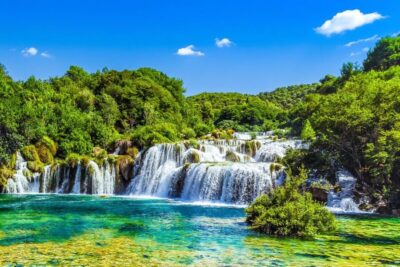
- Vodice: Krka Waterfalls National Park Boat Tour
★ 4.6 · 250 reviews - Šibenik Riviera boat tour: Zlarin + Prvić + Tijat
★ 4.5 · 71 reviews - Sibenik: Guided Evening Walking Tour
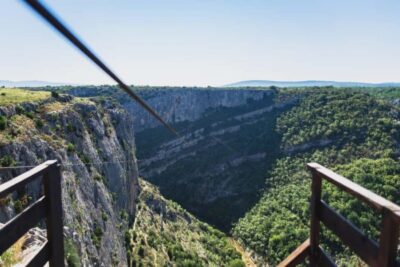
★ 4.9 · 62 reviews - Zipline Šibenik – Čikola Canyon
★ 5.0 · 48 reviews
Price and Group Value: How Much It Really Costs
The price is listed as $188 per group, for up to 20 people, for a 90-minute private tour. That can sound pricey if you’re thinking per-person, but it’s actually a group-friendly setup.
Here’s the math in real-life terms:
- If you have 2 people, you’re effectively paying $94 each.
- If you have 4 people, it’s about $47 each.
- If you have 8 people, it’s about $23.50 each.
- If you stretch it to a full group, the cost per person drops a lot.
So the value depends on how many people you can gather. If you’re traveling as a couple, it can still be worth it because the tour is focused and private. If you’re a family or a small group, this becomes one of the smarter ways to see the old town without getting stuck in a long, crowded schedule.
Starting on the Waterfront: Where You Meet and What to Expect
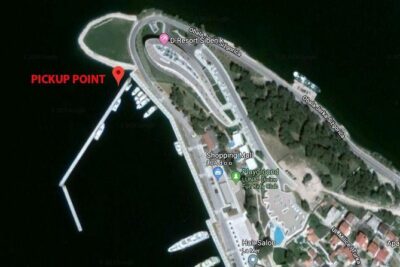
The meeting point is simple: a parking lot on the waterfront next to a gas station. It’s a practical spot because it gets you out of the traffic and into the walk quickly. Once you start heading inland, the old town’s layout does what it always does in Šibenik: it pulls you into tight streets and upward steps.
This tour is designed for real movement, not sightseeing from one wide street. Expect uneven pavement, stair sections, and a bit of weaving through narrow corners. Comfortable shoes aren’t just a suggestion here. They’re the difference between enjoying the walk and thinking about your feet the whole time.
Also note the religious-site rule: when you enter churches, shoulders and knees must be covered. Plan clothing accordingly (or bring something light you can throw on). It’s one of those small logistics items that can either smooth your tour—or slow you down at each stop.
St. Jacob’s Cathedral: The Stone Landmark You’ll Remember
If you want one stop that justifies the entire walk, it’s St. Jacob’s Cathedral. This is one of those places where you understand why people built slowly and obsessively. The cathedral took a century to complete, and your guide will frame it as an outcome of determination and sacrifice, not just a construction project.
What makes it special is its stone-only identity. The cathedral is entirely built of stone, using a brave structure with stone slabs and ribs and no binding material, which you’ll get explained in a way that doesn’t feel like a textbook. Even the facade is described as rare: a trefoil front facade that stands out in Renaissance church architecture.
The tone of this stop is also important. It’s not just about what the building looks like. It’s about what it reveals about belief and identity in the city. You’ll likely spend the most mental energy here—looking closely, then letting the guide connect what you’re seeing to the why behind it.
More private trips, just your own group and skipper.



Narrow Streets and Staircases: The Real “Town” Part of Šibenik
The old town of Šibenik is famous for its tight, winding street plan, and this tour makes you experience it rather than avoid it. Stony houses, narrow lanes, lots of staircases, and the remains of city walls all combine into a romantic Mediterranean atmosphere that feels more lived-in than staged.
This is where a private guide shines. You won’t just pass by. You’ll get small, specific explanations that turn the town into a readable map. For example, you’ll hear the kind of details that help you spot a story in the layout—how squares relate to daily life, how the city’s protective harbor context shaped the settlement, and why some parts feel like you time-traveled into the 15th or 16th centuries.
One practical note: this is a walking tour, not a car ride. Even though it’s 90 minutes, it’s enough time to get a bit of sun exposure and a bit of climbing. A guide who adapts matters here, and I noticed how well the tour’s storytelling reputation includes smart pacing, including pauses in shade when the sun gets intense.
St. Francis, St. John the Baptist, and St. Krsevan: Church Stops With Actual Meaning
The tour doesn’t treat churches like separate postcards. Each one comes with a reason, a historical thread, and a story you can carry into the next stop.
At St. Francis, you’ll learn why it’s more special than other churches in the city. Your guide will connect that uniqueness to how people thought and worshiped here, rather than just pointing out a facade.
St. John the Baptist adds the kind of detail history lovers remember: you’ll hear about its significance throughout the Middle Ages, and why its patron saint changed. That’s the sort of fact that makes a church feel less like a fixed artifact and more like part of a living timeline.
Then comes St. Krsevan, described as the oldest church in town. That makes it a powerful anchor point for understanding how the city developed over time. Even if you’re not chasing dates and names, the age difference tends to show you how long these sacred spaces shaped local identity.
If you’re the type who likes architecture, these stops help you read it like a language. If you’re more casual, they still work because the guide keeps the facts tied to meaning, not just trivia.
Four Wells Cistern and Water Sense in the Old Town
Old cities are easy to romanticize—until you remember basic survival. That’s where the Four Wells comes in. This public town cistern was built during the Middle Ages, and the tour explains how and why such a feature mattered.
Cisterns are one of those “invisible infrastructure” things. They don’t look glamorous from afar, but they can make the entire city logic click. When you understand where water came from and how people stored it, you suddenly notice that you’re walking through a designed system, not random medieval streets.
This stop is also a good pacing break. After climbing and viewing, it helps to land somewhere that feels more functional than monumental. You’ll come away with a grounded sense of what the city needed to stay alive—and how the architecture supported it.
Assumption Bell Tower and St. Barbara’s Four Bells
Two standout church-related moments in this tour are tied to sound and memory—yes, actual bells and the way people remember names and legends.
For the Church of the Assumption of the Blessed Virgin Mary, you’ll learn who uses the church and who built the interesting bell tower. The tour even includes a memory trick about how to remember the artist’s name. That’s smart guiding: it’s easier to recall details when they come with a method, not a dry list.
St. Barbara’s church brings in a very specific feature: it has four bells, and you’ll hear when those bells ring. Even if you can’t catch the bell timing on your visit, the explanation helps you understand what the bells would have meant for daily life—signals for the community and a rhythm the town could share.
These parts of the tour work especially well if you like experiences that connect senses. Visuals matter, but sound and routine add a different layer to the story.
The Croatian National Theater and the Main Square Puzzle
A big part of this tour is how it connects major civic landmarks to the city’s layout. You’ll hear about the Croatian National Theater in Šibenik, including why it was once considered the largest and most beautiful theater in South Europe. It also includes a surprising milestone: in 1896, it got electric lighting as one of the first theaters in the world.
That’s a fun pivot because it pulls Šibenik out of “only medieval.” It shows ambition and modernity moving through the same streets.
Then you’ll learn something that sounds almost too odd at first: why the main city square isn’t in the city. A good guide makes this make sense. The explanation tends to turn into a mental map—suddenly you can understand how the city’s public space worked, where people would gather, and how the old town’s design shaped movement.
If you like history that affects geography, this portion is a real win.
King Petar Krešimir: Power, Pride, and the City’s Story
The tour includes a clear answer to a question many people don’t know to ask: who King Petar Krešimir was and why he mattered to Sibenik and its people.
That type of civic history is useful because it avoids the common mistake of treating architecture as standalone. When you connect a ruler or era to the city’s development, the buildings don’t just look old. They start to look purposeful.
This is also where a guide’s tone matters. In this experience, I’d expect the storytelling to feel human—what people believed, what they sacrificed, and how pride shaped choices. It’s the difference between memorizing dates and understanding why a town keeps telling the same stories.
How Irena’s Style Makes It Flow (and Stay Fun)
The standout from multiple accounts is the guide herself—Irena. Her reputation includes being warm and friendly, and the tour is described as entertaining and easy to follow rather than stiff.
There are also practical touches that you’ll appreciate if you’re traveling with anyone who needs attention. One booking noted that Irena worked with a small child, and another highlighted her excellent German. That’s a strong sign that the tour adjusts to real people, not just an ideal group.
I also like that the approach includes smart pacing. At least one account notes she paused in shade so the tour stayed comfortable in the sun. That matters more than people expect. A walking tour is only enjoyable if the guide keeps the body in mind, not just the facts.
And if you like practical extras, one account mentioned restaurant tips after the tour. That’s exactly the kind of helpful local guidance that makes a sightseeing morning turn into a satisfying plan for lunch.
Timing, Physical Pace, and What to Do If You’re Slow-Moving
Ninety minutes isn’t a long time. It’s enough to get the core of the old town and the biggest architectural points. It’s not enough to treat every church stop like a full museum visit.
So here’s how I’d plan your expectations:
- Go with the flow and let the guide choose what to emphasize.
- If something grabs you, plan a return visit later on your own.
- Wear shoes you don’t mind on old uneven stone.
Because religious venues require covered shoulders and knees, you should also think about what you’ll wear and whether you can adjust quickly. A simple layer strategy can save your time and keep the tour smooth.
Who This Sibenik Tour Is Best For
This tour fits best if you want architecture with explanation, not just photos. If you like walking, you’ll enjoy the narrow-street experience and the way the guide builds connections between stops.
It also makes sense for:
- Couples who want a high-value, private format in a compact city
- Small groups who can split the group cost
- Families who benefit from a guide who can adapt attention
- History-minded travelers who like specific facts tied to places
If you’re traveling with limited mobility, the stair-heavy streets might be tough. The tour data doesn’t claim accessibility features, so I’d treat comfortable walking as a requirement rather than a nice-to-have.
Should You Book This Private Walking Tour?
Book it if you want a focused, story-driven introduction to Šibenik’s most important stone landmarks, with a guide who brings personality and practical pacing. The mix of major sights like St. Jacob’s Cathedral plus meaningful church and civic details—like the Four Wells cistern and the bell stories at St. Barbara—makes this more than a standard walk.
Skip it or plan differently if you need lots of free time at each stop. The 90 minutes are designed to cover key points, which means you’ll be moving with purpose. If you want a slow sit-down pace, add extra time to your schedule and come back after the tour.
If your goal is to understand why the city looks the way it does, and not just what it looks like, this tour is a strong bet.
FAQ
Where does the tour meet?
It meets at a parking lot on the waterfront, next to a gas station.
How long is the tour?
The tour lasts about 90 minutes.
Is this tour private?
Yes, it’s a private group experience.
What languages are available?
The live guide is available in Croatian, English, and German.
What should I wear or bring?
Wear comfortable shoes. For religious venues, shoulders and knees must be covered.
What’s included in the price?
Guide services and taxes are included.
Is food or drinks included?
No. Meals and drinks are not included.
Is there a cancellation option?
Yes. You can cancel up to 24 hours in advance for a full refund.
Can I pay later?
Yes. The booking is set up so you can reserve now and pay later.
More Tours in Sibenik

More Tour Reviews in Sibenik
More of Sibenik & the Riviera
After something else? More tours and days out around Sibenik



Sibenik Old Town & Riviera Tours, compared.
 ★ 4.6Vodice: Krka Waterfalls National Park Boat TourFrom $93250 reviews
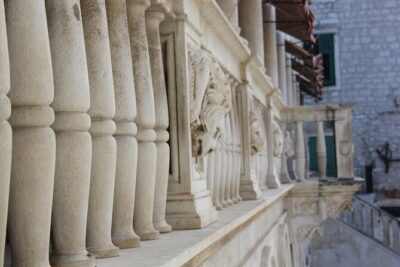 ★ 5.0Private Sibenik Walking Historical Morning or Evening TourFrom $5493 reviews
 ★ 4.5Šibenik Riviera boat tour: Zlarin + Prvić + TijatFrom $14471 reviews
 ★ 4.9Sibenik: Guided Evening Walking TourFrom $4562 reviews
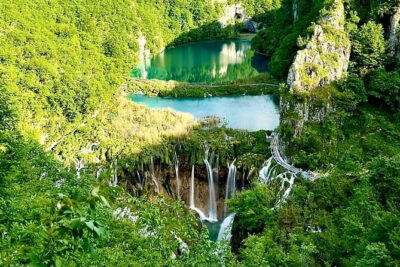 ★ 5.0Zipline Šibenik – Čikola CanyonFrom $8948 reviews
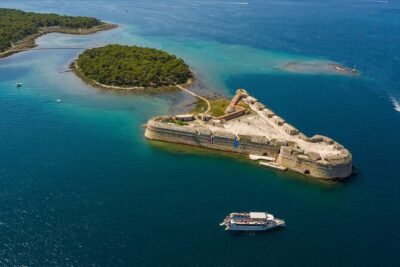 ★ 4.5Krka Waterfalls National Park Boat Tour from VodiceFrom $18043 reviews
 ★ 5.0Sibenik Private Combined Food & Drink and Historical TourFrom $17836 reviews
 ★ 4.0Kornati island National Park & Telascica Nature Park Boat Tour from VodiceFrom $8436 reviews
Browse the lists this tour appears in