
Reviewed · SIBENIK OLD TOWN & RIVIERA TOURS
Sibenik: Guided Walking Tour
Šibenik hits you with history fast, in the best way. This 90-minute walking tour is built to help you read the city in real time, from the Adriatic waterfront to the UNESCO showdown of St. James’s Cathedral. You’ll also get the bigger picture—how the first city came to be, and what the day-to-day feels like now.
I especially like how the tour mixes “what you’re seeing” with “why it matters.” The guide points out details you’d normally miss, and keeps things moving with stories that are both clear and amusing.
My only caution: this is a no-stairs-no-problem type of walk? Not really. It’s not suitable for people with mobility impairments, and you’ll want comfortable shoes for uneven old-town surfaces.
In This Review
- Key things that make this Šibenik tour worth your time
- Starting at Gat Krka: the waterfront warm-up that sets the tone
- The Riva (Embankment): where the sea meets local routines
- Perivoj Roberto Visiani: a shady garden pause in the city center
- Poljana Square: old buildings, modern life, and a place people actually use
- Narrow Old Town streets: learning the maze instead of suffering it
- St. James’s Cathedral: Renaissance stonework and those 70 carved faces
- Price and value: how $57 stacks up in real terms
- Timing, pace, and what to bring so you enjoy it
- Private group and languages: who this format suits best
- The guide style: history with personality, not a lecture
- Should you book the Šibenik Guided Walking Tour?
- FAQ
- Where is the meeting point for the tour?
- How long is the Šibenik guided walking tour?
- What languages are available for the live guide?
- Is the St. James’s Cathedral entrance included?
- What should I bring?
- Is the tour suitable for people with mobility impairments?
Key things that make this Šibenik tour worth your time
- Riva first, cathedral last: you get an easy waterfront start and a big finale at St. James’s Cathedral
- Perivoj Roberto Visiani: a calm garden break in the middle of sightseeing
- Poljana Square context: you learn what the city’s public spaces do for daily life
- Old Town navigation help: narrow lanes become understandable, not just pretty
- Stone-carving highlight: the cathedral exterior’s “70 human faces” detail is a must-see
Starting at Gat Krka: the waterfront warm-up that sets the tone
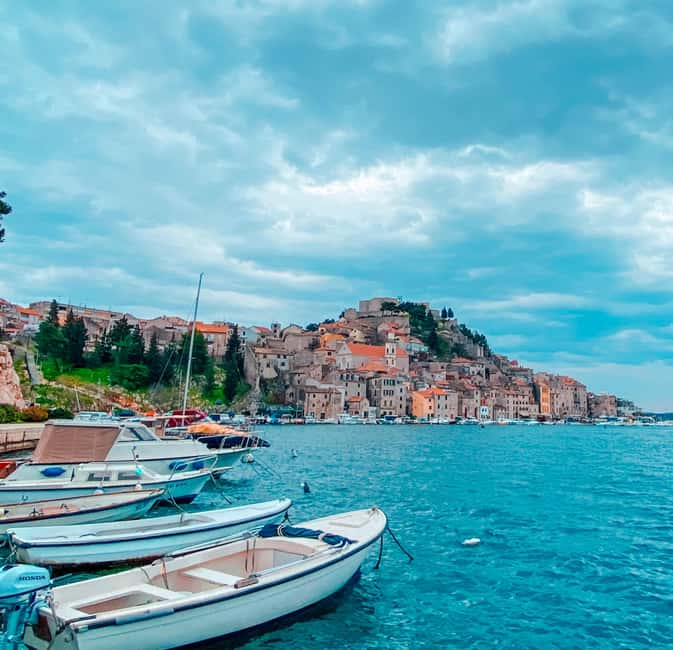
The tour begins at Gat Krka, a parking lot on the waterfront—right by the gas station. It’s a practical start point. You’re already in the right area, with the sea nearby, so you’re not spending your first minutes hunting for the correct street.
From there, the guide’s job is basically to get your bearings fast. Instead of treating sightseeing like a checklist, the walk frames Šibenik as a city shaped by its coastal position and its layered past. You’ll learn to connect landmarks you might otherwise experience as separate photo stops.
And yes, there are plenty of places where you’ll naturally slow down—because the views over the water make you. The tour uses that momentum well: you arrive, you look, and then you start understanding.
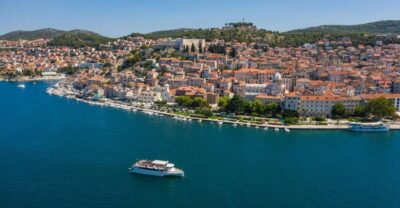
Down the coast to Sibenik, its cathedral and the Riviera islands.
- Vodice: Krka Waterfalls National Park Boat Tour
★ 4.6 · 250 reviews - Šibenik Riviera boat tour: Zlarin + Prvić + Tijat
★ 4.5 · 71 reviews - Sibenik: Guided Evening Walking Tour
★ 4.9 · 62 reviews - Zipline Šibenik – Čikola Canyon
★ 5.0 · 48 reviews
The Riva (Embankment): where the sea meets local routines
Your first real “Šibenik moment” is the Riva, the embankment promenade. This is where the Adriatic shows off, but it’s also more than scenery. You’ll get an orientation to the city’s layout and the way people move along the water.
Expect an introduction that’s grounded in daily life: cafes and restaurants along the waterfront, a sense of activity without chaos, and a feel for why this stretch became such an important public space.
If you like travel that makes you smarter as you wander, this part works. It’s not just look-at-the-sky time. The guide helps you notice how the city grew around the shoreline—and how that still affects what locals see every day.
Practical tip: if the day is warm, you’ll appreciate that your first stop is already outdoors with plenty of open air. Just remember you’ll still need water later, especially once you’re back into older lanes.
Perivoj Roberto Visiani: a shady garden pause in the city center
After the waterfront, you walk to Mediterranean Park (Perivoj Roberta Visianija). This is the kind of stop that makes a guided walk feel worth it, because it changes the pace and gives your brain a breather.
The park is described as a lush oasis in the heart of Šibenik, with fragrant flowers, shady trees, and Mediterranean plants. The best part is the context: it’s named after the Croatian botanist Roberto de Visiani, so you’re not just taking a scenic break—you’re learning why this place has a name and a purpose.
I like that the guide doesn’t treat the park as an in-between photo spot. It’s used as a quick lesson in local identity and how nature and city life sit side by side here.
If you tend to wander into parks and then forget what you saw, a guided explanation helps. Even a short stay like this makes you remember the overall feel of the city.
Poljana Square: old buildings, modern life, and a place people actually use
From the park, you head to Poljana Square, described as the main square of Šibenik. This is where “history” stops being a museum word and becomes part of everyday movement.
You’ll see important landmarks around the square, plus shops and cafes. The guide points out the mix of old and new architecture—historical buildings standing beside more modern structures. That contrast matters, because it shows you that Šibenik isn’t frozen. It keeps living.
This is a smart stop for first-timers. Squares like Poljana are natural navigation anchors. After you’ve spent time here, the old-town streets you’ll walk next start to make more sense, because you understand what the square does in the city’s map and rhythm.
If you’re the type who likes to take a breath, this is a good place to do it. Watch how people use the space, then continue when you feel recharged.
More days out with a local guide who knows the coast.

Narrow Old Town streets: learning the maze instead of suffering it
Then comes the labyrinth: the narrow cobblestone streets of Šibenik’s Old Town. This section is where a guided walk can save you time and frustration.
Without help, you might end up with great photos and little understanding. With a guide, those winding passages become a story—stone houses, hidden courtyards, small shops tucked into corners. You start noticing patterns and meaning, not just visual charm.
The tour aims to cover the past and present, so the guide typically uses the street layout and architectural cues to explain what changed over time and what stayed important. For you, that means the old town doesn’t feel random. It feels organized by centuries.
One note: this is walkable, but you’ll want comfortable shoes. Cobblestones can be slippery when wet and tough on tired feet. If you plan to do more walking after the tour, consider saving energy now.
St. James’s Cathedral: Renaissance stonework and those 70 carved faces
The finale is St. James’s Cathedral, a UNESCO World Heritage site and a real highlight of Šibenik. If you care about architecture, plan to spend a little extra time looking at the details the guide calls out.
The cathedral is described as a Renaissance masterpiece built entirely of stone without the use of mortar. That’s a huge deal, and it explains why the building feels so solid and intentional when you see it in person.
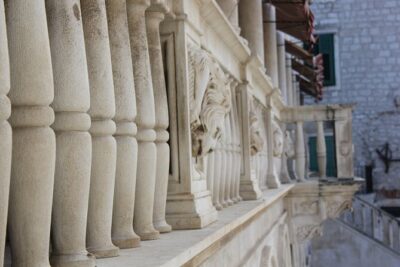
Here’s the standout detail you don’t want to miss: the exterior has intricately carved friezes with over 70 human faces, believed to represent citizens of Šibenik during the 15th century. This is the kind of feature that sounds like a trivia line—until you’re staring at it and realizing how much expression and individuality are packed into stone.
Your guide should explain the construction, historical significance, and unique architectural features. When it’s done well, this stop transforms the cathedral from a “pretty building” into a place with human presence. Those faces make it feel less like history and more like a snapshot of real people.
One practical thing to plan for: the cathedral entrance fee is €5 per person and is not included in the tour price. So if you want to go inside, budget that extra cost.
Price and value: how $57 stacks up in real terms
The tour costs $57 per person and runs about 90 minutes. For the time, that’s a pretty solid price point for a guided, structured walk that covers multiple key areas—waterfront, garden, square, old streets, and the cathedral.
Here’s the value equation that matters:
- You’re paying for interpretation, not just movement. The guide helps connect the old parts of Šibenik to the realities of today.
- You get a clear route with a strong ending point at the UNESCO site.
- Taxes are included, so you don’t have to mentally untangle what’s in the base price.
Your main add-on is the cathedral entry: €5 if you choose to go in. If you add that to your total, you’re still likely getting a good deal compared to paying separately for a private guide or multiple paid stops.
If you’re visiting for the first time and want the city’s story in a tight window, the price makes sense. It’s the kind of tour that helps you avoid the “I saw it, but I don’t know what I saw” problem.
Timing, pace, and what to bring so you enjoy it
The tour is 1.5 hours, which is a sweet spot. Long enough to learn the city’s themes, short enough that you’re not stuck on your feet all afternoon.
You should bring:
- Comfortable shoes
- Water
That’s it—and it’s honest. The walk is outdoors for portions and includes old-town surfaces, so your feet will want support. Water matters because you’ll be exposed to sun and wind in a coastal city.
Also, because it ends at the cathedral area, you can usually keep going afterward in that same part of town—great if you like stretching a trip by adding a short wander or a coffee nearby.
Private group and languages: who this format suits best
This is set up as a private group, and the live guide offers English, Croatian, and Russian. A private format is especially useful when you want your pace respected—asking questions without feeling like you’re slowing a bigger group down.
It also tends to work well if you:
- want first-timer context without information overload
- like asking “why” questions about history and architecture
- prefer a more personal feel instead of a crowded, rush-through experience
The one clear mismatch: it’s not suitable for people with mobility impairments. If that’s you, it’s worth looking for an alternative tour format with accessibility accommodations.
The guide style: history with personality, not a lecture
What makes this walk feel good is the way the guide teaches. The tone described is friendly and engaging, with interesting details you wouldn’t get from a basic guidebook. There’s also mention of funny, light touches—exactly the kind of humor that keeps history from turning into a dry script.
That matters because Šibenik’s attractions can be mistaken for separate sights: Riva, gardens, squares, streets, cathedral. A strong guide ties them together into one storyline: the past and how it still shapes today’s life.
If you’ve had experiences where you learn dates but not meaning, this tour is aiming at meaning.
Should you book the Šibenik Guided Walking Tour?
If you want a smart first pass through Šibenik—Riva to UNESCO cathedral—in just 90 minutes, I think this is a good booking. The structure is practical, the route covers the city’s core character, and the guide approach focuses on how Šibenik worked then and works now.
Book it if:
- you’re in Šibenik for a short time and want an efficient orientation
- you care about architecture details, especially St. James’s Cathedral
- you like your history explained with personality
Skip it if:
- you need an accessibility-friendly walking route
- you prefer wandering without any guided context
If you do book it, wear shoes you trust, bring water, and plan for the optional €5 cathedral entrance so the ending doesn’t surprise you.
FAQ
Where is the meeting point for the tour?
The tour meets at Gat Krka, a parking lot on the waterfront next to the gas station.
How long is the Šibenik guided walking tour?
It lasts about 90 minutes.
What languages are available for the live guide?
The guide speaks English, Croatian, and Russian.
Is the St. James’s Cathedral entrance included?
No. The entrance fee to the cathedral is €5 per person and is not included.
What should I bring?
Bring comfortable shoes and water.
Is the tour suitable for people with mobility impairments?
No, it is not suitable for people with mobility impairments.
More Tours in Sibenik

More Tour Reviews in Sibenik
More of Sibenik & the Riviera
After something else? More tours and days out around Sibenik





Sibenik Old Town & Riviera Tours, compared.
 ★ 4.6Vodice: Krka Waterfalls National Park Boat TourFrom $93250 reviews
 ★ 5.0Private Sibenik Walking Historical Morning or Evening TourFrom $5493 reviews
 ★ 4.5Šibenik Riviera boat tour: Zlarin + Prvić + TijatFrom $14471 reviews
 ★ 4.9Sibenik: Guided Evening Walking TourFrom $4562 reviews
 ★ 5.0Zipline Šibenik – Čikola CanyonFrom $8948 reviews
 ★ 4.5Krka Waterfalls National Park Boat Tour from VodiceFrom $18043 reviews
 ★ 5.0Sibenik Private Combined Food & Drink and Historical TourFrom $17836 reviews
 ★ 4.0Kornati island National Park & Telascica Nature Park Boat Tour from VodiceFrom $8436 reviews
Browse the lists this tour appears in