

Reviewed · ZADAR OLD TOWN WALKING TOURS
Zadar: Evening Walking Tour of the Old Town
Stone that sings? Zadar at dusk does. This short evening walking tour lines up the Old Town’s key squares with the unforgettable Sea Organ, so you get both a quick city orientation and a real sensory moment without spending half your day wandering.
I especially love how the route hits Zadar’s big icons in smart order, with Kalelarga doing the job of a natural main street and the churches giving you context for why the peninsula mattered for centuries. One drawback: with lots of major stops packed into about 70 minutes, you’ll want to move with the group and treat it as an overview, not a slow deep study.
In This Review
- Key takeaways before you go
- Zadar at dusk: a 70-minute old town overview that actually clicks
- Starting at Trg Pet Bunara: how the tour sets your bearings
- Kalelarga and the Forum: the spine of the Old Town
- Five Wells Square to People’s Square: plazas that tell you where you are
- St. Donatus Church and St. Anastasia’s Cathedral: two landmark stops, one payoff
- Sea Organ by the promenade: Nikola Bašić’s sound you can feel
- Why the evening timing matters (and how to make it work)
- Price and value: $28 for an English guide and the right mix of stops
- Who this tour is best for
- Should you book the Zadar Evening Walking Tour of the Old Town?
- FAQ
- How long is the Zadar Evening Walking Tour of the Old Town?
- Where do I meet the guide?
- What sights are included on the walk?
- Is the tour available in English?
- How much does the tour cost?
- Can I swim during the Sea Organ stop?
- Is there free cancellation?
Key takeaways before you go
- Sea Organ by Nikola Bašić, in real time: the sea pushes air through pipes and whistles as boats pass
- Kalelarga is the perfect backbone: the Old Town’s most popular street keeps the walk feeling focused
- Forum, Five Wells Square, and People’s Square: key plazas that help you read the city
- St. Donatus Church and St. Anastasia’s Cathedral: two landmark stops that anchor your photos and questions
- A guide who tells stories, not just dates: guides such as Jasmina, Marija, and Marina come up in English-language reviews
- It works best in the evening light: softer skies make the promenade and sea stops feel more special
Zadar at dusk: a 70-minute old town overview that actually clicks
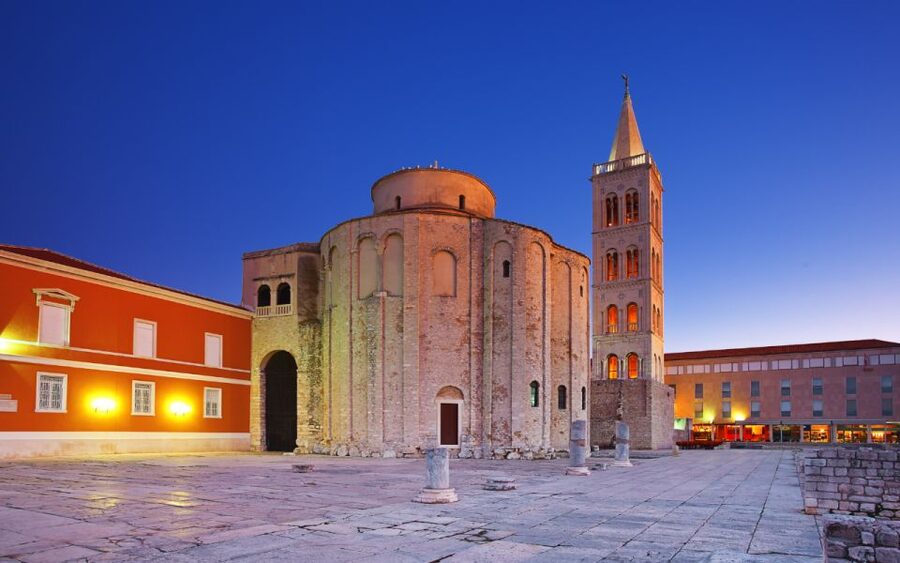
This is the kind of tour that feels built for real travel days. You’re in Zadar’s Old Town peninsula, surrounded by city walls and close to the seaside promenade, and in about one hour you cover the main sights you’d otherwise piece together on your own. It’s a helpful way to get your bearings fast, especially if you’re only in town for a day or two.
What I like most is the balance between “look at this” and “listen to this.” The Old Town stops give you structure, while the Sea Organ gives you the wow factor that makes Zadar memorable after you leave. And because it’s a guided walk in English, you’re not just walking past landmarks—you’re learning what they were for and why locals still care.
More walks around the old town, the Roman forum and the Sea Organ.
- Zadar: Plitvice Lakes with Boat Ride and Zadar Old Town Tour
★ 4.9 · 1,368 reviews - From Zadar: Plitvice Lakes with Boat Ride & Zadar Old town tour
★ 5.0 · 1,129 reviews - Zadar: Guided Walking Tour
★ 4.8 · 445 reviews - Krka Waterfalls, Food & Wine Tasting, Boat Ride & Zadar Old Town
★ 5.0 · 420 reviews
Starting at Trg Pet Bunara: how the tour sets your bearings
You meet at Trg Pet Bunara (Pet Bunara Square), often called Five Wells Square. It’s a strong start point because it sits right in the thick of the Old Town—easy to find, easy to orient yourself, and close to the places you’ll be walking toward anyway.
Right away, the guide gives a city introduction before you start moving. That matters more than it sounds. Zadar’s peninsula layout can feel compact and slightly confusing at first glance, but once you understand the city’s shape—peninsula, walls, main squares, and the pull toward the water—you’ll read everything you see next with less effort.
You’ll also begin with the feel of the Old Town itself: planted park areas and the sense of being inside a walled, historic pocket rather than just walking through streets. That sets the mood for what comes next.
Kalelarga and the Forum: the spine of the Old Town
After getting oriented, you head through the Old Town’s core sights, including places tied to everyday public life like the Forum and the main pedestrian artery, Kalelarga.
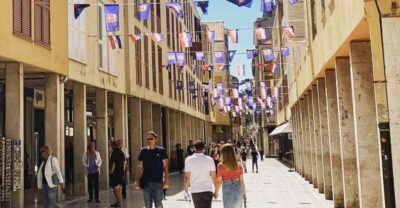
Kalelarga is the tour’s obvious highlight because it’s Zadar’s most popular street. That popularity isn’t random. It’s where people naturally gather, where shops and cafes line the route, and where you get that classic Old Town rhythm: pass a landmark, then turn a corner and suddenly you’re in another square-feeling pocket.
The Forum stop adds value by giving the landmarks more meaning. Instead of treating buildings as photo props, you get a sense of how civic space worked here. Even if you don’t plan to become a local-history buff, a quick explanation of what a forum represented helps you notice things you might otherwise ignore—like how the squares relate to movement and gathering.
Practical tip: on a guided walk like this, your best “homework” is paying attention to the guide’s directional cues. If you know what you’re approaching next—square, church, seaside steps—you’ll take better photos because you’ll be ready when the view opens.
Five Wells Square to People’s Square: plazas that tell you where you are
The tour doesn’t just swing from one big name attraction to another. It threads through major squares such as People’s Square and uses Five Wells Square as your starting anchor.
Plazas in old cities are more than open space. They’re where people paused, where public announcements happened, and where the city’s life condensed into a walkable radius. When you pass through these areas with an explanation, you start to see Zadar as a connected system rather than a list of monuments.
This is also where an engaging guide really shows. In English-language reviews, guides such as Jasmina, Marija, and Marina are praised for telling stories in a captivating way and speaking English clearly. That kind of presentation turns a short walk into something you remember, instead of something you quickly forget.
More to do once the sun is off the water.


St. Donatus Church and St. Anastasia’s Cathedral: two landmark stops, one payoff
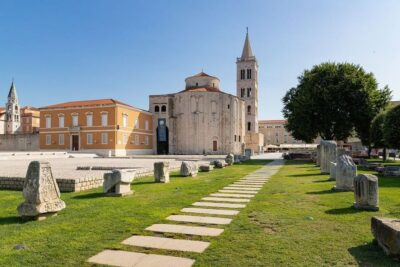
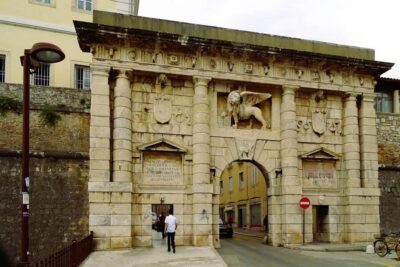
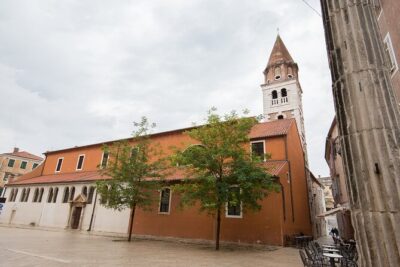
Mid-tour, you’ll reach the two church landmarks highlighted on the route: St. Donatus Church and St. Anastasia’s Cathedral.
I like these stops because they’re not just “big buildings to point at.” They help you understand how Zadar’s old center organized power, faith, and identity. You’ll get context that ties the churches to the wider story of the Old Town you’ve already started to map in your head.
One more small but useful advantage: churches are usually among the best places to slow down briefly, even on a short tour. They give you an easy visual reference point—once you’ve seen them, you can later remember what direction the sea is in, and where the main street likely leads.
Possible consideration: since this is only about 70 minutes, you won’t have time to do everything like a full-entry sightseeing day. If you want long interior time, plan a separate visit after the tour. Treat this walk as your compass, then let your curiosity choose what to revisit.
Sea Organ by the promenade: Nikola Bašić’s sound you can feel
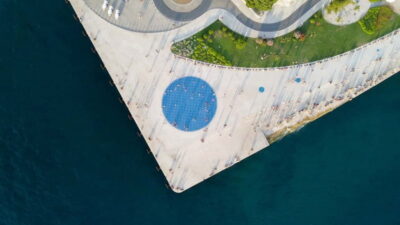
Then comes the part people remember: the Sea Organ, designed by local architect Nikola Bašić.
The description is almost too poetic to be real—until you’re standing there. The Sea Organ is built into perforated stone steps that descend into the sea. Beneath the surface, there’s a system of pipes and whistles. As waves push air through that system, you hear mournful, mellifluous tones that can grow louder when the water movement changes—like when a boat or ferry passes by.
What makes it special is that it’s not a recording or a staged performance. The ocean is the instrument. If you pause and listen for a minute or two, you’ll start noticing how the sound shifts with the rhythm of the water.
You can even swim from the steps off the promenade while listening to the sounds. That’s a big deal if you like doing things that feel local and slightly adventurous—though it also means you should be ready for water and stone steps.
How to get the most out of the Sea Organ stop:
- Stand still for a moment so your ears catch the pattern
- Keep your eyes on the waterline for changes when boats pass
- If you want to swim, do it safely and keep an eye on wave movement
Why the evening timing matters (and how to make it work)
This is an evening walking tour, and that timing pays off mainly in two ways. First, the Old Town feels more relaxed as the day cools. Second, the Sea Organ and promenade area benefits from softer light—your walk feels less like sightseeing chores and more like a night out that happens to include history.
Some guides manage to line up the experience so you catch the kind of scenery people remember after dinner: sunset tones near the water, and the Sea Organ sounding at its best when movement in the sea picks up. If you can, choose a start time that gives you a real chance at that light.
Even if you don’t catch sunset perfectly, evening still makes sense because it turns Zadar into a place where you can hear the city as well as see it. That’s rare for a short walking tour.
Price and value: $28 for an English guide and the right mix of stops
At $28 per person for a roughly 70-minute English-guided walk, the value is really about concentration. You get:
- A guided overview of multiple Old Town main sights
- The key street Kalelarga
- Landmark stops like St. Donatus Church and St. Anastasia’s Cathedral
- The standout sensory attraction, the Sea Organ
If you’re paying for individual tickets or trying to build your own route from scratch, the cost adds up in time and confusion. A guide compresses the learning curve. Even if you’re an independent walker, this kind of guided “city map in motion” is often the fastest route to understanding what you’re looking at.
Also, the review pattern matters: people rate this tour highly for being informative and enjoyable, with guides described as enthusiastic and engaging—so you’re not just buying a walk, you’re buying a storytelling layer that makes the sights stick.
Who this tour is best for
I’d put this tour high on the list if you:
- Want a quick, guided orientation to Zadar’s Old Town
- Like the idea of a short walk that ends with a memorable sensory attraction
- Enjoy learning through stories, not just reading plaques
- Are traveling solo, as a couple, or with friends who want a shared plan
It’s less ideal if you:
- Want long, slow time at each sight
- Prefer strictly self-guided wandering with no pacing
- Are hoping for a full museum-and-interiors day
Should you book the Zadar Evening Walking Tour of the Old Town?
Book it if you want Zadar in one tight package: Old Town squares, Kalelarga, two major church landmarks, and the Sea Organ sound experience designed by Nikola Bašić. The 70 minutes is short enough to fit almost any schedule, and the payoff is high because one stop turns your ears into part of the sightseeing.
I’d skip it if you already have a tight plan for Zadar that’s mostly food and self-guided roaming, or if you’re planning a deeper church/museum day and want maximum time inside.
If you want my practical rule: do this tour early in your trip or the evening you arrive. It helps you decide what to revisit next—because once you’ve heard the Sea Organ and learned the city’s layout, Zadar becomes easier to explore on your own.
FAQ
How long is the Zadar Evening Walking Tour of the Old Town?
The tour lasts about 70 minutes.
Where do I meet the guide?
You meet at Trg Pet Bunara (Pet Bunara Square) in Zadar.
What sights are included on the walk?
The route includes major Old Town sights such as Forum, Five Wells Square, Kalelarga, People’s Square, St. Donatus Church, St. Anastasia’s Cathedral, the Sea Organ, and other key points.
Is the tour available in English?
Yes, the live tour guide speaks English.
How much does the tour cost?
It costs $28 per person.
Can I swim during the Sea Organ stop?
The tour information says you can swim from the steps off the promenade while listening to the Sea Organ.
Is there free cancellation?
Yes. You can cancel up to 24 hours in advance for a full refund.
More Tours in Zadar



More Tour Reviews in Zadar

More Old Town Walks
After something else? More tours and days out around Zadar




Zadar Old Town Walking Tours, compared.
 ★ 4.9Plitvice Lakes with Boat Ride and Zadar Old Town TourFrom $531,368 reviews
 ★ 5.0Plitvice Lakes with Boat Ride & Zadar Old town tourFrom $541,129 reviews
 ★ 4.8Guided Walking TourFrom $17445 reviews
 ★ 5.0Krka Waterfalls, Food & Wine Tasting, Boat Ride & Zadar Old TownFrom $52420 reviews
 ★ 5.0Zadar City Tour 120min WalkFrom $32203 reviews
 ★ 5.0Zadar Walking Tour sponsored by Gligora Cheese and deli.From $18119 reviews
 ★ 4.4Virtual Reality Guided History Walking TourFrom $3586 reviews
 ★ 4.7Private Walking Tour Through 3,000 Years of HistoryFrom $28871 reviews
Browse the lists this tour appears in