
Reviewed · ZADAR OLD TOWN WALKING TOURS
Zadar City Tour 120min Walk
Zadar has a way of sounding and glowing right on the promenade. This 120-minute Old Town walk turns a short visit into a guided path through Roman leftovers, medieval churches, and two of Zadar’s most famous waterfront installations. I love how the route mixes big landmarks with small details, and I also like that the group stays small for an actually conversational pace.
The biggest win is the way local guides, often people like Dorja or Ivan, connect architecture to real stories. You get clear explanations of what you’re looking at, plus context about Croatia that goes past dates and includes how the city moved through the war period and recovered. If your group has the food stop option, you may also pick up a free taste of local maraschino liqueur and cheese along the way.
One consideration: this tour is mostly exterior viewing. Several major stops are listed as no entrance, and there’s no plan for toilet breaks, so build in a quick restroom moment before you meet up. It’s also not recommended if you have mobility limits, because you’ll be walking through uneven historic streets.
In This Review
- Key things to know before you go
- Entering Zadar Fast: Why 2 Hours Works
- Meeting Up and the Pickup Option (So You Don’t Lose Time)
- The Walk Starts With the Greeting to the Sun
- Sea Organ: The Promenade’s Soundtrack
- Cathedral of Saint Anastasia: Big Romanesque, No Rush
- The Forum: Roman Zadar in One Concentrated Moment
- St. Donatus: The Rotunda That Defines the Skyline
- Benedictine Monastery of St. Maria: Art Exposition Without the Entry
- Sea Gate, Loggias, and Narodni trg: The Old Town’s Everyday Center
- St. Simon and the Big Sarcophagus: A Stop for Craft and Faith
- Rector’s Palace, Five Wells, Captain’s Tower: Public Power in Stone
- Perivoj kraljice Jelene: A Public Park Break
- Land Gates Finale (Including the Evening Option)
- Price and Value: Is $32.67 Worth It?
- Who This Zadar Walk Suits Best
- Should You Book This Tour?
- FAQ
- How long is the Zadar City Tour walk?
- Is the tour offered in English?
- Does the tour include pickup?
- What’s included with the tour ticket?
- Are entry tickets to churches and other institutions included?
- Are toilet breaks included?
- Is this tour suitable for children or mobility needs?
Key things to know before you go
- Small-group pacing keeps the walk from feeling like a sprint through Zadar’s old streets.
- Sea Organ plus Greeting to the Sun give you two memorable waterfront moments, both easy to spot and explain.
- Two guides I’ve seen referenced by name (Dorja and Ivan) focus on making history understandable in plain English.
- Most stops are outside (Roman ruins, gates, squares), so you’re there for the sights and storytelling rather than museum time.
- Free extras may appear on the route such as a medieval church entry or a maraschino/cheese tasting, depending on the day.
- Pickup is optional for travelers who select it, using a vehicle pickup setup rather than meeting by foot only.
Entering Zadar Fast: Why 2 Hours Works

If you only have a morning or early afternoon in Zadar, this tour format is built for exactly that reality. Two hours is long enough to link major sites together, but short enough that you still have time afterward to wander on your own.
What I like most is the way it gives you sequence. You start with the waterfront-scale installations, then move inland to Roman forums and medieval churches, and finish with gates, squares, and public spaces. That order matters because it helps you understand why Zadar’s old town looks the way it does: layers stacked over centuries instead of one single “old Zadar” snapshot.
More walks around the old town, the Roman forum and the Sea Organ.
- Zadar: Plitvice Lakes with Boat Ride and Zadar Old Town Tour
★ 4.9 · 1,368 reviews - From Zadar: Plitvice Lakes with Boat Ride & Zadar Old town tour
★ 5.0 · 1,129 reviews - Zadar: Guided Walking Tour
★ 4.8 · 445 reviews - Krka Waterfalls, Food & Wine Tasting, Boat Ride & Zadar Old Town
★ 5.0 · 420 reviews
Meeting Up and the Pickup Option (So You Don’t Lose Time)
The meeting point is central for the main walking session, and the tour is designed to be simple to find once you know what to look for. For guests who selected pickup, you’re not hunting around on foot. Look for a black minivan with the ZADAR CITY TOUR logo, and your driver will have your name on paper.
A couple of practical tips matter here:
- Pickup and drop-off happen right around the tour itself; requests beyond that need approval in advance.
- Communication for pickup time and place is handled through the platform messaging system, email, or WhatsApp—so check those messages the day before.
- If you’re arriving by cruise ship, Zadar has two ports. If your ship docks in the central area in front of the meeting zone, pickup might not be needed.
The end location is different from the start, so don’t plan an immediate close-by reservation at the meeting spot. Keep your next stop flexible, or plan it for after you’ve walked a few minutes away.
The Walk Starts With the Greeting to the Sun
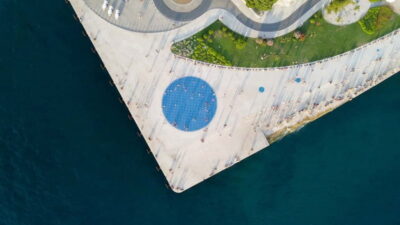
Your tour begins at the installation representing Zadar’s solar system. It’s easy to recognize once you know the visual cues: the guide looks for you near the installation with a white umbrella marked for the tour, and the group gathers around the solar-themed artwork on the floor.
This stop is short, but it’s not random. It’s a clever way to set the tone: Zadar isn’t only about what’s old. It also modernized its public art so the city feels alive even now. And if you return later, the Greeting to the Sun is the kind of spot that changes with time—especially as you approach evening.
Sea Organ: The Promenade’s Soundtrack
Next comes the Sea Organ, one of Zadar’s signature installations. It looks like a staircase formed in the shape of a piano keyboard, sitting right along the promenade. The main idea is simple and memorable: the sea drives the sound.
The most useful part of this stop is the explanation you get while you stand there. You learn how passing water triggers air through pipes in the walkpath, turning wave energy into notes. It’s the kind of “how is this possible?” moment that makes you pay attention to your surroundings instead of just taking photos.
If you’re going in warmer weather, plan to linger a bit with your group. Even when the tour time is tight, this is one of those installations where you’ll want a few minutes to watch the water and listen.
More ways to see the city itself.





Cathedral of Saint Anastasia: Big Romanesque, No Rush

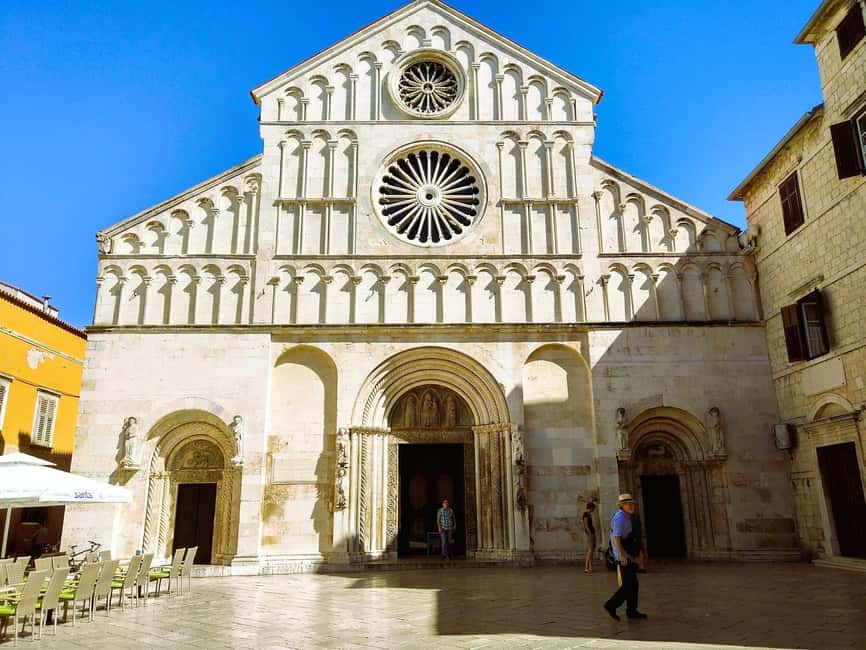
Then you move to the Cathedral of Saint Anastasia, described as the biggest Romanesque church in Dalmatia. This is a key stop for orientation because it anchors the next cluster of medieval and Roman sites.
You won’t go inside here, and that matters if you’re expecting a timed interior visit. Still, the exterior viewing gives you a sense of scale and style. It also helps you connect the city’s religious identity to its civic history—Zadar is constantly mixing sacred and public spaces.
The Forum: Roman Zadar in One Concentrated Moment
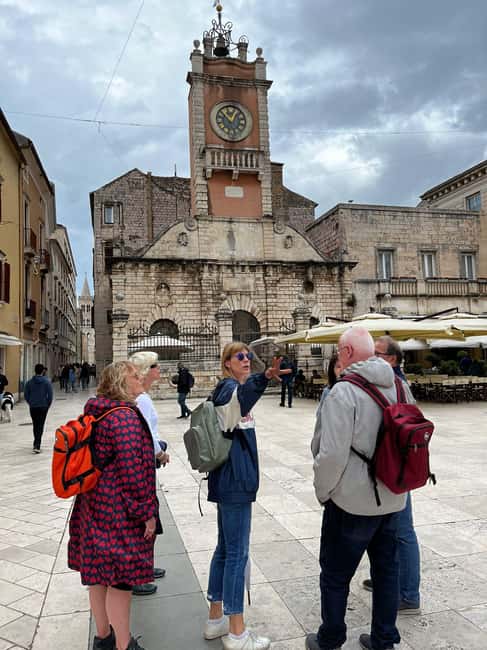
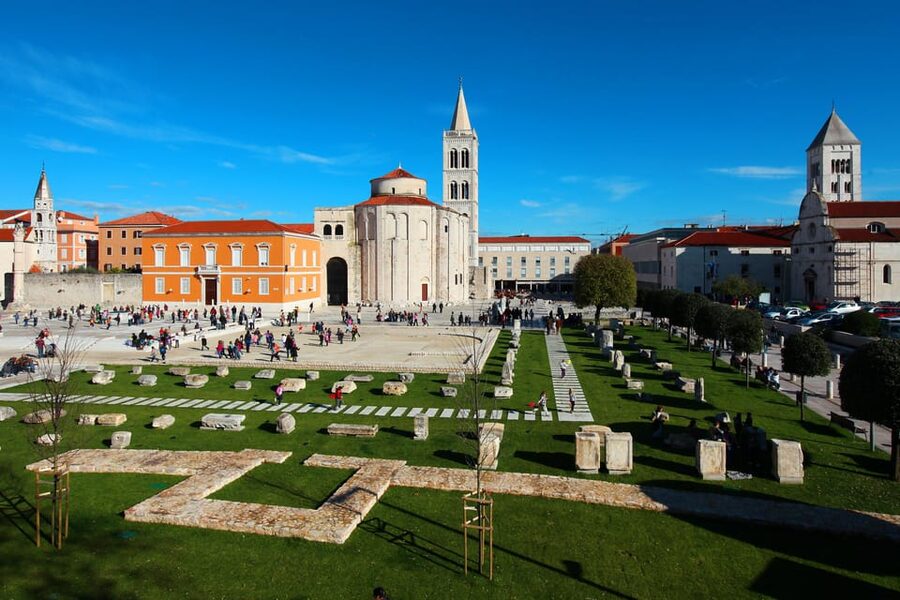
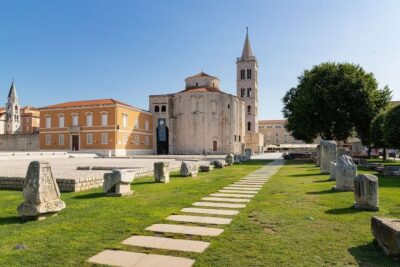
After the cathedral, you reach the Forum—an actual first-century BC Roman forum area located on the peninsula of Zadar. This stop is valuable because it’s where the tour’s story shifts from “buildings” to “city planning.” You’re not just looking at a church; you’re looking at where public life used to happen.
The forum stop is free time, and the ruins you see around you give you enough to imagine daily life: the Roman layout, the surrounding remnants of architecture, and the idea that this area served as a center point long before modern Zadar was even a concept.
If you’re the type who likes maps in your head, this is where the tour clicks. The guide’s walking explanations help you mentally connect pieces without needing a museum placard.
St. Donatus: The Rotunda That Defines the Skyline
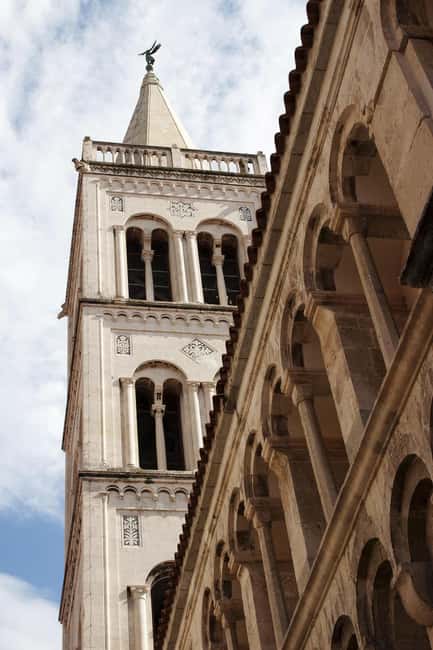
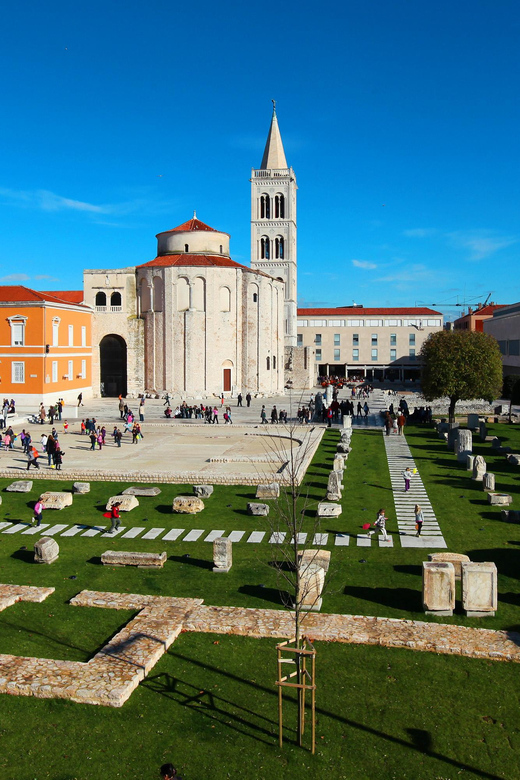
Next is the Church of St. Donatus, a ninth-century structure built in a pre-romanesque style. The standout feature is that huge rotunda sitting in the Roman forum area. It’s one of those buildings you can spot even if you’re not trying—you see the form, then you realize it’s right in the middle of the older Roman setting.
You also won’t enter here, so treat this as a stop for shape, texture, and context. The value is understanding why that rotunda matters: it visually links Zadar’s spiritual identity to the older Roman spine of the city.
Benedictine Monastery of St. Maria: Art Exposition Without the Entry
The Benedictine Monastery of St. Maria is a compact stop that still adds something. You learn that this 11th-century feminine convent includes a Renaissance church and that it holds a permanent exposition of religious arts.
Again, no entrance on this stop, so you won’t get inside to see everything in person. But the guide’s framing helps you understand why the site exists in this space and what kind of religious art and practice shaped the city. This is the kind of stop that’s easy to skim—don’t. Even from the outside, it helps the overall story feel less like a highlight reel and more like a living urban layer cake.
Sea Gate, Loggias, and Narodni trg: The Old Town’s Everyday Center
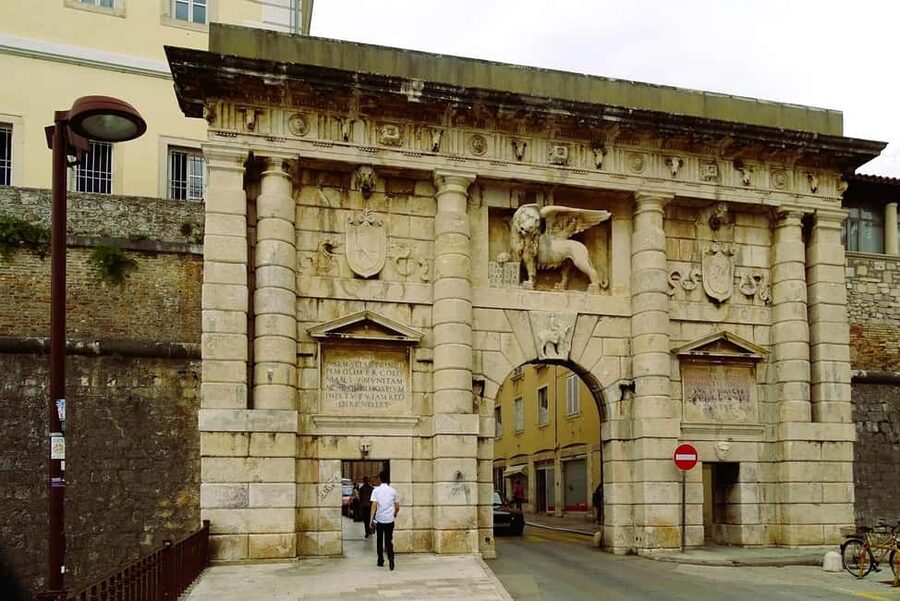
Then the tour starts moving through more “street-level Zadar.” You’ll see the Sea Gate (Morska vrata), a 16th-century structure with Roman elements. It’s a nice reminder that protection and trade routes shaped the city just as much as churches did.
From there you reach Narodni trg, a medieval square. The surrounding loggia and the city guard vibe gives you a feel for the civic rhythm of Zadar: not just ceremonies, but everyday gatherings. This is one of those spaces where it becomes easier to imagine yourself walking through the old town without a guide.
St. Simon and the Big Sarcophagus: A Stop for Craft and Faith
Church of St. Simon is another exterior viewing moment. The note here is the saint’s body inside a huge 14th-century sarcophagus, described as a goldsmith’s masterpiece. You won’t enter, but the guide’s explanation makes the object feel less like a random detail and more like a centerpiece of local devotion and craftsmanship.
If you’re a fan of religious art history, you’ll probably wish you had time for more interior stops. If you’re not, you’ll still find this a quick, interesting break that doesn’t derail the pace.
Rector’s Palace, Five Wells, Captain’s Tower: Public Power in Stone
As you keep moving, the tour highlights the civic and governance side of Zadar.
- Knezeva Palaca (Rector’s Palace): recently restored, and important enough to stop by even if you don’t go in.
- Five Wells: a Renaissance square with five well crowns. This is a charming kind of stop because it’s functional history turned into a visual feature.
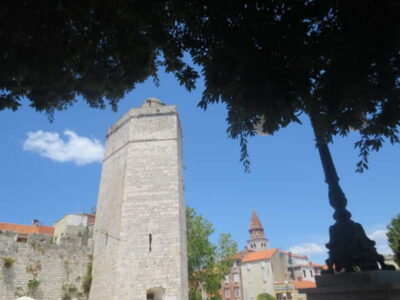
- Captain’s Tower: medieval crown walls and an exterior-only look.
These stops are short by design. That’s not a flaw—it’s how you cover ground while still giving the guide time to connect the dots. By the time you reach these, you’re no longer asking what building is where. You’re asking how the city was organized, protected, and run.
Perivoj kraljice Jelene: A Public Park Break
One of the more pleasant moments comes at Perivoj kraljice Jelene Madijevke, noted as one of the first public parks in Croatia. Even a five-minute pause here can break up the walking and help you reset.
This stop also reflects a subtle but important point: Zadar’s old town isn’t only stone and religion. It has places designed for people to pause and recover, even inside a tight historic footprint.
Land Gates Finale (Including the Evening Option)
The tour can start from the Zadar Land City Gates area for an evening session at 18:30, with the guide waiting by the bikes. The Land Gate is a large Venice Republic land gate built in the form of a triumphal arch, which makes a strong visual ending (or beginning).
If you’re going to the evening session, you’ll probably get a better sense of how the city looks when daylight fades. If you’re on the earlier session, you can still chase that sunset glow independently afterward at the Greeting to the Sun area.
Price and Value: Is $32.67 Worth It?
At about $32.67 per person for roughly two hours, the value depends on what you want from your day.
Here’s what you get for your money:
- A guided walk through major Old Town landmarks without you needing to plan each turn.
- A small group size (up to 16), which usually keeps the tour friendly and helps you hear explanations.
- Optional extras that can include free entrance to a medieval church or maraschino/cheese tastings on the way.
- The experience is offered in English, with mobile ticketing, and in some cases pickup.
Where it may not feel like full value is if your goal is interior access. Several stops are explicitly no entrance, and there are no ticketed institution entries included. For that kind of visit, you’d need a different type of tour focused on museums or churches with paid admission.
But for first-timers, or for anyone who loves walking history, this price lands in the fair zone because you’re buying interpretation and flow—how the city layers connect—rather than a checklist of ticketed interiors.
Who This Zadar Walk Suits Best
This is a strong match if you:
- Want a clear overview of Old Town Zadar in about two hours.
- Prefer a small-group style with time to ask questions and listen.
- Like Roman and medieval architecture, especially when someone explains what you’re seeing in plain terms.
- Enjoy a mix of major landmarks (Sea Organ, St. Donatus) and smaller civic details (gates, wells, towers).
It’s not ideal if you:
- Need a lot of interior time, because multiple stops are exterior-only with no entrance.
- Have mobility constraints, since it’s a walking route through a historic area.
- Want kid-friendly activity time, since it’s not suitable for children.
Should You Book This Tour?
Yes—if you want a smart, time-efficient introduction to Zadar’s most important sights, this tour format makes a lot of sense. The standout for me is the combination of two iconic waterfront installations plus Roman and medieval layers, explained by guides such as Dorja or Ivan in clear English. Add the chance for a free tasting, and it becomes a practical, low-stress way to see a lot without spending the whole day “figuring it out.”
If you’re traveling with high mobility needs or you’re mainly chasing ticketed interiors, you may want to skip this specific walk and look for a tour with more indoor access and fewer exterior-only stops.
FAQ
How long is the Zadar City Tour walk?
It runs for about 2 hours.
Is the tour offered in English?
Yes, the tour is offered in English.
Does the tour include pickup?
Pickup is available only if you book the option with pickup. If you chose it, you’ll look for a black minivan with the ZADAR CITY TOUR logo and your driver will have your name.
What’s included with the tour ticket?
The tour includes the guided walk and a mobile ticket. Depending on the day, you may also get possible free entrance to a medieval church or maraschino/cheese tastings.
Are entry tickets to churches and other institutions included?
No. Entrances to institutions that charge tickets are not included. Several listed stops are also marked as no entrance.
Are toilet breaks included?
No, toilet breaks are not included.
Is this tour suitable for children or mobility needs?
It’s not suitable for children, and it’s not recommended for travelers with mobility issues.
More Tours in Zadar



More Tour Reviews in Zadar

More Old Town Walks
After something else? More tours and days out around Zadar




Zadar Old Town Walking Tours, compared.
 ★ 4.9Plitvice Lakes with Boat Ride and Zadar Old Town TourFrom $531,368 reviews
 ★ 5.0Plitvice Lakes with Boat Ride & Zadar Old town tourFrom $541,129 reviews
 ★ 4.8Guided Walking TourFrom $17445 reviews
 ★ 5.0Krka Waterfalls, Food & Wine Tasting, Boat Ride & Zadar Old TownFrom $52420 reviews
 ★ 5.0Zadar Walking Tour sponsored by Gligora Cheese and deli.From $18119 reviews
 ★ 4.4Virtual Reality Guided History Walking TourFrom $3586 reviews
 ★ 4.7Private Walking Tour Through 3,000 Years of HistoryFrom $28871 reviews
 ★ 4.8Culinary Walking Tour with Food TastingsFrom $12863 reviews
Browse the lists this tour appears in