
Reviewed · ZADAR OLD TOWN WALKING TOURS
Zadar: Virtual Reality Guided History Walking Tour
VR history in Zadar is more than a slideshow. This 2-hour walking tour uses 360° VR to rebuild key moments as you stand in the old town. It’s a fun, focused way to connect what you see today with what stood here centuries ago.
I especially love how the tour blends real walking with VR that explains the why, not just the what. You get an English-speaking assistant who brings you to the right spots, keeps things moving with a simple user interface, and answers questions along the way.
One possible drawback: the VR visuals aren’t always cutting-edge, and the headset may need occasional help. If you’re picky about image sharpness, this is the main trade-off to know up front.
In This Review
- Key things worth knowing before you go
- Time Travel in Zadar’s Old Town: What the VR Walk Feels Like
- Where You Meet: Finding the Tour by the Sea Gate
- The OculusGo Setup: You Don’t Need Tech Skills
- Old Town Reconstructions: Roman Forum, the City Market, and the Crusades
- St. Chrysogonus’ Church: The Stop You Usually Can’t Do
- The Aerial Look: Peninsula Views Like a Hot-Air Balloon
- WWII from Air and Sea: Seeing Destruction Without the Trauma
- Price and Value: What $35 Buys You in 2 Hours
- Who This Works Best For (and who might want to skip)
- Small Details That Make a Big Difference
- Should You Book the Zadar VR Guided History Walking Tour?
- FAQ
- How long is the Zadar VR guided history walking tour?
- Where is the meeting point?
- What does the $35 price include?
- Are there multiple audio guide languages?
- Do I need to bring ID?
- Is the tour wheelchair accessible?
- Is food or drinks included?
- Can I cancel for a full refund?
- What should I expect from the VR setup?
Key things worth knowing before you go
- 360° views on location turn familiar streets into time portals
- Roman Forum, Crusade-era Zadar, and WWII scenes are built into the route
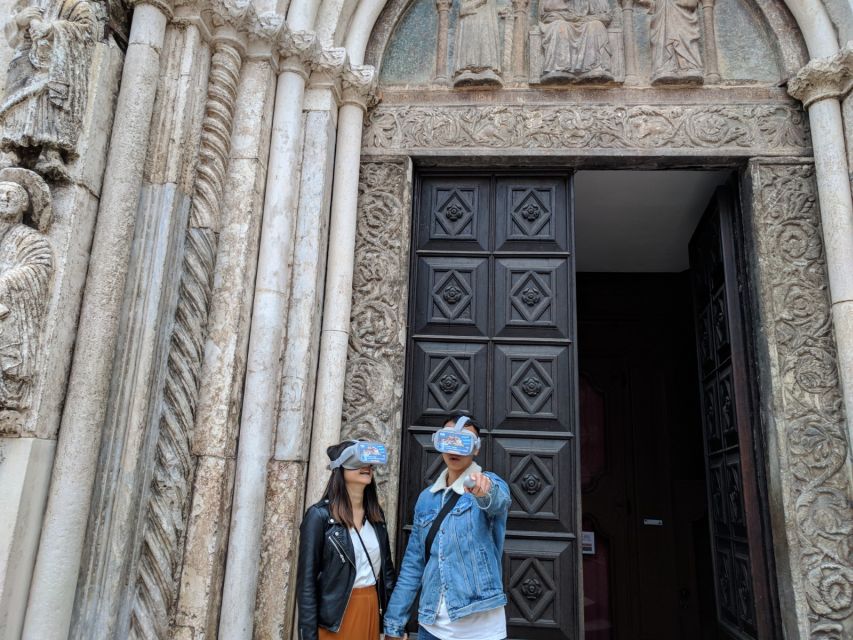
- St. Chrysogonus’ Church gets included even though it’s usually closed to the public
- Simple controls let you move through the experience without being techy
- Assistant support matters since VR pauses can require a bit of guidance
- Short, compact explanations keep the walk from dragging
Time Travel in Zadar’s Old Town: What the VR Walk Feels Like
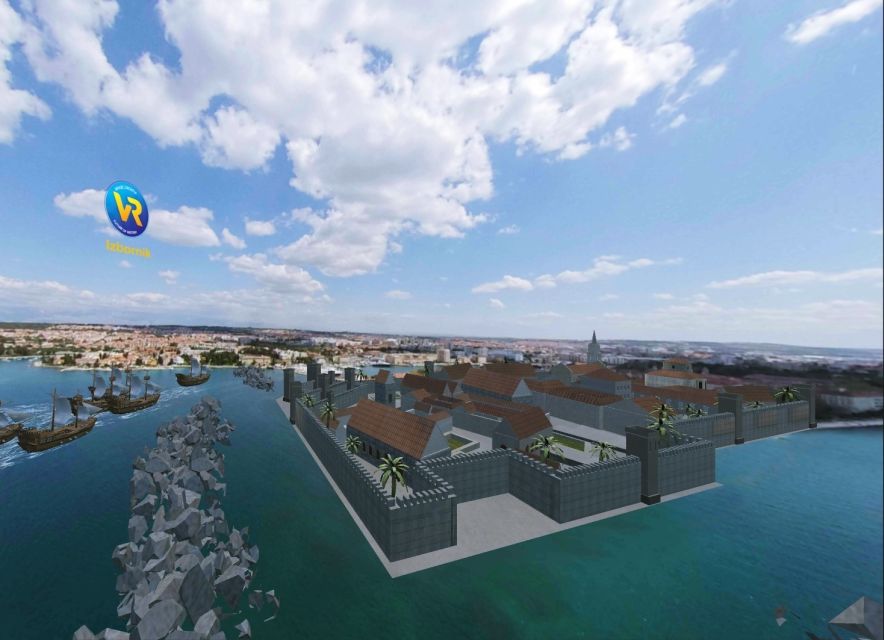
You start out in today’s Zadar, then the tour quietly switches you into “then.” The pacing is smart: you’re walking from place to place, and the VR moments are timed to help you understand what that spot likely meant in another era.
The big win is that you’re not asked to imagine history. Instead, you stand where the action used to happen, then look around as reconstructed scenes layer in. It’s the difference between reading about a city and actually placing yourself inside the story.
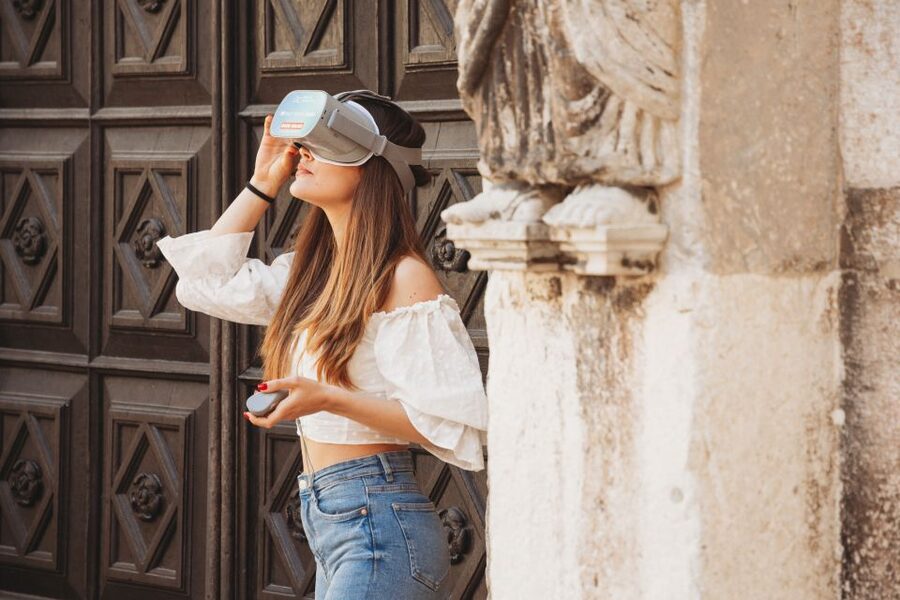
The setup is also designed to be low-stress. You’re given the OculusGo All-in-One headset and a controller, but you’re not expected to master complicated steps. The assistant is there to guide you through the flow and help if something isn’t cooperating.
More walks around the old town, the Roman forum and the Sea Organ.
- Zadar: Plitvice Lakes with Boat Ride and Zadar Old Town Tour
★ 4.9 · 1,368 reviews - From Zadar: Plitvice Lakes with Boat Ride & Zadar Old town tour
★ 5.0 · 1,129 reviews - Zadar: Guided Walking Tour
★ 4.8 · 445 reviews - Krka Waterfalls, Food & Wine Tasting, Boat Ride & Zadar Old Town
★ 5.0 · 420 reviews
Where You Meet: Finding the Tour by the Sea Gate
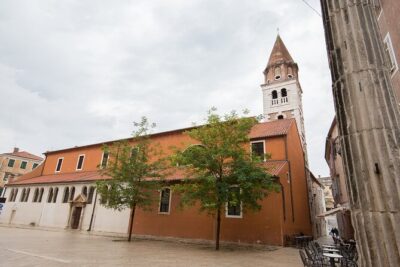
Your tour starts at a souvenir shop in a red building right next to the Sea Gate. The address is Poljana Pape Aleksandra III 7, 23000 Zadar.
This is helpful for two reasons. First, Sea Gate is easy to orient around once you’re in the old town. Second, starting near a major entrance means you can connect the tour immediately to the rest of your day—especially if you’re also planning to explore the waterfront after.
If you’re arriving on foot, give yourself a little extra time to settle in and locate the exact shop entrance before your start. Even though the meeting point is straightforward, you’ll want to avoid arriving rushed with a group.
The OculusGo Setup: You Don’t Need Tech Skills

The tour includes the VR glasses and controller, plus a walking assistant. That combination is key. VR tours can go two ways: either you get a clean, self-serve experience, or you get stuck figuring out controls while trying to keep up with the group.
Here, the assistant handles the “how do I do this right now” part. That matters if you’re traveling with kids, if your group includes first-time VR users, or if you just don’t want a tech lesson before you see Zadar.
There are also built-in pauses where you can step out mentally for a moment. One practical detail: when a VR stop happens, the tour aims for quieter, calmer spots. That means you’re not stuck in the loudest, brightest patch of pavement while the glasses reset.
Old Town Reconstructions: Roman Forum, the City Market, and the Crusades
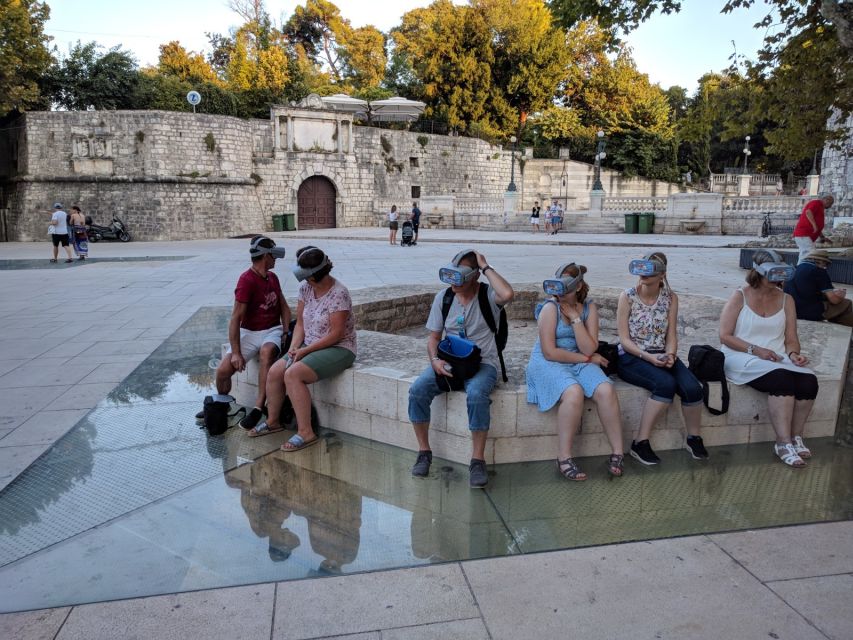
This tour’s backbone is its route through Zadar’s most meaningful historical zones. As you walk, the VR program guides you into different time periods and links them to specific locations you can physically reach.
One highlight is standing where the Roman Forum once anchored daily social and economic life. It’s easy to walk past ancient ruins and feel detached. In VR, that space is explained in a way that’s immediate: you see a reconstructed “center” role instead of just guessing what happened here.
Then the story expands into the 4th Crusade, including an invasion sequence coming from the sea in 1202. What I like about this is that it ties geography to conflict. You can look around and understand why an attack would come the way it did, because the scene is positioned around the city you’re actually in.
You also visit the former location of the city market. The tour frames it in relation to today—helpful because the old market area is not where you’d automatically assume it was. Once you’ve stood there and watched the reconstruction, the layout feels less confusing afterward.
The explanations you receive along the way are intentionally compact. You get enough detail to understand what you’re seeing without drowning in dates and names.
More days out with a local guide who knows the coast.




St. Chrysogonus’ Church: The Stop You Usually Can’t Do

One of the strongest reasons to book is that the route includes St. Chrysogonus’ Church, which is otherwise closed to the public.
That’s not a small bonus. Churches can be a highlight in Croatia, but you can’t count on access. Here, the tour gives you a chance to experience the space through the VR component while the assistant keeps you moving from the nearby old-town sights.
If you care about seeing places beyond the standard photo stops, this is the moment that delivers. You’re not just learning about Zadar’s religious past—you’re experiencing it as part of the same time-travel sequence as the Roman and medieval scenes.
The Aerial Look: Peninsula Views Like a Hot-Air Balloon
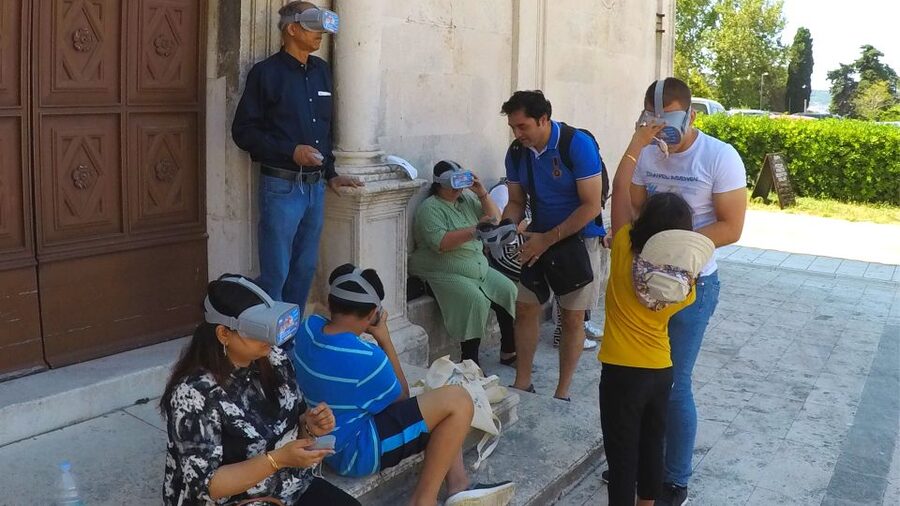
After the street-level history moments, you shift to a view from above. The tour includes a moment where you get an aerial look at the Zadar peninsula, like you’re standing in the center of a hot-air balloon over the old city.
This matters because it changes how your brain processes the city. From ground level, streets and buildings can feel like a maze. From above, the shape of the peninsula, the way water meets land, and the relationship between landmarks become clearer.
It’s also a good reset point. You’ve already taken in several historical scenes on foot. The aerial perspective breaks that rhythm and helps you build a stronger mental map for the rest of your Zadar sightseeing day.
WWII from Air and Sea: Seeing Destruction Without the Trauma
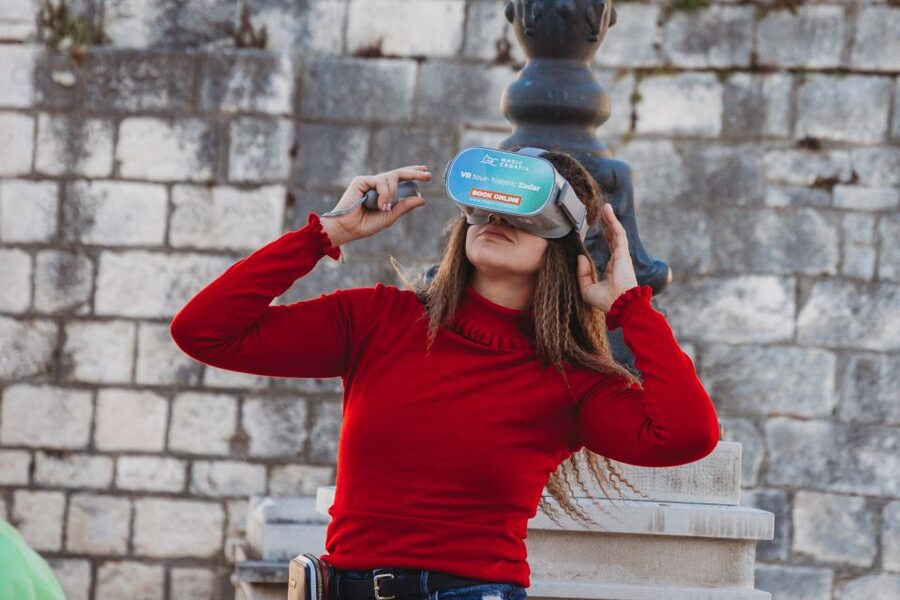
The tour doesn’t stop at ancient times and medieval crusades. It brings you into the World War II era with attack scenes coming from the air and sea.
This is handled in a VR way that’s more about understanding timeline and impact than trying to recreate graphic content. You’re guided to the key points, then you watch the scenes from the viewpoint the tour sets up for you. The result is that you grasp the city’s changes after the war, not just its earlier eras.
You’ll also see how Zadar looked after WWII in the reconstruction. That’s important, because cities don’t go back to what they were. Even when buildings are restored, the layout and memory of a place shifts.
If you want history to feel connected to the geography you’re standing on, this is the section that makes that connection click.
Price and Value: What $35 Buys You in 2 Hours
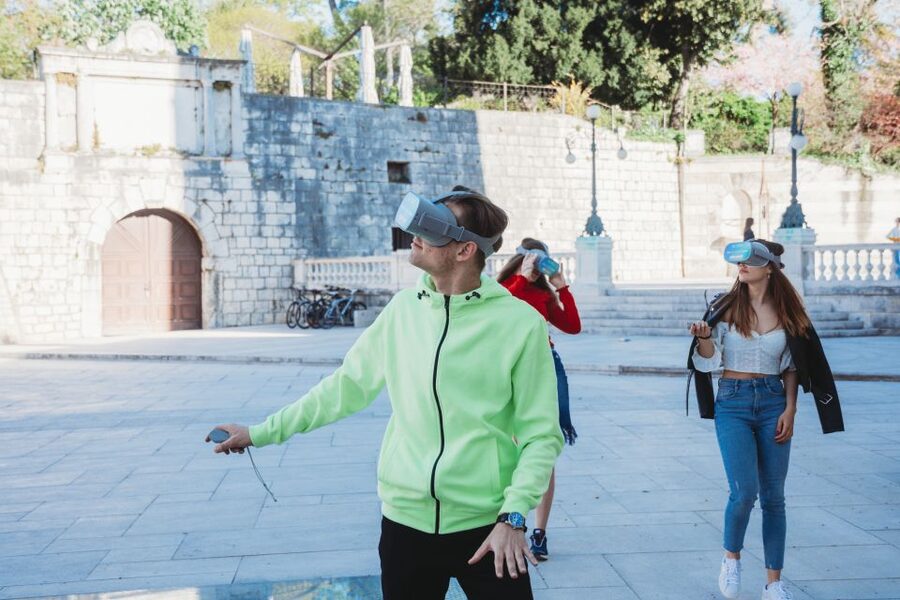
At $35 per person for a 2-hour experience, you’re paying for a tight package: VR hardware, an assistant-led walking route, and an audio guide translated into seven languages.
Is it expensive? It can feel like it at first glance, especially compared with free self-guided walking. But VR tours aren’t the same as a regular tour price. You’re paying for the headset time, the program that reconstructs multiple historical periods, and the fact that someone is physically guiding you to the exact locations that match what you’re seeing.
Also, you’re not just getting visuals. You get an assistant throughout and an audio guide that supports multiple languages, including English plus Croatian, Esperanto, French, German, Italian, and Spanish. That means the tour is less dependent on your own language skills and more consistent across a mixed group.
My practical take: if you like history but don’t love reading dense plaques, this is strong value. It’s also a good buy if your travel style is “quick hit with a real takeaway” rather than slow museum wandering.
Who This Works Best For (and who might want to skip)
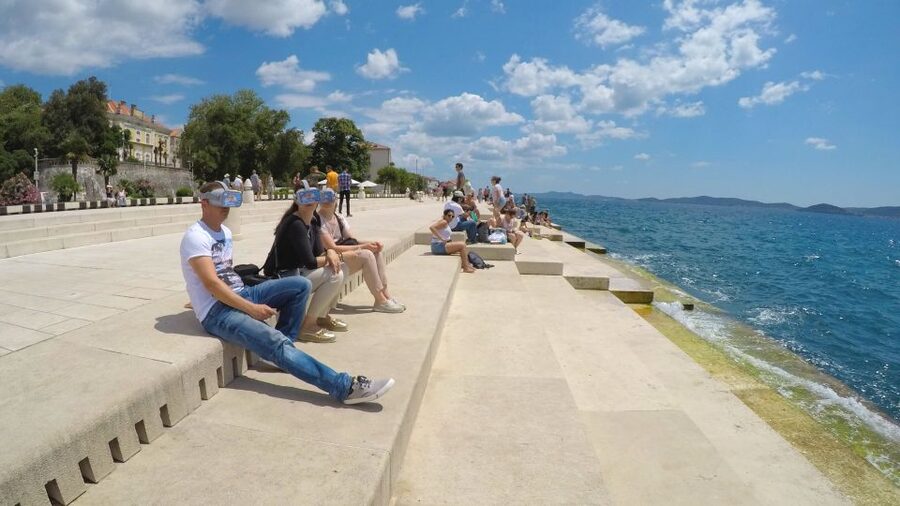
This tour suits you if:
- you want a compact, guided way to learn Zadar’s layers
- you enjoy visual learning, especially reconstructions you can look around in
- you’re traveling with kids or teens who need a break from long explanations
- you like the idea of visiting a place you usually can’t enter, like St. Chrysogonus’ Church
You might consider skipping if:
- you’re very sensitive to VR image quality and expect the newest sharpness
- you don’t want to deal with occasional headset hiccups (it can happen that the guide helps adjust things more than you’d expect)
One more real-world note: since this is a shared experience using VR gear, it helps if your group can tolerate short pauses and hands-on help. If you’re the type who gets impatient with setup time, plan to be flexible.
Small Details That Make a Big Difference
A few things make this tour smoother than many similar VR experiences.
First, the tour uses a simple user interface so you can choose when to see the next point. That gives you a bit of control over pacing, instead of feeling like you’re being yanked forward on someone else’s schedule.
Second, the assistant doesn’t just point. They handle questions and keep explanations at a “just enough” level—short, clear, and tied to what you’re seeing.
Third, the tour is designed for comfort during VR stops. If you get a break in shade or a quieter spot while the headset is in use, it makes the experience more pleasant, especially in warmer months.
Should You Book the Zadar VR Guided History Walking Tour?
I’d book this if you want a guided way to see Zadar’s key eras in a way that sticks—Roman Forum, crusade-era events from the sea, and WWII scenes—without spending hours in museums. The fact that you can include St. Chrysogonus’ Church is a major plus if you’re hoping to see more than the open doors.
I wouldn’t book it if your top priority is crystal-clear VR graphics above all else, or if you hate the idea of needing occasional help getting the headset to cooperate. In that case, you might get more satisfaction from a traditional walking tour paired with a good guidebook.
If you’re deciding today, my best advice is simple: this is for people who want history to feel located. You’ll enjoy the walk more if you’re okay treating VR as a storytelling tool, not a high-end entertainment platform.
FAQ
How long is the Zadar VR guided history walking tour?
It lasts 2 hours.
Where is the meeting point?
Meet at a souvenir shop in a red building next to the Sea Gate, at Poljana Pape Aleksandra III 7, 23000 Zadar, Croatia.
What does the $35 price include?
The tour includes VR glasses (OculusGo All-in-One with a controller), a tour assistant, and the walking tour. An audio guide is included as well.
Are there multiple audio guide languages?
Yes. The audio guide is translated into Croatian, English, Esperanto, French, German, Italian, and Spanish.
Do I need to bring ID?
Yes. Bring a passport or ID card.
Is the tour wheelchair accessible?
Yes, the tour is wheelchair accessible.
Is food or drinks included?
No. Food and drinks are not included.
Can I cancel for a full refund?
Yes. You can cancel up to 24 hours in advance for a full refund.
What should I expect from the VR setup?
You’ll use OculusGo glasses with a controller, guided by a tour assistant, and the experience includes 360° views plus animations, 3D objects, and sound effects.
If you tell me your travel month and whether you’re going with kids or first-time VR users, I can help you judge whether this is your best Zadar activity.
More Tours in Zadar




More Tour Reviews in Zadar

More Old Town Walks
After something else? More tours and days out around Zadar




Zadar Old Town Walking Tours, compared.
 ★ 4.9Plitvice Lakes with Boat Ride and Zadar Old Town TourFrom $531,368 reviews
 ★ 5.0Plitvice Lakes with Boat Ride & Zadar Old town tourFrom $541,129 reviews
 ★ 4.8Guided Walking TourFrom $17445 reviews
 ★ 5.0Krka Waterfalls, Food & Wine Tasting, Boat Ride & Zadar Old TownFrom $52420 reviews
 ★ 5.0Zadar City Tour 120min WalkFrom $32203 reviews
 ★ 5.0Zadar Walking Tour sponsored by Gligora Cheese and deli.From $18119 reviews
 ★ 4.7Private Walking Tour Through 3,000 Years of HistoryFrom $28871 reviews
 ★ 4.8Culinary Walking Tour with Food TastingsFrom $12863 reviews
Browse the lists this tour appears in