
Reviewed · ZADAR OLD TOWN WALKING TOURS
Zadar Private Walking Tour: German
Zadar has a way of telling stories on foot. This private German walking tour links Roman ruins, UNESCO fortifications, and the famous waterfront sound-and-light works of the Sea Organ and Greeting to the Sun, all in 1.5 hours. I especially like the personal pace (you can ask anything), and I like how the route covers both big monuments and the everyday street life of the old town. One thing to consider: key church interiors are not included, so you’ll want to plan for ticket entry if you want inside visits.
The start is simple, and the flow is smart: you begin near Ulica Nova vrata and move through the main sights in a way that helps you understand how Zadar grew from ancient walls to medieval churches and modern art on the shore.
If you want to steer the tour, you can. The walk is designed to be customized to your interests, and in at least one case a guide even helped accommodate a spontaneous request for a Maraschino tasting.
In This Review
- Key things to know before you go
- A 2000-Year Walk Through Zadar’s Old Town
- Starting at Ulica Nova vrata: Easy to Find, Easy to Begin
- Zadar City Walls and the 16th-Century Fortifications (UNESCO)
- St. Anastasia Cathedral: Big Church, Clear Context
- The Greeting to the Sun: Modern Art With a Story
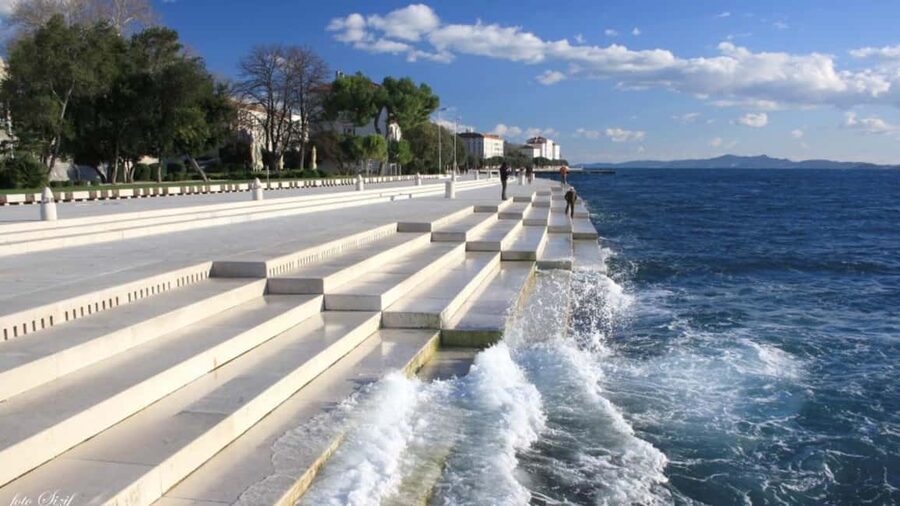
- Sea Organ: When the City Turns Sound Into Architecture
- Roman Forum, Zadar: Understanding the City Layout
- St. Donatus Church: A Landmark You Can Decide to Enter
- Široka ulica and People’s Square: Where Daily Life Shows Up
- Church of St. Simon and 5 Wells Square: Small Stops, Strong Character
- Land Gate: Closing the Loop on How the City Works
- The Value: $114 Per Group for a Private German Guide
- Who This German Private Walking Tour Fits Best
- Should You Book This Zadar Private Walking Tour?
- FAQ
- How long is the Zadar private walking tour (German)?
- Is this tour private or shared?
- What language is the guide?
- Where does the tour start?
- What’s included in the price?
- What isn’t included?
- Which major sights are covered?
- Can the tour be customized?
Key things to know before you go
- German-speaking private guide: one-on-one interpretation, not a lecture from afar.
- 2000 years in one walk: Roman remains to modern waterfront installations.
- UNESCO fortifications on the route: you’ll see why they matter, not just the stones.
- Sea Organ and Greeting to the Sun: two landmark installations explained clearly.
- Entry to major churches is extra: you’ll get context even if you don’t go inside.
- Customizable route by interests: ask for what you care about and adjust on the fly.
A 2000-Year Walk Through Zadar’s Old Town
Zadar is one of those places where you can literally read time. In a short window, you’ll move from ancient layouts to medieval religious power to modern public art designed for the waterfront. That time-travel feeling is the core value of this tour: it’s not just seeing attractions; it’s connecting them into a single story you can remember.
The private format matters. With a German-speaking guide, you get explanations that fit your questions, your pace, and what you notice as you walk. Reviews highlight that guides can be both informative and genuinely fun to spend time with, which makes the walk feel less like a checklist and more like a conversation with the city.
One practical note: since it’s 1.5 hours, you won’t have time for long detours or extended museum-style stops. That’s not a flaw—it’s part of the efficiency. You’ll leave with strong bearings and a shortlist of what you might want to explore deeper on your own later.
More walks around the old town, the Roman forum and the Sea Organ.
- Zadar: Plitvice Lakes with Boat Ride and Zadar Old Town Tour
★ 4.9 · 1,368 reviews - From Zadar: Plitvice Lakes with Boat Ride & Zadar Old town tour
★ 5.0 · 1,129 reviews - Zadar: Guided Walking Tour
★ 4.8 · 445 reviews - Krka Waterfalls, Food & Wine Tasting, Boat Ride & Zadar Old Town
★ 5.0 · 420 reviews
Starting at Ulica Nova vrata: Easy to Find, Easy to Begin
Your walk starts at Ulica Nova vrata, which is a good choice because it puts you right where you need to be to understand Zadar’s city structure. Instead of jumping straight into the most famous church, you start with the idea of boundaries—what Zadar guarded, how it expanded, and how people moved through the old town.
If you like tours that get going quickly, this one fits. One review specifically praised the meeting point as well chosen and easy to reach, which sounds small until you’re doing it in a new city with limited daylight.
From the first minutes, the guide sets the tone: you’ll hear stories and see how the spaces connect—street to square, walls to gate, shore to installations. That orientation helps you enjoy the rest of the walk without feeling lost.
Zadar City Walls and the 16th-Century Fortifications (UNESCO)
After starting, you’ll head toward Zadar City Walls. This is one of the stops that’s more than a photo opportunity. Fortifications explain everything: where power sat, how the city defended itself, and why certain paths and entrances made sense.
The tour includes 16th-century fortifications tied to UNESCO status. Even if you only know Zadar for modern sights like the Sea Organ, these walls give you the missing context. You begin to understand why the old town feels like a distinct unit—almost like a preserved island of stone within the modern city.
Drawback to be aware of: because you’re walking, the wall sections and viewpoints may involve uneven ground or steps depending on the exact route your guide takes. The activity is listed as wheelchair accessible, but the “how” isn’t described in detail, so if you need step-free routing, it’s smart to ask the provider ahead so you can match your comfort level.
St. Anastasia Cathedral: Big Church, Clear Context
Next up is the Cathedral of St. Anastasia. Even though entry isn’t included, the stop is still valuable because the guide can place the cathedral in the bigger Zadar timeline you’ve already started to build.
What you’ll get here is interpretation. Think of it as learning how to “read” the landmark before you ever step inside. You’ll understand why St. Anastasia is central to Zadar’s identity and how the cathedral fits into the city’s long religious and civic story.
If you do want to go inside, you’ll need to handle entry separately. Since that’s true for both the cathedral and another major church later on, you can decide your strategy early: either keep it outside-and-explained for speed, or add inside time when something particularly pulls your attention.
More private trips, just your own group and skipper.




The Greeting to the Sun: Modern Art With a Story
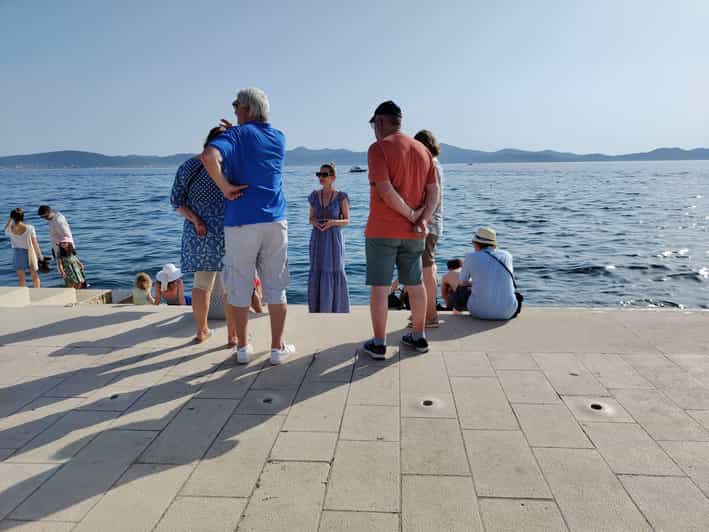
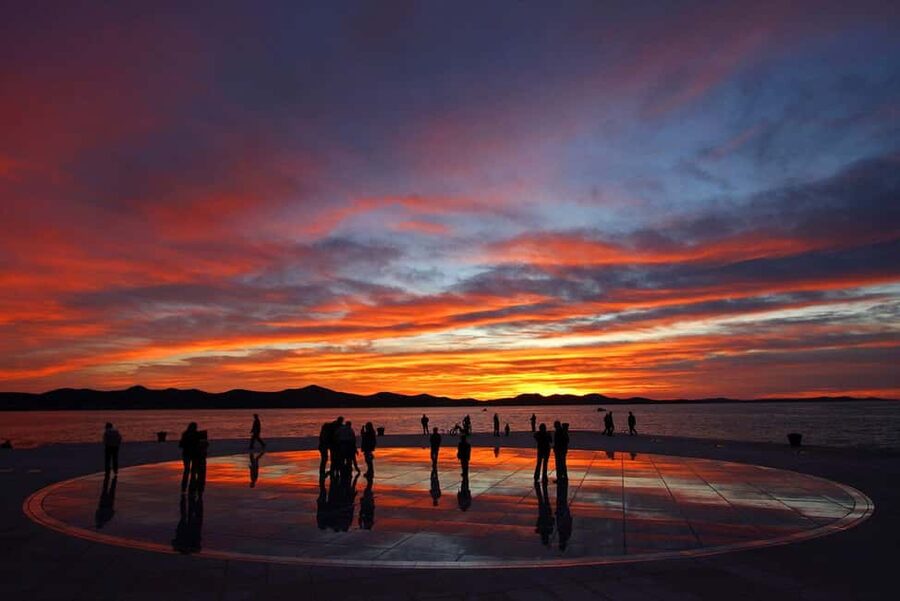
Then the route shifts to the waterfront with the Greeting to the Sun. This is where Zadar stops behaving like a museum town and starts acting like a living city. The installation is designed to work with the environment and daily rhythms, so it feels less like art behind glass and more like something you experience in real time.
Your guide will help you understand what you’re looking at, and that’s key. These kinds of modern installations can feel abstract if you’re just reading a sign. A good guide turns it into meaning: why it’s here, what it’s doing, and how it fits the city’s long habit of blending public space with culture.
This stop is also a reminder that the tour isn’t only about ancient monuments. It’s designed to show that Zadar’s identity continues, and it does that by placing modern creativity right where people gather.
Sea Organ: When the City Turns Sound Into Architecture
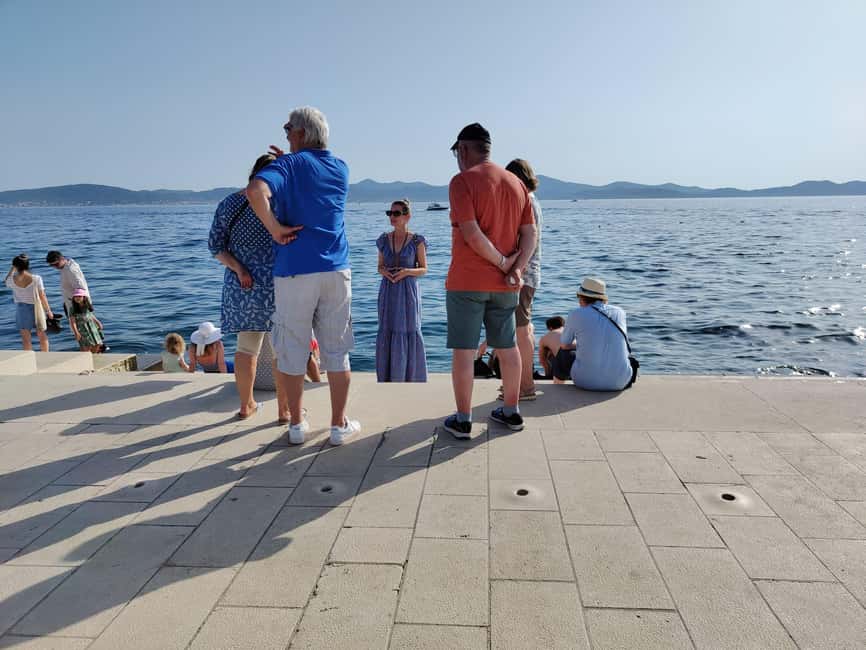
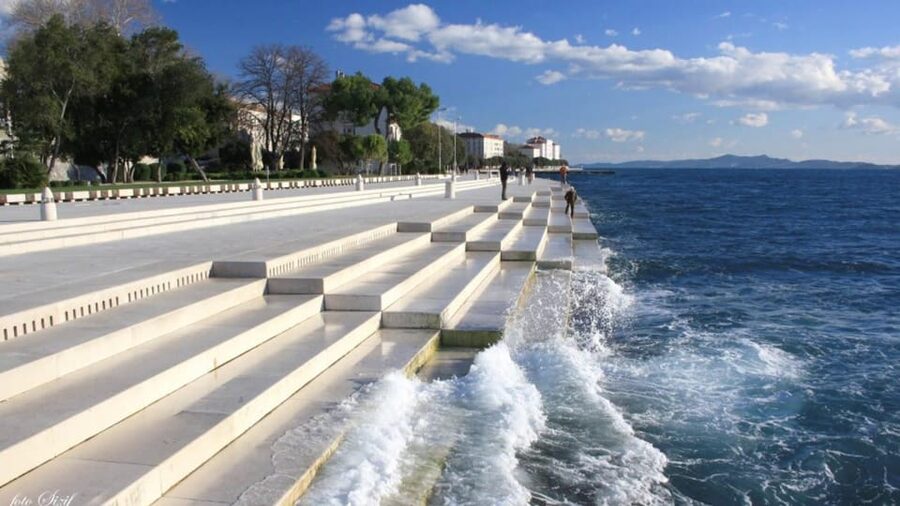
Right after the Greeting to the Sun, you’ll visit the Sea Organ. This is one of the tour’s headline moments, and it’s included in the walk for a reason. The concept is memorable: sound produced by the sea, built into the architecture, so the coastline becomes an instrument.
The value of having a guide here is simple: you’re less likely to miss what makes it work. You’ll understand the idea behind the organ and how to watch/listen for it in the context of the shore.
One practical consideration: since this is tied to sea conditions, your experience may vary. If it’s calm, you might get a quieter feel; if conditions are right, it can feel more alive. Either way, having context helps you enjoy what you’re seeing instead of wondering what the point is.
Roman Forum, Zadar: Understanding the City Layout

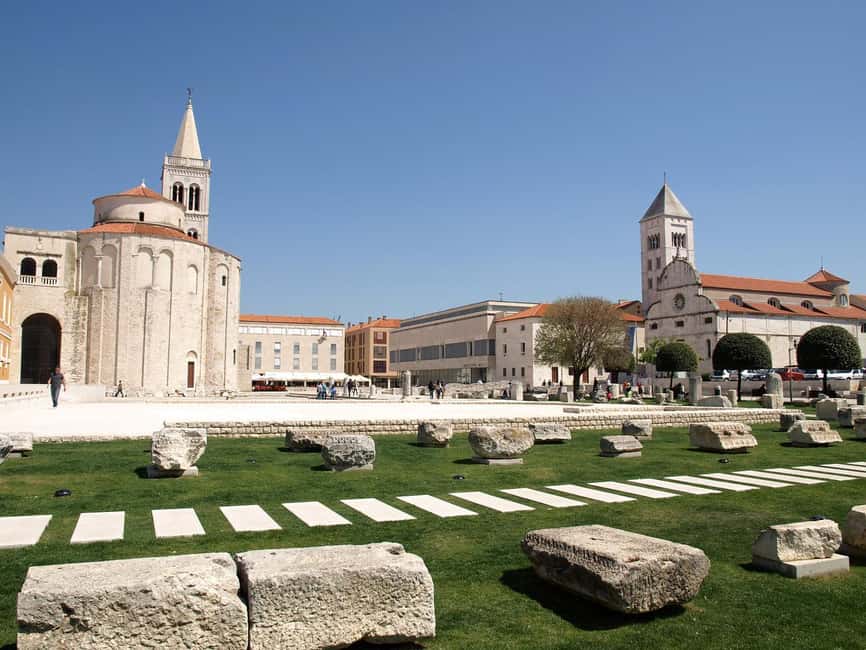
Now you’ll move back into the ancient layer with the Roman Forum. This stop is useful because a forum isn’t just ruins—it’s the organizational brain of a Roman city. When you stand in the right place, you start to see how movement and public life would have worked.
The walk includes a “class” style element at this stop, which usually means the guide slows down just enough to make the Roman layout understandable. That’s exactly what you want here: the forum becomes clearer, and you stop treating it like scattered stones.
If you like architecture, urban planning, or just getting your bearings, this is one of the stops you’ll remember. It connects the walls and gate thinking to the daily life of people who lived there long ago.
St. Donatus Church: A Landmark You Can Decide to Enter
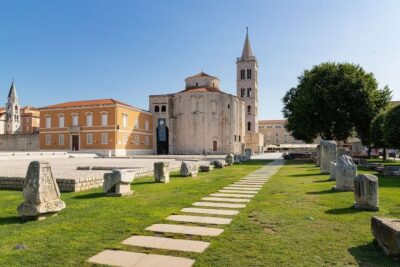
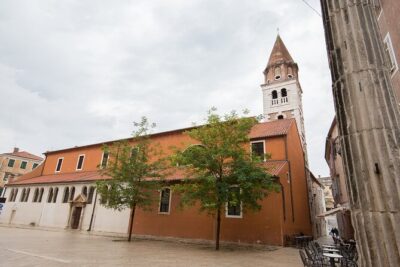
After the Roman Forum, you’ll head to the Church of St. Donatus. This church is one of Zadar’s iconic silhouettes, and your guide will give you the meaning behind it—even if you don’t go in.
Because entry to St. Donatus isn’t included, you’ll want to decide in advance whether your priority is outside views and explanation only, or whether you’ll add time for interior access on your own.
Either approach works. The tour still gives you the story thread, which is the difference between seeing a famous church and actually understanding why people built it and what it represented.
Široka ulica and People’s Square: Where Daily Life Shows Up
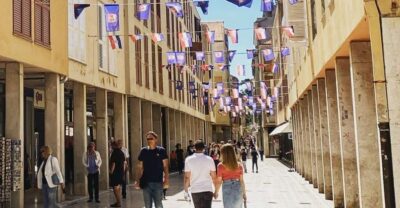
Next comes Široka ulica, followed by People’s Square. These stops shift you from monument zones to street-level Zadar. It’s where you can feel how the city functions now—how people move, where they pause, and what spaces still attract gathering.
I like these sections because they make the tour feel grounded. After walking through centuries of buildings, you get to watch how the city continues to use its open spaces. It also helps your photos look better, since you’re not only shooting façades; you’re seeing the relationships between streets and plazas.
If you’re the kind of traveler who enjoys local lifestyle, this part delivers. It’s also where your guide can answer practical questions about where to eat, what to do next, and what’s worth your time if you have extra hours.
Church of St. Simon and 5 Wells Square: Small Stops, Strong Character
The tour includes the Church of St. Simon and then 5 Wells Square. These aren’t always the first things people list when they plan Zadar, and that’s what makes them enjoyable. Your guide uses these stops to build continuity: how different eras leave their marks, and how Zadar’s identity survives through smaller landmarks.
5 Wells Square is a good example of why walking with someone helps. If you only pass through quickly, you may miss the significance of what you’re looking at. With explanation, the square becomes a pause point with meaning, not just a wide-open spot for a quick photo.
The “private” part of this tour helps here too. You can ask questions and slow down if a detail catches your eye, without holding up a large group.
Land Gate: Closing the Loop on How the City Works
Finally, you’ll finish at Land Gate. This stop ties everything back together. Gates are the practical end of the story: they show how entry, defense, and movement shaped the city over time.
When a tour ends at a gate, it often feels satisfying because you can look back and see the logic of the route. You started at Ulica Nova vrata, learned how walls defined space, visited major landmarks, then came back around to the way people would enter and leave Zadar.
If you want to keep the momentum after the tour, a gate area is also a natural transition point. You’ll know where you are and what direction makes sense for your next move—whether that’s dinner, a slower self-guided stroll, or another stop on your own checklist.
The Value: $114 Per Group for a Private German Guide
This tour costs $114 per group (up to 10 people) for about 1.5 hours, with a German-speaking private guide included. That price feels most sensible when you split it among a small group—friends, family, or a couple plus an extra traveler.
The best value is the private attention. You’re not paying just for access to monuments; you’re paying for interpretation, flexibility, and the chance to ask questions as you walk. Reviews back up that the guide can be attentive to your needs and even adapt when you ask for something spontaneous.
A smart way to think about it:
- If you’re traveling as two people, you’ll likely value the private format more than a cheaper shared tour.
- If you’re a family, the chance to tailor pace and interests can be worth it, especially when you want the kids to stay engaged.
- If you’re solo, it can still be a good deal if you’re the type who asks lots of questions and wants a clear story rather than random facts.
One caution: the tour doesn’t include entry fees for St. Donatus Church and the Cathedral of St. Anastasia. If you strongly want inside visits, budget extra.
Who This German Private Walking Tour Fits Best
I’d book this if you:
- Want a focused walk that connects Roman remains, medieval churches, and modern waterfront art.
- Prefer a German-speaking guide who can explain as you go.
- Like getting local context rather than just collecting landmark photos.
- Enjoy a tour that can be customized to your interests.
It’s less ideal if you want a long, stop-and-stay itinerary with museum time, or if you don’t want to walk much. It’s built for motion and interpretation, not for lingering in multiple indoor spaces.
Wheelchair accessible is listed, but since the route details aren’t spelled out, consider messaging the provider to confirm the smoothest path for your specific needs.
Should You Book This Zadar Private Walking Tour?
Yes, if you want a clean, efficient way to understand Zadar in 1.5 hours—especially the blend of Roman and modern. The tour’s strongest selling point is the private German guide who can keep things lively, answer questions, and tailor the route. The waterfront stops (Sea Organ and Greeting to the Sun) are also the kind of Zadar moments you’ll remember, and the historical stops give them proper context.
If you’re mostly chasing interior church photos and don’t care about storytelling, you might weigh the extra entry fees. But if you want meaning and a sense of how the city fits together, this is a very solid way to start your Zadar time.
FAQ
How long is the Zadar private walking tour (German)?
The duration is 1.5 hours.
Is this tour private or shared?
It’s a private group experience.
What language is the guide?
The guide speaks German.
Where does the tour start?
The starting location is Ulica Nova vrata.
What’s included in the price?
A private tour guide who is German-speaking is included.
What isn’t included?
Entry to the Cathedral of St. Anastasia and St. Donatus Church is not included.
Which major sights are covered?
The tour includes Zadar City Walls, the Cathedral of St. Anastasia, the Greeting to the Sun, the Sea Organ, the Roman Forum, St. Donatus Church, Široka ulica, People’s Square, Church of St. Simon, 5 Wells Square, and Land Gate.
Can the tour be customized?
Yes. You can customize it based on your wishes and interests, and you can share those with your local guide.
More Tours in Zadar



More Tour Reviews in Zadar

More Old Town Walks
After something else? More tours and days out around Zadar




Zadar Old Town Walking Tours, compared.
 ★ 4.9Plitvice Lakes with Boat Ride and Zadar Old Town TourFrom $531,368 reviews
 ★ 5.0Plitvice Lakes with Boat Ride & Zadar Old town tourFrom $541,129 reviews
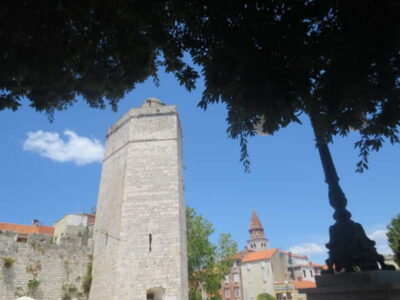 ★ 4.8Guided Walking TourFrom $17445 reviews
 ★ 5.0Krka Waterfalls, Food & Wine Tasting, Boat Ride & Zadar Old TownFrom $52420 reviews
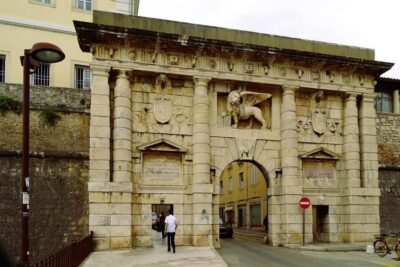 ★ 5.0Zadar City Tour 120min WalkFrom $32203 reviews
 ★ 5.0Zadar Walking Tour sponsored by Gligora Cheese and deli.From $18119 reviews
 ★ 4.4Virtual Reality Guided History Walking TourFrom $3586 reviews
 ★ 4.7Private Walking Tour Through 3,000 Years of HistoryFrom $28871 reviews
Browse the lists this tour appears in