
Reviewed · ZADAR OLD TOWN WALKING TOURS
Zadar City Tour 90min Walk
Zadar clicks into focus fast. In 90 minutes you’ll trace Roman ruins, Venetian squares, and modern sound-and-sun landmarks, guided in English. I love the small-group pace and the chance for Maraskino and cheese tastings on the way; the trade-off is it’s a steady walk with no toilet breaks, and it’s not a good fit for mobility issues.
You’ll be mostly looking at exteriors—cathedrals and churches without entry—so this works best when you want context, not a long museum session. One smart thing: the route changes depending on whether you book the morning or evening departure.
If you’re the kind of traveler who likes getting your bearings fast, this is a very solid-value way to understand Zadar’s layers without burning half a day.
In This Review
- Quick Take
- Why This 90-Minute Zadar Walk Works So Well
- Meeting Points and Timing: Morning vs Evening Stops
- Greeting to the Sun: Zadar’s Solar-System Shortcut
- Sea Organ: When the Waterfront Sounds Like a Piano
- Cathedral of St. Anastasia: Big Romanesque Without the Ticket
- The Roman Forum and Stup srama: Old Power, Middle-Age Reputation
- St. Donatus and St. Mary: Rotundas and Monastic Spaces (No Entry Included)
- People’s Square and Venetian City Moves: Narodni trg to City Hall
- Kalelarga and the Roman Decumanus: The Street That Keeps Changing
- The New Gate (Last Built in 1931) and Five Wells
- What You Actually Pay For: Value at $26.43 for 90 Minutes
- The Human Factor: Guides, Questions, and How the Tour Feels
- Practical Tips That Make This Tour Easier
- Who Should Book This Zadar City Tour?
- Should You Book It? My Take
- FAQ
- How long is the Zadar City Tour walking experience?
- What is the group size?
- Is it offered in English?
- What is included in the tour price?
- Are there any tickets or entrances included for the main sights?
- What’s the difference between the 11 AM and 18:30 tours?
- Where does the evening (18:30) tour start?
- Is the tour suitable for people with mobility issues?
- Does the tour depend on weather, and what’s the cancellation rule?
Quick Take
- Small group (up to 15) keeps the pace easy and questions welcome
- Roman + Venetian + modern in one loop, with lots of free stops
- Optional local tastings like Maraskino and cheese can add real flavor to the walk
- Time-slot differences matter: morning versus evening swaps key landmarks
- Mostly exterior viewing at major churches and monuments (no interior entries in the standard flow)
- Weather-dependent: plan for a good-weather day to keep it comfortable
Why This 90-Minute Zadar Walk Works So Well

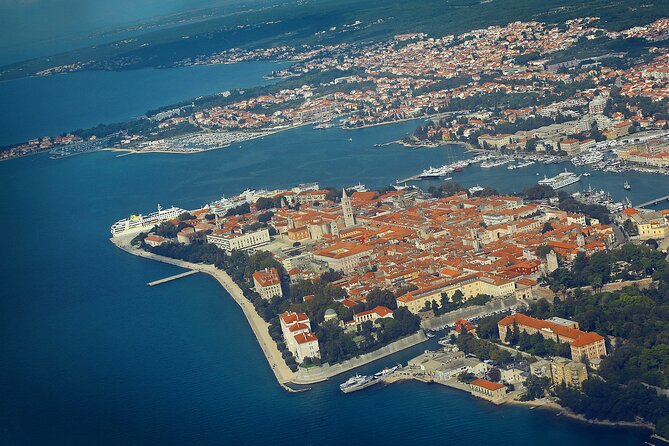
Zadar is one of those cities where the best stories are written into the streets. This tour is built for that. You’re not trying to “see everything.” You’re learning how the city got from Roman roots to Venetian control to today’s quirky modern waterfront art—fast, in a way that actually helps you explore on your own afterward.
The 90-minute format is key. It’s long enough to cover the main spine of the Old Town, but short enough that you don’t end up rushing through everything with sore feet and zero memory. And because the group max is 15, the guide can slow down for questions instead of just herding people along.
The other thing I really like: the stops are mostly free to admire (even when there’s no entrance included). So your money goes toward interpretation—how the pieces connect—rather than constant ticket lines.
More walks around the old town, the Roman forum and the Sea Organ.
- Zadar: Plitvice Lakes with Boat Ride and Zadar Old Town Tour
★ 4.9 · 1,368 reviews - From Zadar: Plitvice Lakes with Boat Ride & Zadar Old town tour
★ 5.0 · 1,129 reviews - Zadar: Guided Walking Tour
★ 4.8 · 445 reviews - Krka Waterfalls, Food & Wine Tasting, Boat Ride & Zadar Old Town
★ 5.0 · 420 reviews
Meeting Points and Timing: Morning vs Evening Stops
This is not a one-size-fits-all route. The itinerary swaps a couple of major waterfront elements depending on departure time.
- 11 AM tours do not include the Land Gate area.
- 18:30 tours exclude the Sea Organ.
- The Greeting to the Sun installation is not included on the evening tour.
- Five Wells is not included on the morning tour.
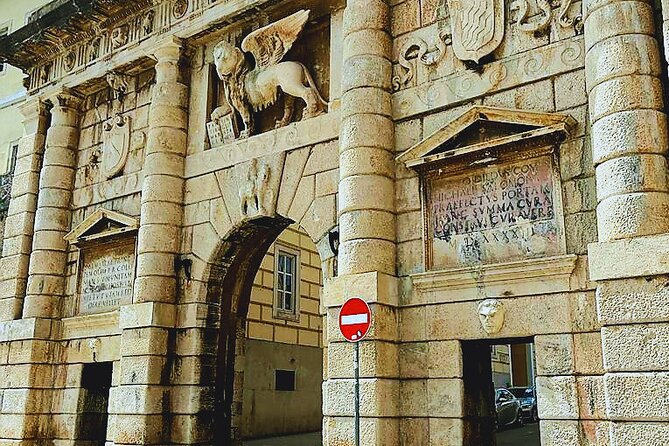
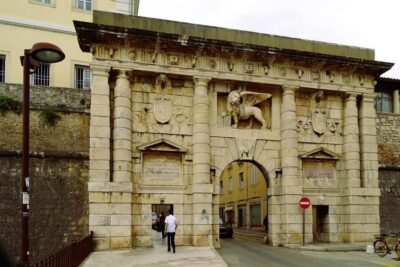
- The 18:30 start is from the Zadar Land City Gates (a large Venice Republic gate built as a triumphal arch), and the guide waits in front of the gates beside the bikes.
In practice, this means you should choose your time slot based on what you’re most curious about:
- If you want the solar-powered Greeting to the Sun, go morning.
- If you want the big Land Gate and the “backdrop” look of Venetian-era city power, go evening.
Also note: the tour needs good weather. If conditions are rough, it may be rescheduled or refunded.
Greeting to the Sun: Zadar’s Solar-System Shortcut
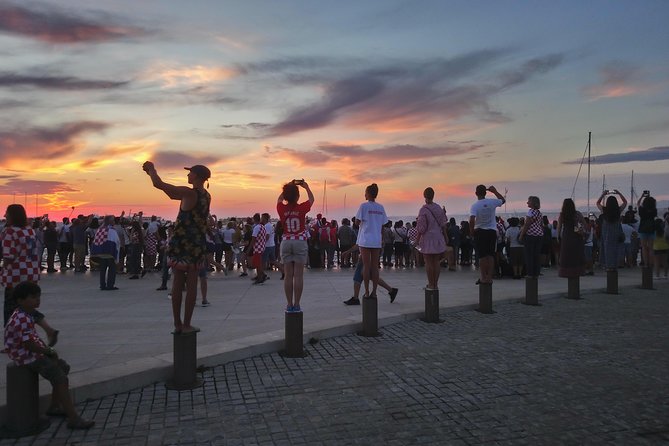
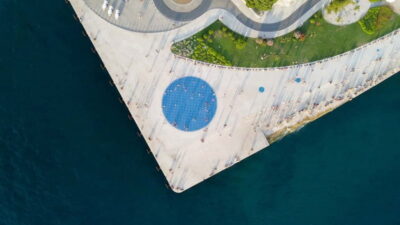
The tour often begins with a modern public installation that feels like sci-fi dropped into the promenade. The Greeting to the Sun (from 2008) uses solar panels on the ground to represent the solar system.
This stop is only about 5 minutes, but it’s a good opening move. It signals something important about Zadar: the city isn’t stuck in the past. It keeps adding layers, and locals clearly embraced the idea of public art that you can’t miss.
Tip: if you’re a quick “look and move” visitor, you’ll enjoy this. If you love slow photography sessions and long explanations, you may want extra time before or after the tour to linger here.
Sea Organ: When the Waterfront Sounds Like a Piano

The Sea Organ (from 2005) is the other signature waterfront installation. It’s shaped like a piano keyboard and uses the sea to create musical notes.
On the schedule, this is a short, visual-and-audio stop (about 10 minutes)—and it’s not included on the evening tour. That means if you care about the sound element, the morning option is the one to pick.
Even when you don’t catch every sound perfectly (wind and wave timing can do what they want), the design still makes sense. It’s a fun contrast to all the stone churches you’ll see soon after.
More ways to see the city itself.





Cathedral of St. Anastasia: Big Romanesque Without the Ticket
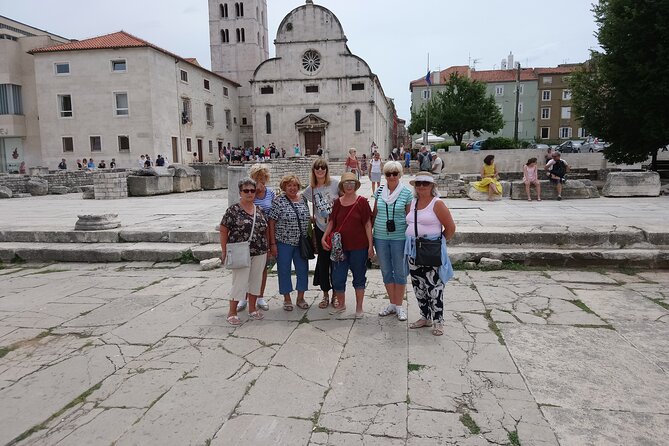
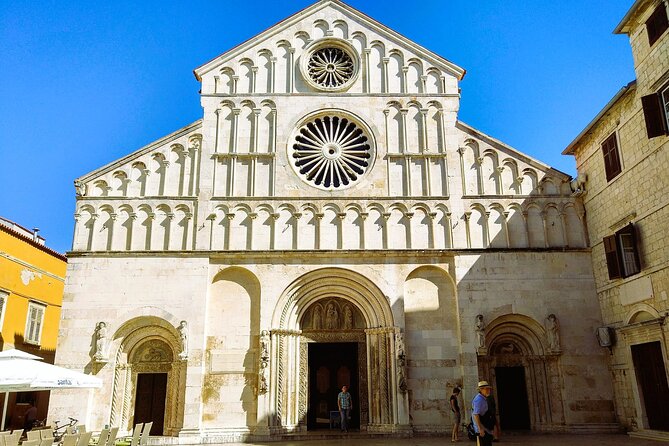
Next up is the Cathedral of Saint Anastasia, Zadar’s biggest Romanesque church. You’ll spend about 10 minutes here, but this tour does not include entry.
That’s actually not a bad thing. A stop like this works as a “spot the style” lesson. You’ll get the sense of scale and why this building mattered, without turning your evening into a ticket-and-line slog.
If you want the inside, you can always add it separately. For the tour’s goal—city context—seeing the exterior and getting the explanation is the sweet spot.
The Roman Forum and Stup srama: Old Power, Middle-Age Reputation
The itinerary then steps back even further, to Roman Zadar.
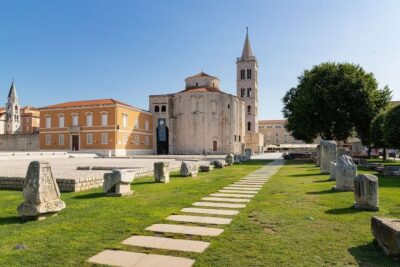
- The Forum is an ancient Roman forum from the 1st century BC (about 10 minutes).
- Stup srama (about 5 minutes) is one of the two largest surviving Roman columns. It later became known as the Pillar of Shame in the Middle Ages and still keeps that name today.
These stops are short, but they’re the kind that add “weight” to the walking. You start noticing that Zadar’s big squares and major streets weren’t random choices—they grew out of older plans.
Practical note: these are outdoor stones. That’s good news if you don’t want entry fees, but bring sunglasses and water in warmer months because you’ll be under open sky at times.
St. Donatus and St. Mary: Rotundas and Monastic Spaces (No Entry Included)
Two major religious landmarks follow, and both are exterior viewing on this tour:
- Church of St. Donatus (about 10 minutes) is a desacralized 9th-century structure built as a huge rotunda in a pre-Romanesque style. No entrance is included.
- Benedictine Monastery of St. Maria (about 5 minutes) is a feminine Benedictine convent from the 11th century with a Renaissance church. Entrance is also not part of the tour.
Even without entry, these stops are worth it because the shapes tell the story. St. Donatus especially gives you something you can actually visualize later, when you’re trying to remember Zadar’s architecture.
If you prefer “hands-on” experiences, consider adding a separate visit for interior access. For most people, though, this tour gives a clean, efficient overview.
People’s Square and Venetian City Moves: Narodni trg to City Hall
You’ll then hit People’s Square (Narodni trg), a place everyone walks through. You’ll get quick context on:
- City Loggia and the City Guard from the Middle Ages
- A 16th-century City Guard structure built during the Venice Republic government (visible near the square)
- Gradska loža (16th-century City Hall) from the same Venetian period
This section is about turning what you see into a mental map: who ruled, where power sat, and why the city centers looked the way they did.
One of my favorite things about this part of the walk is how it links different eras without feeling like a history lecture with no payoff. The square is just the stage; the guide explains the roles.
Kalelarga and the Roman Decumanus: The Street That Keeps Changing
Then you’ll walk toward Kalelarga, described as the biggest street on the peninsula. Historically, it used to be the main Roman Decumanus.
This stop is deceptively valuable. It’s the kind of detail that makes you start noticing the “bones” of a city: old street alignments survive even when the buildings around them change.
If you’re planning to do self-guided wandering afterward, Kalelarga is a smart place to reorient. It’s easy to follow, and it keeps you near the sights.
The New Gate (Last Built in 1931) and Five Wells
Depending on your departure time, you’ll also pass or stop near:
- The New Gate, visible from People’s Square, noted as the last gate built in 1931
- Five Wells, another stop included in one of the tour windows, but not included on the morning tour (about 5 minutes)
These aren’t the biggest “wow” moments like the waterfront installations, but they help you understand how the city kept updating its entrances and infrastructure. That’s how you avoid seeing Zadar as frozen in time.
What You Actually Pay For: Value at $26.43 for 90 Minutes
At $26.43 per person, this is a price that makes sense for what you get—especially in peak seasons when your time is the scarcest resource.
Here’s the value logic:
- You’re paying for an English-speaking guide who connects Roman, Venetian, and modern Zadar into a coherent story.
- The pace stays manageable because the group cap is 15.
- Many core stops are free to view, so you’re not paying for constant entrances.
- You may also get possible free entrance to a medieval church or Maraskino/cheese tastings along the way.
From the experience of guides like Doria, the tastings and shop stops can be a real highlight. In at least one case, the tour included free sampling connected to local products like Maraska liquor and cheese shops. That kind of add-on turns a “sightseeing walk” into something more memorable.
Just keep expectations aligned: several major monuments here are no-entry stops. The “why it mattered” part is the main attraction.
The Human Factor: Guides, Questions, and How the Tour Feels
The strongest praise in the overall experience is about the guides. Doria comes up repeatedly: clear English, strong historical context, and a friendly, professional style. In some cases, the tour even adapts to make time feel comfortable, like answering questions and offering practical next-step suggestions for what to do around the city.
There’s also a note that if an original guide can’t make it, an associate may take over. In one instance, the replacement guide was knowledgeable but quieter, which can make it harder to hear on busy streets. That’s a small risk with any small-group walking tour—busy Old Town streets can chew up sound.
If you want your guide to be more conversational versus strictly lecture-like, the best move is to set that tone early. You’ll get more from the time if your preference is clear from the start.
Practical Tips That Make This Tour Easier
- Bring water. You’re outside with open sky at multiple points.
- Expect mostly exterior viewing. If you want inside access, plan to add it later.
- The tour does not include toilet breaks, so use facilities before you start.
- It’s not recommended for people with mobility issues due to the walking format.
- Animals are not allowed.
- The tour is dependent on good weather, so aim for a forecast-friendly day.
And if you’re choosing between morning and evening: pick the slot that matches the landmarks you care about most. The route differences are real enough to matter.
Who Should Book This Zadar City Tour?
This tour is best for you if:
- You want a fast orientation to Zadar’s Old Town.
- You like history explained in plain terms while you walk (Roman forum to Venetian squares to modern installations).
- You’ll appreciate small-group pacing and time to ask questions.
- You’re open to short stops at major sites without going inside every building.
It’s less ideal if:
- You need lots of breaks or want toilet stops built in.
- You want long museum-style viewing.
- You need wheelchair-friendly logistics (it’s not recommended for mobility issues).
Should You Book It? My Take
Yes—if you’re doing Zadar for a short stay and want your bearings in 90 minutes, this is a smart buy. The combination of Roman and Venetian context plus the modern waterfront installations gives you a fuller Zadar picture than most “quick highlight” walks. Add in the chance for tastings or a free entrance to a medieval church (when offered), and the value climbs even higher.
If your ideal day includes lots of time inside churches, museums, and ticketed attractions, you might pair this with separate visits after. Think of this tour as the map-maker, not the finish line.
If the weather forecast looks good and you don’t mind a steady walk, this is an easy recommendation.
FAQ
How long is the Zadar City Tour walking experience?
It lasts about 1 hour 30 minutes.
What is the group size?
The tour has a maximum of 15 travelers.
Is it offered in English?
Yes, it’s offered in English.
What is included in the tour price?
The tour includes the guided walking experience. It also lists possible free entrance to a medieval church or Maraskino/cheese tastings along the way.
Are there any tickets or entrances included for the main sights?
No entrance is included for several key stops (like the Cathedral of St. Anastasia, St. Donatus, and the monastery areas). Some other stops are described as free to view, but the tour generally does not include entrances at those no-entry sites.
What’s the difference between the 11 AM and 18:30 tours?
The 11 AM tour excludes the Land Gate, while the 18:30 tour excludes the Sea Organs. Also, the Greeting to the Sun is marked as not included on the evening tour.
Where does the evening (18:30) tour start?
It starts in English at the Zadar Land City Gates, where the guide waits in front of the gates beside the bikes.
Is the tour suitable for people with mobility issues?
It’s not recommended for travelers with mobility issues.
Does the tour depend on weather, and what’s the cancellation rule?
It requires good weather. If canceled due to poor weather, you’ll be offered a different date or a full refund. There’s also free cancellation up to 24 hours in advance for a full refund.
More Tours in Zadar



More Tour Reviews in Zadar
More Old Town Walks
After something else? More tours and days out around Zadar




Zadar Old Town Walking Tours, compared.
 ★ 4.9Plitvice Lakes with Boat Ride and Zadar Old Town TourFrom $531,368 reviews
 ★ 5.0Plitvice Lakes with Boat Ride & Zadar Old town tourFrom $541,129 reviews
 ★ 4.8Guided Walking TourFrom $17445 reviews
 ★ 5.0Krka Waterfalls, Food & Wine Tasting, Boat Ride & Zadar Old TownFrom $52420 reviews
 ★ 5.0Zadar City Tour 120min WalkFrom $32203 reviews
 ★ 5.0Zadar Walking Tour sponsored by Gligora Cheese and deli.From $18119 reviews
 ★ 4.4Virtual Reality Guided History Walking TourFrom $3586 reviews
 ★ 4.7Private Walking Tour Through 3,000 Years of HistoryFrom $28871 reviews
Browse the lists this tour appears in