
Reviewed · ZADAR OLD TOWN WALKING TOURS
Zadar City Tour
Zadar is full of photo-friendly spots, but this one is about sound, stone, and stories in a tight 2-hour loop. You’ll hit the Sea Organ, major churches, and Roman ruins without getting lost in the maze of old streets.
I especially like that the pacing is built around short, focused stops, so you’re not standing around wondering when the next highlight arrives. I also like the certified local guide factor—clear, friendly explanations that help you notice details you’d otherwise rush past.
One consideration: a few of the church/monastery stops don’t have admission included, so you’ll want to be ready to pay extra there even though the tour itself is a great deal.
In This Review
- Key points before you go
- Walking start point: getting bearings near Greeting to the Sun
- Sea Organ: the wind-powered monument you can actually hear
- Cathedral of St. Anastasia: Romanesque scale, then go quiet inside
- St. Donatus Church: short stop, big shape, and real acoustics
- Roman Forum: where daily Roman life actually happened
- St. Simon’s Church: a relic stop with a serious reputation
- St. Mary’s Church and Monastery: gold-and-silver church art
- Price and value: what $48.50 buys you here
- Timing in real life: a 2-hour route that doesn’t drag
- What you’ll notice most: the guide’s explanations
- Who should book this Zadar city tour
- Should you book? My call
- FAQ
- How long is the Zadar City Tour?
- How much does the tour cost?
- Is the tour offered in English?
- What’s the meeting point and starting time?
- Where does the tour usually end?
- Is it a mobile ticket?
- Which stops have admission included or free?
- What is the cancellation policy?
- Are service animals allowed?
Key points before you go
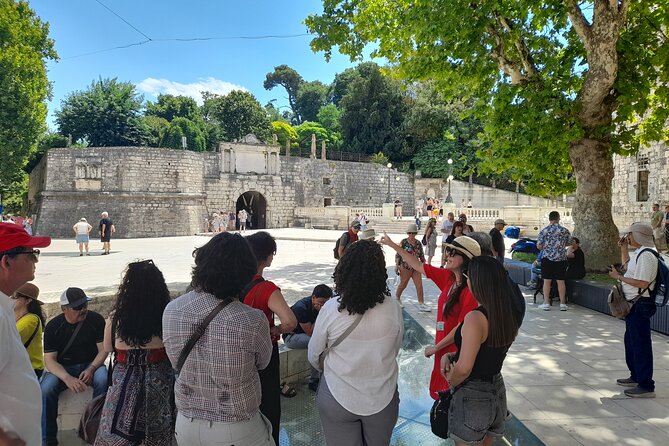
- Small group size (max 15) means you can actually hear the guide and ask questions.
- English-only commentary makes this a straightforward pick if you want less self-guided work.
- Free time at multiple highlights: Sea Organ, Roman Forum, and St. Simon’s Church have free admission on this route.
- A smart 2-hour structure: 6 stops that roughly match the listed time blocks.
- Mobile ticket keeps check-in simple.
- Some admissions not included at St. Anastasia and St. Mary’s Monastery, so budget a bit for those entries.
Walking start point: getting bearings near Greeting to the Sun
The tour meets at Greeting to the Sun, right along Istarska obala in Zadar, starting at 10:30 am. If you’re arriving from elsewhere in town, aim to get there a little early—this kind of walk is most enjoyable when you’re not sprinting to catch the group.
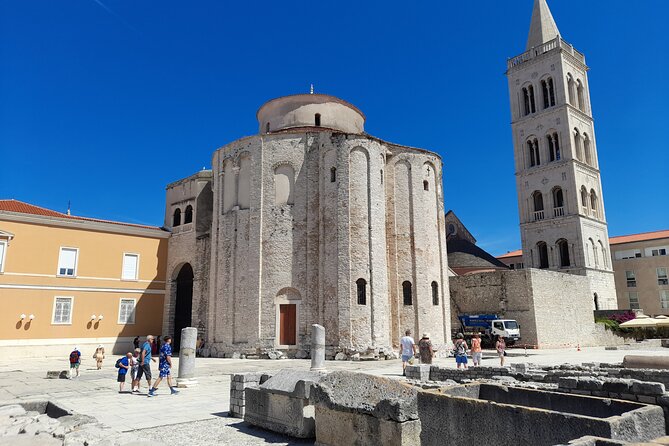
Also, the tour route ends at Trg pet bunara on the peninsula. That’s useful because it leaves you in a good spot to keep exploring after the guided part is over—rather than dumping you somewhere remote.
Logistics are simple: you’ll use a mobile ticket, and the tour is offered in English with a maximum group size of 15 travelers. Service animals are allowed, and the format says most people can participate, which usually translates to a manageable walking pace for a city tour.
More walks around the old town, the Roman forum and the Sea Organ.
- Zadar: Plitvice Lakes with Boat Ride and Zadar Old Town Tour
★ 4.9 · 1,368 reviews - From Zadar: Plitvice Lakes with Boat Ride & Zadar Old town tour
★ 5.0 · 1,129 reviews - Zadar: Guided Walking Tour
★ 4.8 · 445 reviews - Krka Waterfalls, Food & Wine Tasting, Boat Ride & Zadar Old Town
★ 5.0 · 420 reviews
Sea Organ: the wind-powered monument you can actually hear
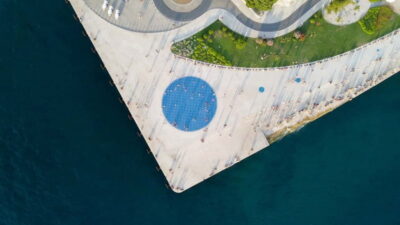
Stop one is the Sea Organ, one of Zadar’s most famous modern monuments. The concept is wonderfully simple: it’s powered by wind and waves, turning natural motion into sound. It’s not just a “look at it” stop—this is one of those places where your ears do half the sightseeing.
You’ll get about 20 minutes here, and that’s the right amount of time. Spend the first minutes getting oriented: stand close enough to hear the shifting notes, but don’t block your own view. Watch the water too, because the sound changes as conditions change.
If the day is calm, the organ may feel subtler; if the sea is lively, it can feel more dramatic. Either way, the guide’s narration matters because they help you understand what you’re hearing and why it’s such a talking point in Zadar’s public art scene.
Admission: free. This is a great start because you’re not immediately juggling ticket purchases.
Cathedral of St. Anastasia: Romanesque scale, then go quiet inside
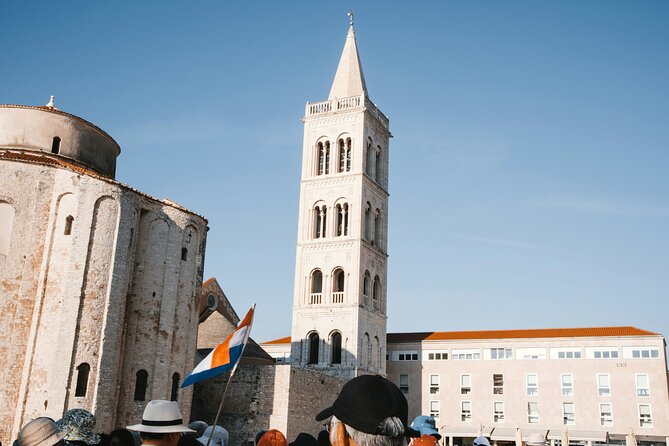
Next up is the Cathedral of St. Anastasia, often described as the biggest cathedral in Dalmatia. The building itself is Romanesque and dates to the 12th century, so you’re looking at something that’s been shaping the city’s skyline for a long time.
Expect about 20 minutes. That timing is realistic: you can appreciate the exterior details, then spend the real time where it counts—the interior. The listing highlights an impressive interior, and that’s usually where these older churches make the biggest impression: light, stone, and the sense of scale.
The main practical note here: admission is not included for St. Anastasia. So when you’re deciding whether this stop is “worth it,” remember it’s not part of the free segment of the tour. For value, you’re basically paying for time inside one of the area’s key sacred landmarks.
If you’re sensitive to noise—some cathedrals can be lively in peak hours—aim to keep your voice low and let the space work. Even a short visit benefits from a calm pace.
St. Donatus Church: short stop, big shape, and real acoustics

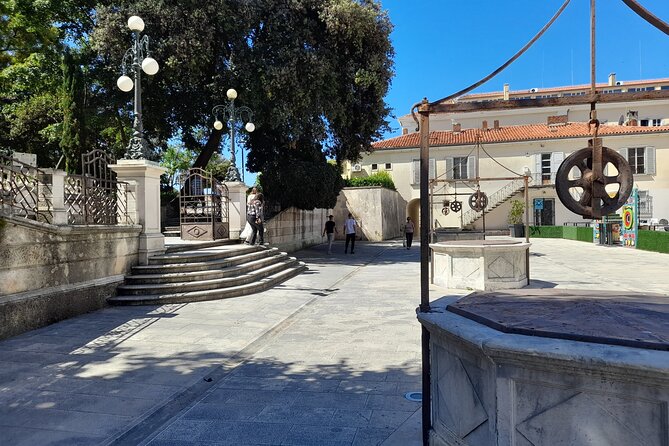
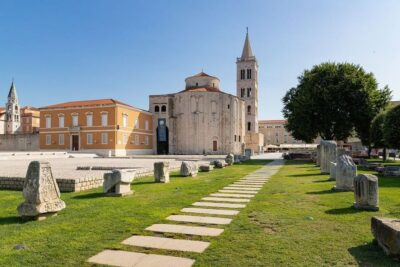
Stop three is the Church of St. Donatus, one of Zadar’s main symbols. It’s described as preromanesque, with an unusual shape, and the big draw is the acoustics. This is the kind of monument where the architecture seems to encourage sound—handy when you’re trying to understand why it’s famous.
You’ll have about 10 minutes here. That’s brief, but it matches the reality of the spot: the church is compact enough to see quickly, and the experience is more about noticing the form and how sound travels than about lingering for an hour.
Practical tip: treat this stop like a quick “listen and look” moment. Don’t rush past the shape while you’re still trying to take photos. Let your eyes lock onto the structure first, then shift your attention to what the space does acoustically.
Admission: not included for this stop. In other words, it’s a top-name sight, but you should factor extra entry cost into your day if you want to go inside.
More ways to see the city itself.





Roman Forum: where daily Roman life actually happened
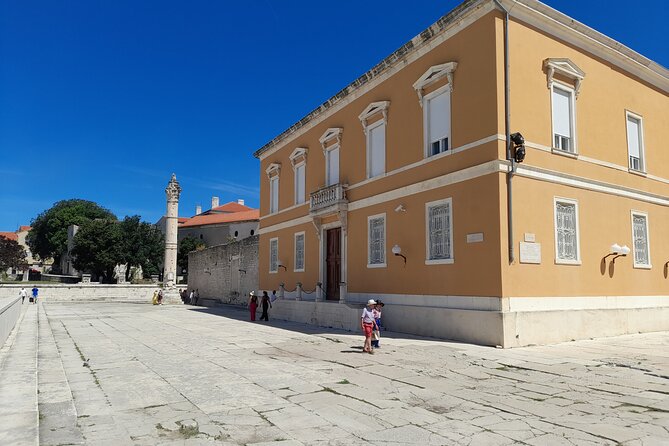
After the churches, you’ll move to the Roman Forum, which is framed as the largest forum on the eastern side of the Adriatic. That’s a dramatic claim, but the real value of Roman ruins like this is more basic: you start to picture how people moved through the city and used public space.
You’ll get 20 minutes here, which is enough to walk the core area and get a sense of the forum’s role in Roman Zadar. The stop is listed as the central part of life for the inhabitants of the Roman city—so the guide’s job is usually to connect the physical remains to everyday activities: gathering, commerce, civic life.
Admission: free. This makes the Roman Forum one of the strongest “bang for your euro or dollar” segments of the route.
One thing I appreciate about forums on guided city tours: you don’t just see stones—you get a mental map. With the guide’s context, you can usually understand what the open space likely looked like in use, not just how it looks today.
St. Simon’s Church: a relic stop with a serious reputation
Next is St. Simon’s Church, given about 20 minutes. The itinerary notes it holds the body of St. Simon, described as one of the most prized artifacts in the Christian world. That matters because it changes how you should approach the visit: you’re not just looking at architecture; you’re stepping into a space tied to a major tradition and belief.
Because admission is free on this stop, this is another cost-friendly highlight. It’s also a nice contrast to the modern sound-and-wave story of the Sea Organ. Here, the focus is on devotion and continuity.
To get the most from a short relic-related church stop, keep expectations grounded. You’ll likely move efficiently through the key points, and the guide’s explanation is what turns it into something more than a brief interior look. If you’re the type who likes understanding what you’re seeing, this is a stop where your time doesn’t feel wasted.
St. Mary’s Church and Monastery: gold-and-silver church art
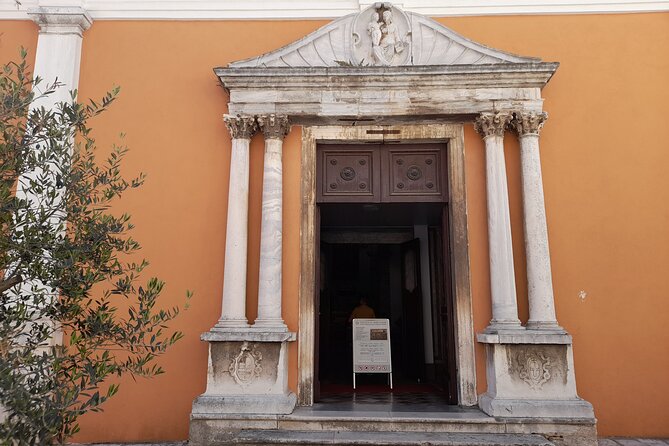
Stop six takes the longest, at about 30 minutes, at St. Mary’s Church and Monastery. Inside the monastery, you’ll see the Zadar Gold and Silver Church Art exhibition. The listing also notes it’s under the supervision of Benedictine nuns, which adds a real sense of care and continuity to the visit.
This is one of those stops that can feel “less famous,” but it’s often the one you’ll remember later. Why? Because exhibitions tend to slow the pace just enough for details to land: craftsmanship, design, and the way religious art is presented in a monastery setting.
The tradeoff is practical: admission is not included. So, this is where your day may cost a bit more than the free-admission parts of the tour.
Still, if you like religious art beyond just selfies and quick glimpses, the monastery museum-style component is usually what justifies spending money on a guided tour. Your guide helps you connect what you see to why it exists in the first place—and what makes Zadar’s church art distinctive enough to display as an exhibition.
Price and value: what $48.50 buys you here
At $48.50 per person for roughly 2 hours, this tour hits a smart price-to-time balance. You’re not paying for a long bus ride or a full-day itinerary. Instead, you’re buying focused direction and context for six major stops across Zadar’s most recognizable religious and historic sites.
The value becomes even clearer when you separate what’s included from what’s not:
- Included: a certified local guide, plus the overall guided experience across the route.
- Free admission stops on the itinerary: Sea Organ, Roman Forum, and St. Simon’s Church.
- Admissions not included: Cathedral of St. Anastasia, Church of St. Donatus, and St. Mary’s Church and Monastery.
So the “true cost” depends on whether you plan to enter those ticketed locations. If you’re the kind of traveler who wants to go in everywhere, you’ll likely spend extra beyond the tour price. If you’re okay treating the exterior views as part of the experience, you can keep your day’s total costs lower.
Either way, the tour’s structure is the big win: the guide keeps you moving efficiently, and you get explanations at the exact moments you’re looking at the thing.
Timing in real life: a 2-hour route that doesn’t drag
The schedule is tightly set around short visits:
- Sea Organ (about 20 minutes)
- St. Anastasia Cathedral (about 20 minutes)
- St. Donatus Church (about 10 minutes)
- Roman Forum (about 20 minutes)
- St. Simon’s Church (about 20 minutes)
- St. Mary’s Church & Monastery (about 30 minutes)
That totals right around the 2 hours (approx.) listed. I like routes like this because you don’t get trapped in one location. You get a steady stream of contrasts: modern sound art, Romanesque cathedral interior time, acoustics-focused architecture, Roman public space, a relic-related church, then art in a monastery.
The risk with compressed city tours is that you might feel rushed. With this one, the stop lengths are short but reasonable—especially because you have fewer “sit and wait” moments. If you’re photo-heavy, give yourself permission to take a couple of key shots and let the rest be observational. The guide’s storytelling is where the experience really pays off.
What you’ll notice most: the guide’s explanations
The highest praise in the info you’re working from centers on the guide: friendly, instructive, and with perfect explanations and data. That’s exactly what you want from a city tour, because the difference between seeing monuments and understanding them is often just one good explanation at the right time.
A small group (up to 15) helps here. It’s easier for a guide to read the room and adjust if someone looks confused or wants clarification. When explanations land well, you start noticing things like why acoustics matter at St. Donatus, or how the Sea Organ’s design is more than a gimmick.
Even if you’re not a “history person,” this route is built around sensory and architectural cues. The guide’s job is to translate those cues into meaning fast, so you walk away with a mental checklist that feels earned.
Who should book this Zadar city tour
I think this tour is a strong fit if you:
- Want a short, efficient Zadar highlight walk instead of an all-day plan
- Prefer guided context at major landmarks (not just wandering)
- Like variety—modern public art plus churches plus Roman ruins
- Travel with limited time but still want to see the big-name sights
It may be less ideal if you prefer deep, slow museum-style visits. The itinerary is designed to keep moving, and the longest stop is still just 30 minutes.
One more fit check: if you don’t want to handle extra entry costs, keep in mind that several key churches/monastery stops have admission not included.
Should you book? My call
Book it if you want Zadar in two focused hours with a guide who explains what you’re seeing in a way that actually sticks. The mix of free-admission stops plus a couple of paid interior experiences makes it a fair value, especially given the small group limit and the strong emphasis on clear local commentary.
Skip it only if you already plan to do a self-guided route and you don’t care about learning the why behind the sights. In that case, you’d probably do fine on your own with a map and time.
If you like compact itineraries with big payoff, this one is a solid bet—Sea Organ to monastery art is an unusual pairing, and that’s exactly why it works.
FAQ
How long is the Zadar City Tour?
The tour is approximately 2 hours.
How much does the tour cost?
It costs $48.50 per person.
Is the tour offered in English?
Yes, the tour is offered in English.
What’s the meeting point and starting time?
The tour starts at Greeting to the Sun on Istarska obala, 23000, Zadar at 10:30 am.
Where does the tour usually end?
The tour usually ends at Trg pet bunara, 23000, Zadar on the peninsula.
Is it a mobile ticket?
Yes, the tour uses a mobile ticket.
Which stops have admission included or free?
Sea Organ, Roman Forum, and St. Simon’s Church list admission as free. Cathedral of St. Anastasia, Church of St. Donatus, and St. Mary’s Church and Monastery list admission as not included.
What is the cancellation policy?
You can cancel for a full refund up to 24 hours in advance of the experience start time. After that, the amount paid is not refunded.
Are service animals allowed?
Yes, service animals are allowed.
More Tours in Zadar


More Tour Reviews in Zadar
More Old Town Walks
After something else? More tours and days out around Zadar




Zadar Old Town Walking Tours, compared.
 ★ 4.9Plitvice Lakes with Boat Ride and Zadar Old Town TourFrom $531,368 reviews
 ★ 5.0Plitvice Lakes with Boat Ride & Zadar Old town tourFrom $541,129 reviews
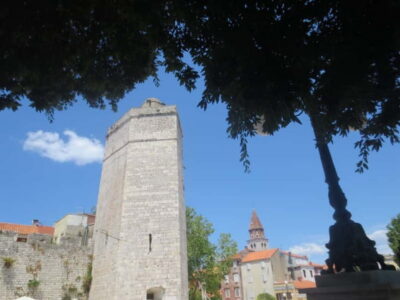 ★ 4.8Guided Walking TourFrom $17445 reviews
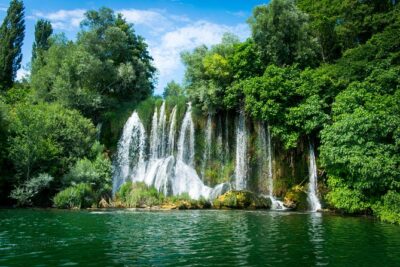 ★ 5.0Krka Waterfalls, Food & Wine Tasting, Boat Ride & Zadar Old TownFrom $52420 reviews
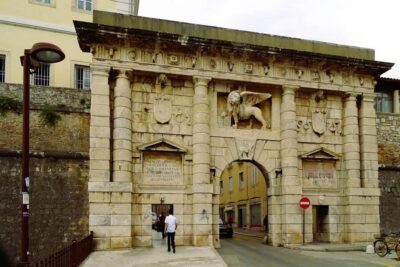 ★ 5.0Zadar City Tour 120min WalkFrom $32203 reviews
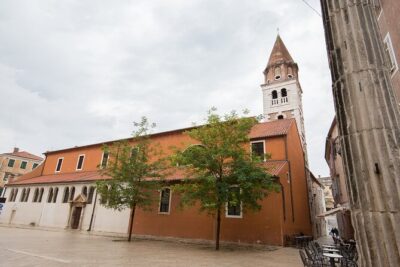 ★ 5.0Zadar Walking Tour sponsored by Gligora Cheese and deli.From $18119 reviews
 ★ 4.4Virtual Reality Guided History Walking TourFrom $3586 reviews
 ★ 4.7Private Walking Tour Through 3,000 Years of HistoryFrom $28871 reviews
Browse the lists this tour appears in